
Last updated: September 27, 2026
Key Takeaways
- Gen Z leads the backlash against AI-generated music, driven by concerns over authenticity, royalties, and synthetic-content fatigue.
- Listeners often cannot distinguish AI tracks from human-made music in blind tests, yet still pull back once they see an AI label.
- AI-generated tracks dilute royalty pools for working artists, and major platforms now respond with labels, detection tools, and in some cases outright bans.
- Gen Z is redirecting spending toward human experiences, including live shows, physical formats, and human-curated discovery.
- OnesToWatch champions authentic, human-curated music discovery that aligns with Gen Z’s demand for real artistry and transparency.
Discover Human-Curated Music on OnesToWatch
Why Gen Z Is Rejecting AI-Generated Music: The Short Answer
Gen Z is rejecting AI-generated music for four main reasons. First, it strips away the lived human experience, vulnerability, and imperfection that make music emotionally meaningful. Second, AI-generated tracks dilute the royalty pools that working artists depend on. Third, a generation already saturated with synthetic content across every digital surface is experiencing acute fatigue. Fourth, the knowledge that a track was made without a human author triggers rejection even when the audio itself is indistinguishable from human-made music.
The Authenticity Argument: Music as a Human Story
Music has always functioned as a record of human experience. It captures the specific grief, joy, or confusion that only a person who has lived through something can originate. A peer-reviewed study by researchers at Stanford University and Reed College, published in 2026, found that people engaged less deeply with music labeled as AI than with music labeled as human-made, even when a human had actually composed it. The label alone changed the emotional transaction.
That finding maps directly onto what Gen Z is defending when it pushes back against synthetic content. OnesToWatch has built its editorial philosophy around this principle. The platform champions artists who are counter-trending, who possess what the team calls “realness” and “authenticity,” and who demonstrate genuine live performance potential. The artists OnesToWatch has championed, from early features on SZA and Billie Eilish to current emerging voices, share a common thread: a human story that listeners can locate themselves inside.
The Blind-Test Paradox: They Cannot Tell, But They Still Reject It
If authenticity is what Gen Z is defending, you might expect them to detect its absence. The research shows something different. A November 2025 Deezer-commissioned Ipsos survey of 9,000 people across eight countries (the US, Canada, Brazil, UK, France, Netherlands, Germany, and Japan) found that 97% of listeners could not tell the difference between fully AI-generated music and human-made music in a blind test featuring two AI songs and one real song. Seventy-one percent of respondents were surprised by their own inability to distinguish them.
Yet rejection persists once the label is known. The paper “Liking Without Endorsing: Consumer Dilemmas in Responses to AI-Generated Music” (Psychology & Marketing, 2026) by Andrew B. Edelblum and Joshua Poe frames this as a “stated–revealed preference gap.” In Study 1 of that research, 367 U.S. adults rated the same AI-generated R&B song labeled as either AI-generated or human-generated. Before listening, the human-labeled version was expected to be higher quality. After listening, quality ratings converged. Willingness to relisten, explore the artist further, or share the track stayed suppressed for the AI-labeled version.
A 2026 blind-listening study published in Frontiers in Psychology by Junsong Chang and Yueqi Jing, using 71 musically trained listeners and 18 melodic excerpts, found that attribution judgments for AI-generated and human-AI collaborative excerpts were close to a random distribution. Listeners could not reliably identify the source. Those attribution judgments still correlated with aesthetic evaluation even within the AI-generated condition. The researchers describe this as a possible “endogenous perceptual bias” in the reception of AI-generated music.
The psychology is consistent. Knowing a person is on the other end of the music changes the emotional transaction, even when the audio is identical. Listeners can enjoy a track and still withhold the deeper endorsement, the follow, the share, and the return listen that constitute genuine fan engagement.
The Economics and Consent Angle: “Trained on My Stems”
Listener psychology is only half the story. For the artists whose work trains these models, the objection is economic and rooted in consent. Working musicians describe the AI music landscape in specific, concrete terms: “trained on my stems,” “voice cloning,” “style theft.” These are literal descriptions. Suno acknowledged in court filings that its training data included “essentially all music files of reasonable quality that are accessible on the open Internet.” R&B singer SZA told i-D magazine in March 2026 that she feels “at war” with AI and the content being created with it. In February 2026, several artists’ rights groups published an open letter titled “Say No To Suno.” It claimed that AI content “dilutes the royalty pools of legitimate artists from whose music this slop is derived.”
The royalty math is straightforward and damaging. Under the pro-rata model used by every major streaming platform, subscriber fees go into a shared pool distributed by each artist’s share of total streams. Deezer reported that up to 85% of streams on fully AI-generated tracks in 2025 were fraudulent, driven by bots rather than human listening. Those streams siphoned royalty pool share that would otherwise have reached human artists.
Listener demand for transparency is documented and substantial. The November 2025 Deezer/Ipsos survey found:
- 80% agree 100% AI-generated music should be clearly labeled for listeners
- 73% of streaming users want to know when a service is recommending fully AI-generated music
- 52% believe 100% AI-generated songs should not be included in charts alongside human-made songs
Platforms have responded with a patchwork of policies that range from simple labeling to outright bans. The table below shows where each major service stood as of September 2026 and highlights that only TIDAL and Bandcamp fully withhold royalties from AI-generated tracks, while Spotify and Apple Music continue to pay.
AI as Tool Versus AI as Replacement: The Line Gen Z Draws
Gen Z draws a clear line between AI as a tool and AI as a substitute for artists. A Muse Group survey of 1,200 musicians published April 10, 2026 found that 78% of musicians are open to AI tools and 70% already use them, yet 82% oppose AI generating music or compositions from scratch. The most acceptable AI features in that survey were audio cleanup (70%), practice help (68%), and transcription (58%). Lyrics generation (37%) and auto-finishing (32%) faced strong resistance.
Among 18–24-year-old musicians specifically, the youngest group showed the highest opposition to AI in music at 28%, the highest concern at 26%, and the highest frustration at 21%, while being the least excited at 14%. Critically, 43% of 18–24-year-olds describe themselves as somewhat familiar with AI in music tools and 31% say they are very familiar. Their caution reflects experience, not confusion. Gen Z’s objection focuses on the replacement of the artist rather than AI as a creative instrument.
Meet the Human Artists Defining 2026
Are People Actually Rejecting AI Music?
Listener sentiment is moving against AI music, especially among older Gen Z. The 2026 Jacobs Media Techsurvey, an online survey of nearly 31,000 U.S. radio listeners drawn from the email databases of 506 commercial radio stations, found that Gen Z had the biggest negative response to AI music of any generation surveyed, with 81% saying they have a major problem with it. Nearly three-fourths of all respondents said hearing AI-generated music on their favorite station would be a “deal-breaker.”
Luminate’s survey of 1,758 U.S. respondents already aware of generative AI technologies found that 18- to 24-year-olds registered a net negative reaction of -29% toward AI-produced music. By contrast, 13- to 17-year-olds showed a net positive reaction of 19%, a 48-point gap within what is broadly called “Gen Z.” Luminate concluded it “would be a mistake to regard Gen Z as a monolith in its attitudes toward AI content.”
Why Gen Z Sees AI-Generated Music as a Problem
The objections cluster into five distinct categories:
- Authenticity: AI cannot originate lived experience. The Stanford University and Reed College peer-reviewed study (2026) found listeners engage less deeply with music once they know it is synthetic, even when the audio is identical to human-made music.
- Livelihood: AI-generated tracks dilute pro-rata royalty pools. The IFPI estimates streaming fraud drains roughly $2 billion a year from legitimate artist royalties, with AI described as “the ultimate enabler” of that fraud.
- Fatigue: Luminate’s research found overall consumer interest in AI music dropped from -13% to -20% between May and November 2025, with Luminate’s media analyst Audrey Schomer attributing part of the shift to “brain fry,” mental burnout from excessive AI content across digital life.
- The “Fake” Factor: The knowledge of artificial authorship triggers rejection even when the audio is indistinguishable. The “Liking Without Endorsing” study (Psychology & Marketing, 2026) documents this as a persistent “stated–revealed preference gap.”
- Consent: Voice cloning, style theft, and training on copyrighted work without permission. A June 22, 2026 coalition letter from the Music Artists Coalition, Songwriters of North America, NITO, and BMAC documented artists being opted into AI deals by default, with little actual choice offered.
What Gen Z Is Choosing Instead
Gen Z is making an active choice for human-centered music. Gen Z spent a monthly average of $101 on live music events in Q1 2026, outspending Millennials at $94, a reversal that reflects a deliberate prioritization of human, in-person experience. The same preference shows up in what they buy. U.S. vinyl sales hit $1 billion in 2025, nearly a 10% increase from 2024, and Futuresource Consulting’s Audio Tech Lifestyles report found that nearly 60% of Gen Z buys vinyl.
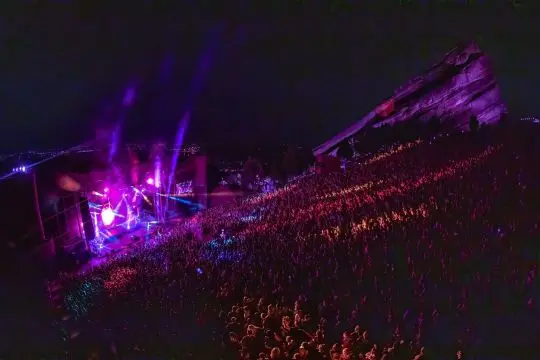
University of Florida sophomore Daniela Molina captured the motivation precisely. “I just like knowing that I’m supporting artists by paying for their music. I think it’s a louder form of appreciation if you actually have a vinyl or CD from a specific artist.” The physical purchase, like the live ticket, is a consent-based transaction, a direct transfer of value from fan to human artist.

For discovery, Gen Z is increasingly skeptical of algorithmic playlists that, as Jacobs Media president Fred Jacobs noted, already battle an authenticity problem by surfacing AI-generated content. OnesToWatch exists precisely for this moment. It offers a human-curated platform that validates authentic artistry through editorial coverage, curated playlists built on analog listening and selection, and a structured pipeline from emerging artist to touring career. Every artist featured on OnesToWatch is a human being with a story, the exact thing Gen Z is spending $101 a month to find.
The Generational Divide: How Youth Differs on AI Music
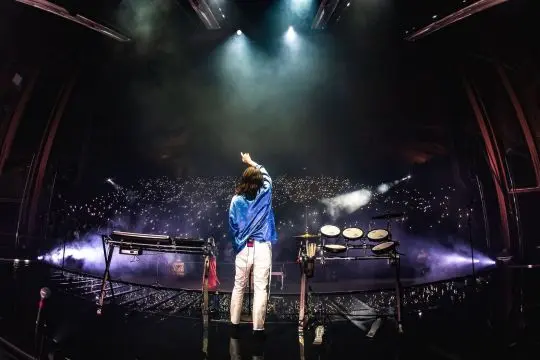
Luminate’s July 2026 “AI & Media: Audience Attitudes” report found the starkest generational divide within youth itself. The 13–17 cohort is net positive across all media types. A separate Luminate survey of 1,758 U.S. respondents found that 18- to 24-year-olds registered a net negative reaction of -29% toward AI-produced music. The gap between the two groups is even wider, 58 points, for AI-scripted movies and TV and for AI-generated social media content. Meanwhile, media consumers 55 and older are “the most deeply negative” on AI-assisted content across all categories.
The pattern suggests that older Gen Z, those who entered the workforce or higher education during the AI acceleration, carry a different relationship to the technology than younger teenagers who have not yet faced its economic consequences. Fred Jacobs attributed Gen Z’s alarm partly to economic anxiety, noting the generation is upset “because it seems like every article that’s written talks about how Gen Z is going to pay the price for AI, and all these entry level jobs are going to disappear.” In music specifically, that anxiety is concrete. It touches the royalty pool, the session gig, the sync placement, and the streaming revenue that AI-generated content is structurally positioned to dilute. For the music industry, the implication is clear. The generation most likely to spend on live shows and vinyl is also the generation most likely to abandon platforms perceived as indifferent to human artistry.
Frequently Asked Questions
Here are the questions readers ask most often about Gen Z’s response to AI-generated music.
Are People Rejecting AI Music?
Yes, though the rejection is not uniform. As the data above shows, Gen Z is the most negative generation, while the 13–17 cohort is actually net positive. That split matters for anyone trying to reach young listeners, because it suggests different expectations around authenticity and economic impact within a single broad age label.
What Is the Problem With AI-Generated Music?
Five distinct problems drive the backlash. Authenticity concerns center on the absence of lived experience behind AI tracks. Livelihood concerns focus on diluted royalty pools and streaming fraud that shifts money away from working artists. Fatigue reflects growing burnout with synthetic content across digital life. The “fake” factor describes how knowledge of artificial authorship suppresses deeper engagement even after a positive listen. Consent concerns highlight voice cloning, style theft, and training on copyrighted recordings without clear permission.
What Is Gen Z Choosing Instead of AI Music?
Gen Z is directing spending and attention toward experiences and formats that guarantee human authorship. Live music is the clearest signal, as noted above, with Gen Z outspending Millennials on shows. Vinyl has crossed $1 billion in U.S. annual revenue, and a large share of those buyers are Gen Z. Community radio, indie artist support, and human-curated discovery platforms are also part of the shift. OnesToWatch serves this need directly, offering editorially curated playlists, in-depth artist features, and a yearly selection of promising emerging artists.
Conclusion: Gen Z’s Anti-Replacement Stance
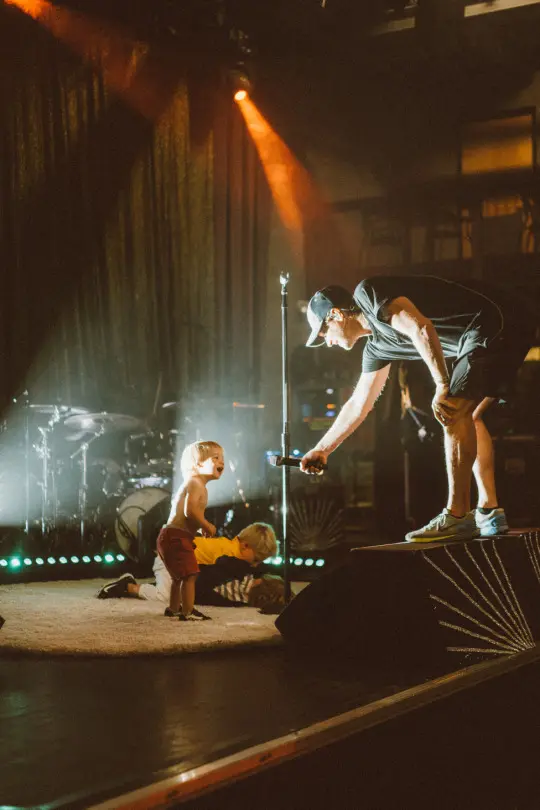
Gen Z is anti-replacement, not anti-AI. The generation most fluent in generative tools is drawing a line at music because the artist-fan relationship feels especially personal. Consent, compensation, and human story form the core of that relationship. The blind-test paradox shows the objection centers on authorship rather than audio quality. The economic data shows the concern is rational. The spending on live shows and vinyl shows the response is active.
The artist-fan relationship is the thing worth protecting. Platforms, labels, and discovery services that treat it as a foundation, as OnesToWatch does, will be where the next generation of music fans chooses to spend attention and money.
Check out OnesToWatch’s Top Artists To Watch in 2026 for a human-curated list of the emerging artists defining what authentic music looks like right now.
Explore the Human Artists Shaping 2026
Discover Your Next Favorite Artist on OnesToWatch