
Calder Allen Is an Advocate for Human-Made Art
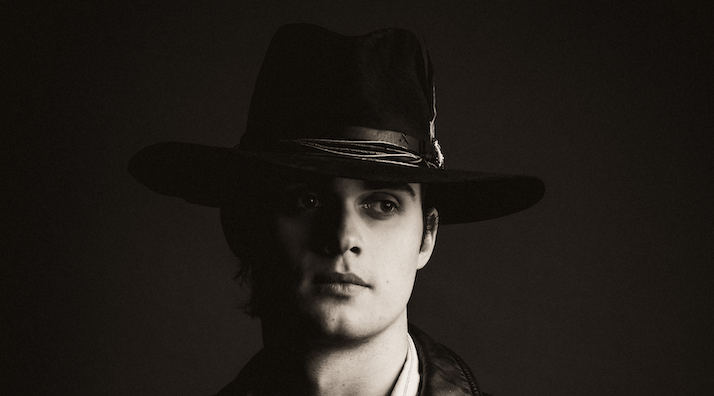
Photo by Barbara FG
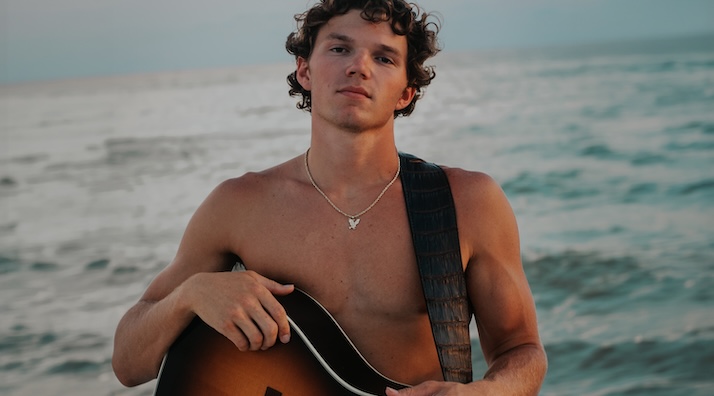
Meet Calder Allen, the fifth generation “Austinite” and singer-songwriter from Austin, TX whose artistic aesthetic and presentation reflect the quintessential Americana he was raised on. He proudly referred to his hometown, and its culture, on several occasions throughout this interview, candidly stating, “I just got off the water. Yeah, I was fishin’ with my audio engineer, Jacob,” with the kind of tanned glow this New Yorker could not possibly hope to have had in late March.
Musically, Allen honors and upholds the legacy of his family of artists, including his influential multi-hyphenate grandparents Terry and Jo Harvey Allen. He began writing songs in high school with the help of the great Charlie Sexton, a family friend and frequent collaborator renowned for his decades-long stint with Bob Dylan and as a songwriter and producer in his own right. This led to the release of his first two records, The Game, in 2022, and Dreamers Drifters and Hiders, in 2024. All three of his records have been recorded at the famed Arlyn Studios (Willie Nelson, Stevie Ray Vaughan) in Austin, though he will look to change it up for future releases. “We’re gonna switch up what we’re doin’,” he said. “Now, I’m just looking for interesting ways to make records. In houses, go to cabins, travel around.”
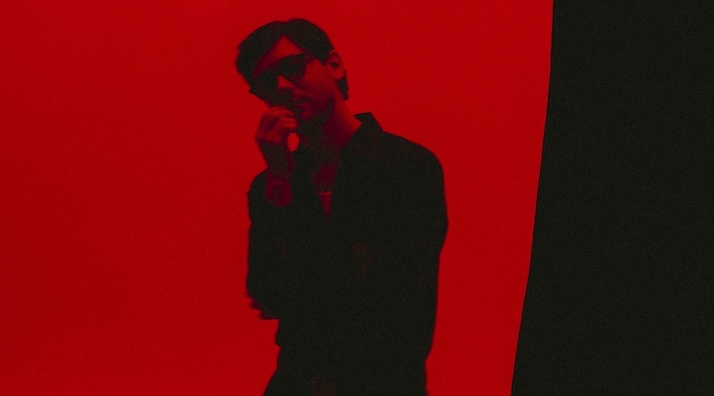
Earnest and reserved in early interviews and performances, he was playfully accused of hiding behind a cowboy hat during these appearances. Now, at 23, his confidence is enhanced, and his wardrobe selections are intentional, mature, and designed to create an immediate understanding of his artist project and persona. The tones are darker. The photos present him as more obscure, though the music does anything but.
His latest project Fault Lines sees him tap into his most adult-oriented material yet on songs like the grief-stricken “Howl,” the bitter and tenacious “Norwood County Line,” the stunningly formative “Daylight Saves,” and the lengthy and lush “For The Son” with background vocals by both Sexton and notable country music star Jack Ingram.
Despite his prowess as a songwriter, Calder’s resonant baritone-centered vocal tone may sometimes experience technical limitations. And though it is fragile, its warmth and self-imposed gravel and vocal cracks form a gift that is profoundly impactful. He celebrates his imperfections, stating, “I don’t need to be perfect, I just need to be honest.” Each of his three records have seen him rely heavily on his exceptional storytelling abilities as their main focal point, though he continues to raise the stakes and provide the listener with growing insights into his mind and emotional capabilities.
OTW: Can you give me, as a jaded New Yorker who thinks that Electric Lady is the epitome of music recording, a rundown of Arlyn Studios?
Calder Allen: [Laughs] From what perspective though, really? In comparison to the New York studios, or an analysis from MY perspective?
If you want to give me the critical analysis, go right ahead!
Well, ok, so, the first time I was ever in a recording studio was at Arlyn when I was a sophomore in high school. My grandfather was working on a record called Just Like Moby Dick, and Charlie Sexton was producing it. I didn’t know ANYTHING about how this whole recording world worked. Arlyn is notorious for having this super long, over the top, multiple-part console. Walking in there was like being in spaceship. Being a kid, I was so amped. A few years later, when COVID hit, I started writing songs. Charlie wasn’t on the road, so he had time to take me under his wing. It was more of a family, full circle thing for me. I feel nothing but comfortability as far as where I learned to be in a studio, track, and record in the same place my grandfather did.
Is it common for people to record their very first records there?
It was just Charlie saying “This is where we’re gonna do it.” Our process is I’ll just go to his house and record a bunch of demos, and gameplan five or ten days of how we’re going to punch it out in the studio. It just depends. It’s like everything else in this business… and I try not to call it a business, but it is my career, ya know [smiles]. There are so many different ways to get to that same result. I’ve never looked at the space over the songs.
As a fifth-generation artist, how do you feel your perception of art differs from those with less exposure?
This is a deep-rooted question for me, because I think about this A LOT. I think about early influences, about being a kid and having the freedom to express myself and that being ok at the dinner table. Seeing how my grandparents orchestrated their lives with that expression, and how they freely say whatever they’re gonna say. There was no fear behind what they were making. I acted in grade school, and that turned into me loving the outdoors, so I started tying all these flies. So, for a while, I wanted fly fishing to be my route, and I was always encouraged to follow what I was excited about. That just bled into songwriting. But, I look back at that, and I was intimidated by Charlie back then. My grandparents would throw these big Christmas parties, and all their artist friends would walk in. It’d be Charlie and the late Joe Ely, wearing all black, leather, Charlie’s big hat, three long nails on the right hand because of his guitar playing, and I was like “What is going on??” Later in my life, these people are my heroes. It’s full circle, and it has definitely influenced me as far as how much I care about artistic integrity and self-expression.
Going off that idea of larger-than-life characters, do you feel like your aesthetic is now meeting your music at this stage?
I think so! I was a basketball player as a kid always wearing athletic wear and Eminem t-shirts. Now, it’s all denim. A lot of that comes from Charlie. I have this black cowboy hat a buddy of mine made for me. He wanted me to have a stage hat, so he asked me what I wanted to base it off. I showed him some reference photos of Charlie, and now I have a big black hat directly related to him. I don’t think about my look too much, but my taste has definitely changed since I started this in high school. Now, I’m 23. I’m not trying to stay in one lane, I’m trying to evolve and see and do different things.
You’ve been asked about the hat a lot. In many of your early interviews it was like,
“You’re wearing a hat because you’re just SO shy and reserved...”
[Laughs]
… I mean, that’s how the questions were being presented!!
[Continued laughter] It’s true… that’s VERY true.
Do you feel like now it’s an Eric Church thing where your hat, like his sunglasses, separates you as the artist from you as a person?
It is definitely a part of my look, but, recently, there have been a lot of shows that I just won’t wear a hat, because it has been such a TOPIC!! Every time I’m on Andy Langer’s radio show in Austin, that’s ALL HE SAYS!! It’s funny to me because I wear hats every day because I fish! I like being outside all the time. I live in Texas!! If it’s a theatre show, I’d wear a different hat than if I was playing outside at 3 p.m. On show days, I’m more stressed about all my gear. All the guitars… “What tuning is this in? What’s going on?” I simplify my clothes for stage so that I don’t have to think about it.
Do you consider yourself a high baritone or a low tenor?
[Pauses in thought] I don’t know, I’m not really… I’ve never thought of that. This is the first time anyone has EVER asked me that. Off first instinct, I’d say high baritone.
Can you explain the process of developing melodies that maintain a sense of conversation as opposed to something more wavey and melodic?
Eight times out of ten, the melodies are based off the words I’m choosing, because making the story is important to me. Naturally, with just the style of writing, it’s going to be catered to the melody that makes the words sound the best. Early on, I didn’t really know how to play guitar, so I was limited on chords. Now, I don’t need the guitar to write a song. I can just hum it out and learn it later.
Where does the huskiness come from in your tone?
Yeah, I don’t know! I’m aware that it’s there, but, to my fault or not, I’ve never taken singing lessons or had a vocal coach. If you watch videos of me singing from my first record, my family would be like, “You’re whispering into the microphone. What are you doing?” The more shows I do, the more I learn to project and sing out. Charlie is always helping me with that. I’ve taken pieces of that from all the people around me. Jon Randall sings really well, and he's a great harmony singer because of all his bluegrass stuff. He sang on “For The Son,” which I wrote with Jack Ingram, for this record.
What do vocal discrepancies add to a song?
My grandfather’s songs had some of the wildest melody choices I’ve ever heard, but it never seemed wrong. It just seemed honest to him. And that goes back to my early influences of listening to Joe Ely around a campfire, or going into Marfa and watching Steve Earle do an acoustic set. It’s not perfect, but it’s honest. I don’t want to be a perfect singer. If I wanted to be a perfect singer, I’d use autotune. I’m just trying to express the story I’m trying to tell. There a lot of moments on this record, like on the bridge of “Howl,” where I have a lot of voice cracks. It was pretty intentional to leave that stuff in there, especially because everything that’s real [pauses]… I don’t want to say is under threat, but there is a changing culture where people will go one side or the other. I would much rather go the human side, expressing yourself, being imperfect, and having it be about the art. People are wanting that authenticity, and they’re wanting the genre that promotes that the most. Not to say that other genres are inauthentic… but these Top 40 people have five people writing with them. What do they have to say? What’s their perspective on things?
And are they getting paid??
Exactly. I try and just stay in my own world, and I was lucky enough to be exposed to my grandparents being honest with their integrity.
You’re said to read a lot of poetry. Do you think songs come from poetry?
It’s just a passing exercise. I keep a quick pocket book full of things that I’ve written or found at a flea market on the road, or that friends have given me, in the center console of my truck. There’s a lot of sittin’ around waitin when you’re solo acoustic in a truck drivin’ around opening for bands. You’re at soundcheck, then you’ve got two hours to kill. I try and get different perspectives from it all, and my grandpa sends me more than anyone. It has always helped me with writing, but it’s not like I’m looking to open a page and have it impact a song.
This new record is described as the culmination of your journey so far. This is your third album, so how did you conclude that you wanted this to be the ‘Here’s my story’ record?
Because of the way that I write, they’re all going to be a ‘Here’s my story’ record. I was so young on the first record. My experiences were that of high school puppy love and teenage angst. I don’t think I’ve ever said this, but “Stones” is about me quitting basketball. I made the decision to not go to college to pursue music full time, and in the past four years, I’ve seen so much of the country and have had so much experience that I wouldn’t have gotten in college. I wrote “Howl” when I was in North Carolina with Shane Smith and the Saints, and I got a call from my best friend. His mom had been battling cancer, and she passed away. I told him I would cancel the shows and fly back to Austin, and he told me I wasn’t allowed to do that. I wrote that song in one night in a hotel room in Raleigh. Since then, I’ve lost family members and other close people, but that was the first person I considered a family figure passing. There’s also “Fault Lines,” which is about the intense conversation I had with my mom about dropping out of college to pursue music. She supported me, but that’s a scary thing for a parent. “Norwood County Line” is about me trailering my buddies drift boat through a town called Norwood in Colorado and getting stopped by a cop who thought we were stealing it. Every song has a story. This record just happens to be about the things that have happened over the last 4-5 years.
Had you ever taken your vocal to the extreme that you do on “Norwood County Line”?
There’s that, and then there’s the bridge of “Carry On” where I really open up for the first time in a song. That was me knowing a bit more about my voice, and what I was listening to. It was edgier, and me wanting to go there.
Do you think the story of that song, and the frantic nature of it, required you to take your vocal there?
Totally. We were pretty pissed off about the whole thing, so when we were writing it, we were trying to have some attitude.
Do you think there is a conclusion to the story of “Howl,” or do you think it’s a lingering feeling that you’re not ready to find an end for?
There are songs like that that float around on all my records. On the first one, it’s “They Warned You” and “The Game.” On the second, it’s “Just Pray” and “Burned Bridge.” On this one, it’s “Daylight Saves” and “Howl.” There was a real sense of comfort of writing “I’ll howl from the night, and you’ll howl from the sky.” Just that thought made me feel better about my outlook on death. It’s a coping mechanism. A lot of my songs are me talking to myself, and writing, about what I need to hear at that time.
“Fault Lines” is about you dropping out of college, correct?
Roughly, yes.
You’re basing the title of the record off that, so why was that experience formative enough for you to craft this project around?
When dropped out of school, my brother came to help me unpack. As we were leaving school, I was like, “Man, I’ve never felt like this in my life.” He asked if I regretted what I was doing. I said, “I just feel like this is a line in the sand. Like, ‘Your life WAS this, and now it’s THIS.’” Looking back on the past 4-5 years of what I’ve experienced and the path that I’ve been on pursuing music, it really is true. It’s crazy where I am today as far as where I was then. The title of the record being Fault Lines just encompasses everything. It’s the whole thing. It’s about trying to push the needle with yourself, and prove that you can do it.
-1790705710.JPG)