How "La Vida Era Más Corta" Turned Milo j's Nostalgia Into One of Latin America's Most Vital Albums [Q&A]
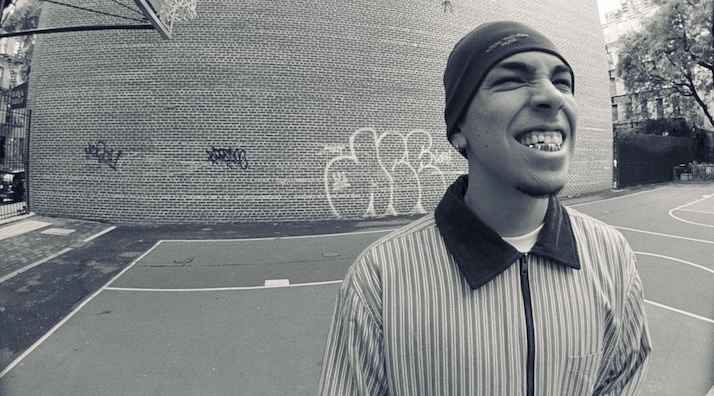
Photos by Riley Byington
"My past life probably had a shit time, because in this one I'm being rewarded quite a lot, and very early on, I think," jokes Milo j, an artist from Morón, Argentina. After releasing his third album La Vida Era Más Corta last year to critical acclaim, as well as featuring in a Tiny Desk session that currently sits at 15 million views, Milo has positioned himself as one of the most exciting voices coming out of Latin America.
When I sit down to talk to him whilst he's in New York, Milo sips on his maté, a typical Argentine drink. "I drink this religiously," he says. He's currently on a break between the first and second parts of his world tour, which he only stopped so he could enjoy the football World Cup at home. "I used to play defense back in the day, and am now a proud member and sponsor of my neighborhood's local team… thank God we are doing really well this year," he remarks. Later this year, Milo will play at Kempes stadium in Córdoba, marking the biggest show of his entire career so far. Still, for an artist of his magnitude, he is very much still just a boy from Morón.
With an album that tackles growing up, enjoying the now and finding our place in the universe, his vulnerable and poetic lyrics show a remarkable analysis of our mortal condition and its growing pains. "It's really hard to be in the here and now, even more so with this artist's life… " he tells me. Although I ironically asked Milo if he’s ever tired of his age being a talking point when discussing his music, it is his very age in a way that drove the instinct to create this album. ”(If I had been older when starting my career) I probably would have worked through certain things — in my emotions, in my psychology — the way any normal person gets to close those chapters, which I can't do today because I don't have time to dedicate to myself” he says honestly.
Although lyrically La Vida Era Más Corta is an album of bold reflections and hard truths, probably one of the most special things about it is how it is produced. I remember the first time I listened to it, fully expecting a trap album, and being instead blown away by a stunning mix of genres that reflects the full diversity of Latin American music, including Milo’s self-described “urban” touch. Produced together with tatool and Santi Alvarado, making the album was a process of stringing different genres together and, for the first time in his career, recording live instruments. The record’s many collaborations were equally eye-opening, from established folk artists, to new generation artists who each taught him something different about how music gets made.
That urge to learn and grow has been at his core since the very beginning when he started making music and beats as a teenager. "Nothing in the world gives me what making music gives me," he tells me. "I feel like I have control over doing everything myself. It's my way of being free." That freedom found a live expression in his iconic Tiny Desk, where Milo performed alongside Uruguayan murga group Agarrate Catalina in a session that beautifully captured the love between Argentina and Uruguay, and showed the world exactly what this album embodies.
"Music is a communicator and a unifier," he tells me. "With my music I sometimes see generations come together, countries come together, communities come together." It is a big thing to say, but I truly believe that La Vida Era Más Corta is an instant classic that backs the sentiment up with its greatness.
Interview has been translated from Spanish and edited for length and clarity.
OnesToWatch: Hi Milo! You have a song called "Antes de los 20" (Before I Turn 20) and I can see that this birthday is coming up soon for you. What is something you'd like to do before you turn 20?
Milo j: I don't know if there's something I'd still like to do. I think I've already done what I would have wanted to do before turning 20. The "goals" I had, I think I’ve surpassed them by a long shot. Right now I'm on tour and doing what I've loved since I was 16, and I'm really happy doing it.
You just finished the first leg of your "La Vida Era Más Corta" Tour. What has been your favorite memory so far?
There are several places aside from Estadio Vélez in Argentina, which obviously holds a special place for me because it's in my country. In Ecuador, which was my first time there, we did three shows — two in Quito and one in Guayaquil — and it was insane, the crowd was going crazy! The National Stadium in Peru blew my mind, and the 360 stage in Mexico City was incredible too. It was a show format I had never done before, but I wanted to try something new and it turned out amazing.
Getting into the album that brought us to this tour — do you believe in past lives?
Yes, 100%. My past life probably had a shit time, because in this one I'm being rewarded quite a lot, and very early on, I think (laughs). Actually, I have a scar back here (shows the back of his head) that I've had since birth. My hair never grew there and it's shaped like the silhouette of the Virgin Mary. Maybe it had something to do with how I died in my past life. I feel like we're always in the presence of a group of omnipresent entities that can't be seen, so I find that really interesting.
Your third album La Vida Era Más Corta deals a lot with mortality, the passage of time and our place in the universe. I was wondering where were you mentally when you were writing about these themes, or what led you to focus on them?
It had a lot to do with the moment in my life that I was going through. Honestly, I was in a kind of depressive block. You have to think that this album has been with me from when I was 16 or 17 all the way up to now, almost turning 20. So it covers an entire stage of my life, and during that time I couldn't write lyrics about anything else, you know?
It was all you were thinking about.
Maybe I missed how my life was before I did music professionally, and I was constantly trying to enjoy the present. Just trying to find a way to just be at peace, but not being able to. It's really hard to be in the here and now, even more so with this artist's life that constantly puts you in a position of having to position yourself, keep up with the speed of the industry, constantly release music, etc. Because of that I’m always working, and sometimes that makes you forget that you're actually here, in this moment, right now.
Thank God this career happened to you so early in life and that it's been incredible, but have you ever wished it had happened a little later?
Yes, 100%. I think I would have been much more prepared for a lot of situations. I think I would have learned many more things and would even have more stories to tell. I would have more confidence in myself. I probably would have worked through certain things — in my emotions, in my psychology — the way any normal person gets to close those chapters, which I can't do today because I don't have time to dedicate to myself.
So yeah, maybe it would have been better for me to make it a little later — but obviously I don't regret anything I've done and it's a blessing to be living off of this today. Also, reaching so many people with my lyrics at such a young age says something too. The people who listen to me have also grown up with me. They started listening when they were 14 or 15, and today they're my age. That's a beautiful thing.
Does it ever bother you that people bring your age into the discussion when talking about this project?
Look, the easy answer is yes, sometimes it does get on my nerves, but at the same time you have to think about it: it's understandable. A lot of times the question comes from an interviewer thinking "What was I doing at that age?" and maybe that confuses them, or even shocks them. But to me it's completely understandable. There are “pibes” (kids) my age or musicians much younger than me who are prodigies. They're just people who dedicated themselves to one thing from a very young age, and their minds developed an ability to make music, to create art and by 16 they're already incredible, you know?
I'm not talking about myself — I'm talking about artists in general, in my country and across Latin America. Something is happening where, almost out of nowhere, artists are starting incredibly young. And obviously when you develop a skill, when you become obsessed with something, by 16 or 17 you're already almost an expert. So it's also a matter of calculation that if you become obsessed with something so young and discover it so early, it's wild, but it's also understandable, and I get why it draws attention from the outside too.
When you first discovered this musical world, what was it that made you say "this is it, this is my thing"?
It started because of my sister Alma. She sang and I wanted to sing, she freestyled and I wanted to freestyle. But what really made me say "this is mine" was when I discovered I could make beats — when I started watching tutorials and YouTube channels that showed you how to make the tracks that play behind the songs. That blew my mind, you know? I downloaded FL Studio and became obsessed with tutorials, because on top of everything, when you open FL you don't understand a “pingo” (a single thing). It's all these little buttons that each do just one specific thing. I became obsessed with it and I think nothing in the world gives me what making music gives me — because I feel like I have control over doing everything myself, you know? And it's also my way of being free. Nobody can tell me what to do there. And obviously the rebellious teenager in me was like “this is perfect”.
So music was your rebellious phase, and it still is?
Yes, because the phase still hasn't ended [laughs].
On this album, something magical is how you mix genres that are more modern and emblematic to you — like trap — while also going back to the roots of Latin American and South American music. What drew you to creating that fusion?
The initial idea came from tatool, one of the album's producers. We always talked about folk music and he suggested we make an album with it. Honestly, it started as a genreless album, where everything was built by arranging things and seeing what worked together. Just like that, we had two or three genres that fit well, we kept experimenting, and I added my urban touch — and that's how it slowly took shape. I'm not a folk musician or a classical singer, so it was important to put my urban stamp on it.
I feel like a lot of artists are having this moment of going back to their musical roots. From your perspective, why do you think that is?
It's a bit conceptual I think, because normally it's artists who are already established who do it. In my country there's an artist called Broke Carrey who is maybe not mainstream, but he put out an incredible record called "Hijo del País" where he really experimented with Argentine folk. What you're referring to are artists who are already established and go back to their roots. I think it's like this logic of the “triunfador” (winner) having to return home — like the whole Odyssey thing. It's kind of like in order to connect with yourself you often have to go back home, conceptually, and you have to do it from within your own field, which is sound.
So I feel like, for example, what Bad Bunny did with "DeBÍ TiRAR MáS FOToS", what C Tangana did (years ago) with "El Madrileño" or what Rosalía has done throughout her whole career. Whether through sonic fusion or sampling, you need to connect with yourself from the roots, and the root is your home, your own country. And it depends on each artist and what country they're from. For my part, I fused a lot of Latin American folk, a lot of Uruguayan murga, a lot of Rioplatense sound. There's a lot of Argentine folk influence: Cafrune, Horacio Guaraní, the Littoral style. There's a lot of Brazilian influence too, and Brazil is also connected to Uruguay through candombe, so there's a deep connection there. It's a whole thing, it might seem like a mess but it's really just the music I was listening to at the time.
In terms of collaborations, you have an incredible list on this album. What I love is that it wasn't just artists from the new Latin generation like Trueno or Akriila, but also more established or folk artists like Mercedes Sosa and Roberto Carabajal. Did you notice a difference in the way of thinking or working between generations?
Yes, totally. For example, with Roberto Carabajal, he and his team came in with a notebook of 100 chacareras (argentinian folk songs), which is a lot (laughs). They played us some songs and the fourth one: "El invisible," is the one that ended up on the album. With Akriila, I made the track and just told her "jump in on a verse here", which is how music gets made a lot of the time now. Same with Trueno, I told him to rap on a song that actually had more of a samba and murga feel. With Paula Prieto we composed it together, her on guitar and me doing the melody and lyrics. In Silvio Rodríguez's case, I sent him the finished song and he simply performed it.
Wow, each one is so different.
That taught me a lot about how artists and musicians work, and how they record. It was the first time I ever recorded live instruments. The album was produced between tatool, Santi Alvarado and me. Santi Alvarado, who plays about five different instruments, brought in a whole bunch of musicians to record with us. It was incredible.
Going forward, would you like to keep down this path of recording more live musicians rather than everything being purely production-based?
With this album I discovered a whole new way of producing. I'll record something myself and think "I want someone else to add this later", or I'll come up with a melody and think "I want this melody played on guitar which I'll record later." I think it's a world and way of recording music that absolutely belongs to a previous generation, because that's how music used to be made. It’s not how I was used to making music, but in the end, every project makes you grow so much.
And speaking of today, it's a special day because your Tiny Desk finally came out on all platforms. Do you feel like it has changed your interaction with a more international audience in any way?
Yes, you know, a lot of Brazilian listeners have joined. Soon we'll play in Brazil actually — we're playing Rock in Rio and we also have two dates in São Paulo. Also in the US and Europe, new places have opened up too. It's incredible!
In this Tiny Desk, someone you had already collaborated with a lot — the Uruguayan murga group Agarrate Catalina — was there with you. And one of them said something that really struck me.
Yamandú's (the director of Agarrate Catalina) speech?
Exactly! He recites: "We come from the south of time, from an Eden in the pardo suburbs, mestizo and blonde, climbing the same wind, happy in the attempt to accompany their songs — black, white and brown — with the neighborhood as our north, stamped on our passport next to our hearts, from Morón to the entire world, with his exceptional band, a carnival was made of rhythm, earth and leather, that finds us at dawn, defending in every note the enormous force that springs from Latin America." And he concludes: "What an honor for Catalina to sing alongside Milo j!" How do you see these divisions in Argentina, and what place do you think your music has in bringing people together?
It's very strange, with my music I sometimes see generations come together, countries come together, communities come together, fandoms come together. Music is incredibly powerful, it's an amazing communicator and unifier. Like I told Yamandú "this has to be a moment of love between Uruguay and Argentina, you know? I need you to introduce the Milo j and Agarrate Catalina bands at the Tiny Desk as a union of love between Argentina and Uruguay." And I think he did a great job.
When they offered you the Tiny Desk, what was your initial reaction?
Obviously, pure pride. With this album I said to myself “with this one I have to do the Tiny Desk”. And luckily the opportunity came very quickly. They told me in October that I'd been accepted, just one month after the album came out. The recording got delayed about three times though, so by the day we actually filmed it we were incredibly well rehearsed and everything came out super easy and super smooth. Even the worst take was going to be good, you know? But this is a platform I really admire and it's a real honor.
And as we have a few minutes left — going back to the beginning of our conversation, where you mentioned this album was born partly from a place where you felt life was moving too fast and everything was changing — what do you do in those moments to ground yourself when you feel like everything is slipping away?
I try to spend my free time with my friends, with my partner, or doing something, whether that's going to play or watch football. I'm pretty ordinary in that sense, but it helps me decompress. I also need to learn how to do nothing.
Who are the artists you're watching right now?
Broke Carrey with "Hijo del País", elaiyah with "POR OTRA PUNTA" and Herencia de Patrones with "Cosas de la Clica."
Well Milo, thank you so much for taking the time — what an honor to speak with you.
Big hug. Thank you so much.
Listen to La Vida Era Más Corta below:
![Cavetown is A Fun Adult Who Does Things in New York City [Q&A]](https://s3-us-west-2.amazonaws.com/onestowatch-v2/image47-1791580275.jpeg)