Kunmie Makes Afrobeats That Touch Your Soul [Q&A]
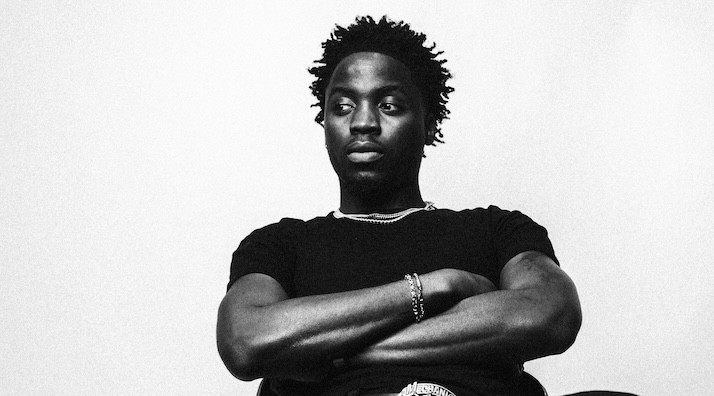
“I just wanted to use Afrobeats to touch your soul,” Kunmie shared through our Zoom conversation from his place in Nigeria. Afrobeats is a genre and culture that has been pulsating in the music industry throughout the world and continues to grow. Kunmie is part of this new wave and he’s representing his own version of Afrobeats.
Kunmie is not only a singer but a songwriter, musician and producer. He’s known for his breakout 2025 single, “Arike,” which reached number one on the Official Nigeria Top 100 Chart for five weeks and hit the Top 5 on the Official UK Afrobeats Chart. Through his motivation, passion, and love for music, he has already achieved milestones early in his career and has established himself as an artist to watch from the success of that project.
His debut album, 22, features songs about self-belief, freedom, survival, love, insecurities, and more. The album draws on Kunmie's personal experiences, from leaving home at sixteen to follow his dreams.
While working on the project, he opened up about his feelings throughout the process, how his collaborations became a part of this project with Lojay and Phyno, and what he wants audiences to take away from listening to the album. 22 was made during a time of transition, self-reflection, and discovery. From start to finish, there is a kaleidoscope of emotions and sounds that Kunmie is guiding audiences through.
Can you share your beginnings in music? How did you decide to pursue this as a career?
For me, singing per se started off randomly. It wasn't so much of a deep thought as to how I came about with music. I started to play the drums at church in the early days, when I was a kid. And one day in rehearsals, they were rehearsing vocally, and they asked somebody to do something with their voice, and I was like, ‘Oh, it's not so hard.’ I just did it randomly, and I was able to know how to sing. It became more personal for me in 2019. That's the first time I made my first song, and it was because it was a very dark time for me. It was me, my thoughts, and I. I think that's why I kind of found music there. It's just been up from there.
What's the significance of the number 22?
22 refers to 2022, and it was a special year for me. It was the year that I kind of had a clear idea of what I wanted my music to feel like, and I tapped into a vision of what I knew Afrobeats could be, and so I made an album. I just wanted to make an identity for the vision that I had in 2022. That's what that album feels like. I kind of just realized that everybody was using Afrobeats to make people dance, but I just wanted to use Afrobeats to touch your soul. It's highly emotional, and whenever I say emotional, people like to relate to sadness, but they don't know that being happy is also an emotion as well. It's a blend of all types of emotions here. It's a great body of work.
The song “Laye Mi” goes back to you leaving home at sixteen to chase your dreams. Why did you feel the album couldn't exist without that story in it?
Curating the album, I had songs that were specifically written for the album. One thing I was saying when I was making the album was that I wasn't making the album for myself. I was making the album for the vision that I got, but I could not leave myself out of the vision. I have songs there that kind of experience what it felt like to have been alone at a young age and trying to navigate Lagos, trying to navigate your career, trying to navigate family, because it was tough at the time. I have songs that represent what it felt like and I'm just happy that people get to listen to it.
You emerged as one of Nigeria's most exciting new voices with 2025's 'Arike,' which spent five weeks at number one on the Official Nigeria Top 100 Chart, charted in over 20 countries, and hit the UK Afrobeats Chart Top 5. How are you navigating that rise, and did it change how you approached making 22?
It’s part of the vision that I caught in 2022. But I think 22 as a project is just a little bit more mature than where I was because I made 'Arike’ in 2023, but a lot of the songs in 22 were recorded last year. All the songs were recorded early last year, so I think the level that I had already achieved, my voice, my writing, and the level, had already gone up with this particular album. It's a very mature project, and I'm just happy, excited, and gassed for the album. I'm happy that I’m getting to do it with people that I love, even the features. All of them are people that I really love, and it's a personal album, but I think it's also a statement album.
'5AM' has Phyno on it, 'Gorgeous' has Lojay. What was it like working with them, and how did you pick these artists for the album?
I have a great relationship with everybody on the album. I go to their houses, we chill. I even have my best friend on the project as well. Everybody that is on the album are people that I like and love, and they also love and show respect to my craft as well. The Lojay one happened because of Kizz Daniel. He just added a call with Lojay, and he's like, ‘Oh, I think you guys should make a visit together,’ and we did. Kizz gave me the Phyno feature as well. He's always adding me to calls, so he just added me to the Phyno call. On the last one, with a guy called G4ZI, he’s been my friend for a long time. When I thought about the song, I thought about what the song meant to us because we started music together. I knew that it was a no-brainer to have him do a verse on it. Every feature on this song, to me, I think is right, and it makes it more personal and enjoyable to myself.
Did you learn anything about yourself while working on this album?
That I'm a perfectionist. I always run away from the agenda. I always say the music that we make is different. I don't want to compare music. I don't think you should compare art, but I think there's a gap in how it should be cared for. When I was mixing the project, it took me a lot of time. It took me so much back and forth. I was losing my sleep and my mind. But I'm happy that we found a way to get through it.
As Afrobeats continues to gain more attention internationally, what do you think still needs to happen for the genre to reach even more listeners, particularly in the U.S.?
That's the responsibility that we Afrobeats artists have to carry. Everybody's doing their bit, from the top OGs to us who are still fresh in the game. Everybody's breaking boundaries in one way or the other, and it's helping the genre. I know that Afrobeats, for me, is probably the most special genre because it's a fusion of everything. Whatever genre you want to hear, there is somebody in Afrobeats that's fused it to African music. I think the world still has a lot of catching up to do.
There’s also been a growing wave of Latin Afrobeats, with artists blending Afrobeats with Latin sounds. Have you been listening to that movement, and what are your thoughts on the fusion?
On the album as well, I think the 10th or 11th song on the album, you can hear the Latin influence on the album. You can hear the influence that we tap into from the Caribbean and Latino space. I'm a fan of it. But my own last thought on it is that everybody that wants to make Afrobeats has to come to Lagos to really know what it's about.
Even when we go to your cities, we really tap into what we really want to give the fans. Sometimes we have to come back to Nigeria, you know. Afrobeats is like an inspiration for everyday life for a Nigerian, for a Lagosian. The fast life. Lagos is different from every place that I've been to. Trust me, everybody needs to come here to really understand.
If you could collaborate with a Latin artist who would it be?
I think J Balvin. When I hear him on Afrobeats records, like with Mr. Eazi, I think he fits perfectly. I like you guys' accent. It's so interesting, and you guys also appreciate it when we use our native languages, like Yoruba. It's the same feeling that we get when we put Spanish and Latin in Afrobeats.
Some of these songs get really vulnerable, like 'Confession' and 'Calvary.' Was there one song that was hardest for you to finish?
For me, as an artist, I don't know how to leave the studio without finishing the song. I have to finish it that day. If I don't, I move on to something else. Barely would I come back. I think ‘Tonight’ was one of the songs on the album that I had done with the demo idea, and then my producer was like, ‘Bro, this is such a good idea. Try and finish it.’ The hardest one was, I think, ‘Pressure.’ Not because it was hard to make the song, but it was because there was a lot of back and forth with the features as well. We had some people and then, based on clearance, we had to switch it to some other people, so I think that's just the one that I kind of dragged a bit. But a lot of songs on here, when it's personal to you, when it's your story you're telling, it's easy to write about. It wasn't really stressful like that. I think the first one that I made, though, was ‘Calvary.’
After everything on this album, what do you want listeners to feel once they've heard the whole thing?
Should I be honest? I just want them to feel like they've just listened to something extraordinarily special. That's really what I want, and I'm not the artist who wants to take all the glory. I'm not the artist to say, ‘Oh, I'm a genius,’ and all of that. I stayed true to the vision of the project, and I think that was enough. I just want it to be people's go-to album, you know, when you just keep listening to things and you're not feeling like it. I just want it to be this big album that you can always just go back to, and it always just makes sense to you. I'm just seriously, really gassed for the album. Putting in a lot of work, and yeah, just can't wait.
Listen to 22 below:
![Cavetown is A Fun Adult Who Does Things in New York City [Q&A]](https://s3-us-west-2.amazonaws.com/onestowatch-v2/image47-1791580275.jpeg)