
Matt Louis Is Reimagining Latin Pop on His Own Terms
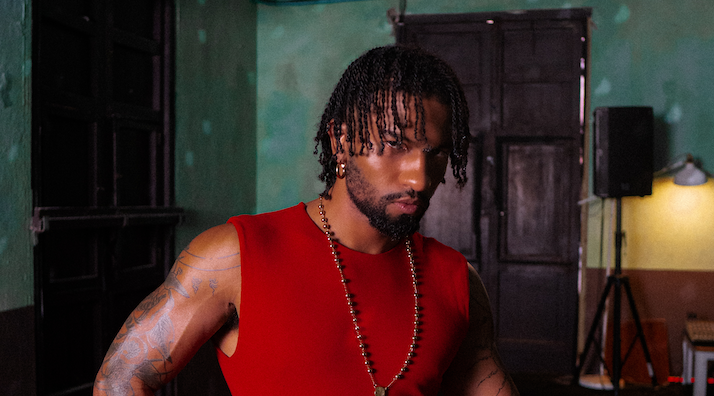
In Ponce, Puerto Rico, Matt Louis grew up being a multidisciplinary artist through music, photography, writing and more. When creating music, he is fusing pop, R&B, and Latin sounds into a sonic identity that's entirely his own. Louis is Black and queer, and he represents that proudly in his work, using his platform to push contemporary Latin pop into a new direction. His artistry is not just about the music, it's about creating space for stories that haven't always been centered in latin music, and about being unapologetically himself in the process. One of his latest singles, "Juanga," reimagines the legacy of Juan Gabriel through a queer lens and through Louis's own artistic vision.
Ones To Watch caught up with Matt Louis to talk about "Juanga," what it means to be queer and Puerto Rican today, and why he's committed to using his music and voice to speak on mental health, identity, and representation.
OnesToWatch: What is your background in music and what inspired you to become an artist?
Matt Louis: I’ve been surrounded by music since I was around 12. I was in choir, taking vocal lessons, performing, and after school I would go to this alternative music school called Instituto de Música. That space really helped shape me in a more intentional way as an artist, with classical and jazz influences. And through music, I started discovering other parts of myself creatively, like writing, photography, movement, and especially performance. Being in front of an audience is what made me realize I didn’t just want to sing. I wanted to create a whole world around my art.
Your music represents queer identity, Afro-Caribbean roots, and this futuristic energy. What is it like blending these together to create your own sound?
For me, playing around with these genres and sounds comes from curiosity. It’s a way of giving a body to my references and to the way I hear music in my inner world. When I think about the elements in my music that can feel futuristic, I’m not trying to escape where I come from. I’m interested in taking sounds from different places, placing them in another space and time, and interpreting them through my own point of view, through my queerness and the Caribbean lens .
With “Juanga” you went into the Latin House and Pop Fusion genre. What pulled you toward that sound and what was your experience creating that single?
“Juanga” was born from wanting to bring two worlds together. I was interested in bringing in dance music and house music, especially inspired by “World, Hold On” by Bob Sinclar, and mixing that with the way Juan Gabriel sang. I was really on that journey of exploring both references, and I loved entering that world. So those were the starting points for the song: the theatricality and passion of Juan Gabriel, the energy of house music, and also a soulful way of singing that I wanted to bring into it.
As a queer Puerto Rican artist in Latin music, how much do you feel the industry has grown and where do you think there’s still work to do?
I think there’s a lot of room to grow. Queerness is not always going to look like the cliché version people expect, or only exist in the ways the industry feels comfortable accepting. Sometimes queer artists get placed only in queer spaces, queer playlists, or queer celebrations, when in reality we deserve to exist everywhere. We are artists, and our work should be part of everyday culture, not only highlighted when queerness is the theme. So yes, there is more visibility, but there’s still work to do in recognizing how present and undeniable queerness has always been in music, performance, nightlife, fashion, and entertainment.
You’ve been really vocal about artists needing access to mental health support and medical plans. What made you want to speak up on that publicly?
I spoke about it because sometimes you’re expected to give so much of yourself, but you don’t always have the resources to take care of yourself. Sometimes we romanticize the process of being an artist. I think it would be powerful to imagine future contracts or systems that support both the business and the artist, including things like mental health resources or medical support during certain stages of the process.
You’ve shared stages with Jhayco and Buscabulla. What did those touring experiences teach you about yourself as a performer?
When I was working with Jhayco, I was there as a photographer, so it was a completely different experience. Being on stage with an artist like him and seeing his process through the lens gave me another perspective. It opened my mind to what it means to be in a big moment of your career, the sacrifices, the energy, and everything that happens around that level of work.
With Buscabulla, it was different because I was there as a singer with my own project. Being part of that tour opened me up a lot as a performer. It took away a lot of fears, gave me more confidence, and helped me understand how to work with myself on stage and connect with new audiences. It also confirmed again that performing is one of the things I love doing the most.
Working with RaiNao on “ABA” is one of my favorite collabs of yours. How do you know when someone is the right creative collaborator for your vision?
Working with RaiNao was really beautiful. She’s a good friend and I love her a lot, so the connection was already there, and that made everything feel easier and more natural. I think when someone is the right person to collaborate with, you feel it. As an artist, you can sense the frequency someone else is in and see if there’s a real meeting point. For me, the most beautiful thing is finding artists who are open to connecting with other perspectives and building something together from that place.
Puerto Rico has so many exciting artists right now. How does being rooted on the island influence the way you create?
Puerto Rico is part of who I am. It shows up in the way I understand sound, movement, language, and emotion. At the end of the day, I’m an island boy forever.
For someone discovering Matt Louis for the first time, what do you want them to feel after experiencing your music and visuals?
I want them to feel a sense of excitement, like they’re entering a new world, but also connecting with something real inside themselves.