Maya Hawke's “Thérèse” Is a Tranquil Portrait of Fleeting Magic

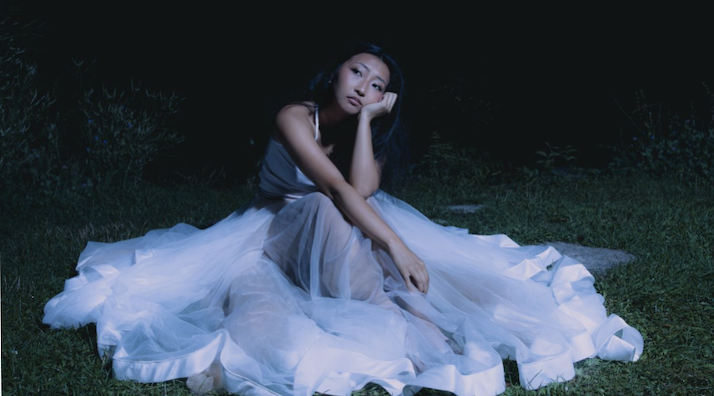
Photo: Celine Sutter
Positioning artwork of the past in a modern context can be a challenging exercise to pull off, but in her newest single “Thérèse,” Maya Hawke offers an earnest perspective. The track swaps the chaos of Hawke's role in Stranger Things (with which it shared a release date) for a more serene choice of expression. “Thérèse” is the first look at the artist's upcoming sophomore record, Moss, due on September 23. The track sprouts from a disputed painting displayed at the Metropolitan Museum of Art in New York City. Thérèse dreaming, painted in 1938 by Balthus draws its controversy from its subject: a young girl who poses suggestively with her underwear visible. The song takes a big-picture approach, letting Maya dream about who this girl was and what she desired in life instead of debating whether or not she should be on display.
Maya writes about Thérèse’s dreams of riding horses and having innocent crushes, while also acknowledging the cultural context she’s unwillingly been tangled up in. She sings, “Milk matches her undеrwear / And get her down, takе her off the wall” while in a later lyric, she states “Thérèse does not belong to you,” driving home the overarching “point”—that there doesn’t have to be one. The chorus is simple, with soft vocals that declare “It's tactless, it's a test / It's just Thérèse, it's just Thérèse.” Within the uncomplicated delivery of these lyrics lies its greatness, rejecting the think pieces and advocating for the human subject.
In an Instagram post speaking on “Thérèse,” Maya writes “I like the idea that a song is like a wild little animal that you can briefly catch in your hand and then let it go back into the stream.” This notion is almost always overlooked with debated topics like the consent and respect of a subject. While some see the painting and immediately jump to a particular defense, Maya finds solace in experiencing the art. The track also embodies this sense of appreciation and in-the-moment observation sonically. It evokes a calm composure until a busy static production element takes over before the last verse. To close out the track, listeners return back to that serene start with a gorgeous plucking guitar paired with Maya’s mellow but purposeful vocals.
At the end of the day, “Thérèse” is a beautifully written and performed track that transmits a strong message without saying too much. The structure tells a story: calm observation before a phase of overthinking. With this track, Maya wants us to leave with simplicity and consider Thérèse for who she was instead of what she might stand for once she’s gone. It’s clear that Maya relates to the subject in some capacity, which makes “Thérèse” a perfect introduction to her new upcoming album and distinct voice.
Listen to the track “Thérèse” below:
[emb]
[emb]