
Friends Helped Guide Beauty School Dropout’s WHERE DID ALL THE BUTTERFLIES GO?
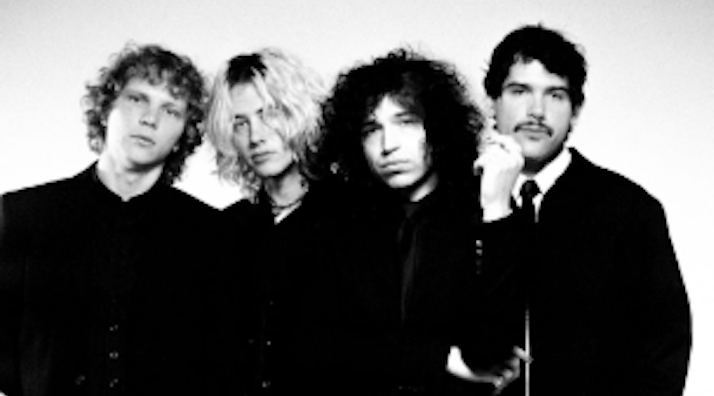
Photo by Natasha Austrich
Made up of Cole “Colie” Hutzler, bassist Brent “Beepus” Burdett and producer/guitarist Bardo Novotny (no nickname applicable), LA-based trio Beauty School Dropout are one of the most formidable rising acts in the contemporary punk genre. Their latest album, WHERE DID ALL THE BUTTERFLIES GO?, out now, allows elements of pop and alternative music to permeate their lyricism, sound, and overall direction, though the project is inherently rock focused with renown rock producer Neal Peart (Everclear, The Used, Disturbed) at the helm.
While Peart kept the trio focused, even tipping the scales of the bands hesitancy to include the emotional dissonance of the title track now serving as the album closer, BSD has accrued an abundance of heavyweights in their corner. They caught the eye of blink 182’s Mark Hoppus, eventually heading out on the road as opening act with the beloved 00’s outlet, and of Fall Out Boys Pete Wentz, among others. In an interview with the Spout Podcast, Colie stated that establishing relationships with artists of this caliber is equitable to all his childhood dreams coming true. The trio expanded on the long-term ramifications of those partnerships throughout this interview.
Perhaps as a result of those partnerships, BSD declares they are not operating as a group of hired guns accompanying a singular front man. They are, in fact, a “real band.” “There’s no precociousness about it,” says Beepus, following his explanation of the creative dynamics of the trio. Their confidence is warranted, as all-around performances from this record, particularly on tracks such as “HEART AWAY,” “DADDY DON’T CRY,” and “FEVER,” one-up early fan favorites “WE MADE PLANS & GOD LAUGHED” and “A$$A$SSINS.” The tunes reflect a learned restraint leading to intentional musical and vocal expansion over the course of their runtime, with “FEVER,” arguably the most intelligently crafted song of their catalog thus far, crashing in like a freight train.
As they attempt to ascend the ladder, and gain the trust of the mainstream punk audience, BSD is sure to deliver the kind of “pee-pee poo-poo” humor their loyal fans are accustomed to. The kind of humor that comes naturally to them as they translate their own human experiences through song, while simultaneously bringing the heat musically. Songs like “ON YOUR LIPS” and “SEX APPEAL” off the new record aim to achieve the former, consolidating doses of contemporary electronica with erratic bursts of murky guitar hooks and frequent flurries of hammering drums, as Colie unflinchingly sings passages such as, “You know I love that shit/ The way your clothes don’t fit/ The way you go to sleep with your retainer in.”
OnesToWatch: What’s it like to go from being a fan of this kind of music and your influences, teaching yourself to play, sing, and produce in ways that are relative to the punk genre, and ultimately becoming a band doing this professionally?
Colie: It feels… very reaffirming. I can’t speak for everyone, but, growing up, this was always, in some fashion, MY intention. Now, to see it come to fruition is a special feeling. It has taken a lot of work and being present among the culture. These are the tastemakers and the heavy hitters when we were growing up, so to be able to work in their spaces on any level is proof that we’re hopefully doing something right. We’ve built such great connections and relationships with all of these people, and we just feel like this is the start for us. We’re 5-6 years in, but we want to be the reference in 20-25 years when OnesToWatch is asking some new band, ‘What’s it like to be in the corner of the heavy hitters?’”
What has the association done for you in terms of industry favor and in the eyes of the fans?
Colie: It has earned us a lot of credibility. letlive., Blink, Neal… they’re at a point in their careers where they don’t pick people lightheartedly or lend themselves to people they don’t really fuck with. That being known, it has created a standard where the people around see it and respect it, like, ‘Oh damn, these boys are really working for it.’”
What are the key factors for winning the contemporary punk audience over right now, and who do you think the contemporary punk audience is?
Colie: It’s so hard to say. The landscape is changing every day. The perfect example is Deftones, right? I grew up on Deftones, and I was so familiar with what their fanbase is, or was. To see it expand from these 35–45-year-old dudes to 15-year-olds who discovered them on TikTok. The contemporary punk audience is shifting in a way that rock n’ roll, and rock derivative, music is back in the mainstream of pop culture. Which, weirdly enough, is antithetical to the punk agenda, but it allows that space to thrive, and allows new artists to come in and dominate and be the new headliners. The people who are going to win are the ones who will stay the most authentic to it.
So then what do you think the general public needs to latch onto BSD in the way they did for [mainstream] bands like Panic or My Chem?
Bardo: It’s harder to connect now, because it’s an all-you-can-listen buffet of music. What’s going to set people apart from passive listening is connecting to what the band stands for, how they put on a show, the lore. Some bands crush it and make a ton of money, but there’s no personality. Just pure songs. Our audience connects with our weird, dumb humor… it’s built into our thesis.
Beepus: Standing out live is so crucial now. So many people can make bedroom music, but standing out live is so crucial now. That’s how you can really win people over.
Bardo: It’s also HOW you play together live. It’s now become a bit more fashion-forward to be a band, but back when we started, we were one of the only bands in LA. There’s power in having chemistry onstage, playing with your boys, vs ‘I’m a singer and I have a band around me and I’m contractually obligated to stand in the back and shut the fuck up.’ There’s swag to having a crew that mobs together.
Beepus: The New York scene is a huge influence for us, especially on this current project. The energy of that late 90’s, early 00’s era was so tangible… so sleazy. We try to channel that. We want our shows to feel like a party, and that’s what they accomplished during that era. Everyone came to look cool and meet cool people.
Colie: Our first instinct in every city we’re in is to try and find the most underground culture we possibly can, even if that’s outside of music.
Was the idea of a melting pot of sounds for this album on the drawing board, or did you fall into a whole batch of contrasting sounds?
Colie: That’s kind of just how we roll. We all have different tastes, and we’ve always had our peaks and valleys of opinions. Everything you get is going to be the culmination of what we, as individuals, like to listen to and consume. Bardo might be listening to some EDM sonics, Beepus is listening to pop punk, and I’m listening to old 90’s grunge, and metal. It’s going to be a cocktail of all our favorite things melted down.
Beepus: We all write in every session together. It’s not one of us writing all the music with a band playing it. Everyone is playing each other’s instruments. There’s no preciousness about it.
Colie: That’s what gives us our edge as a band. There’s so many “bands,” like we mentioned, that are one person doing everything and hiring everyone else. Which is fine. That’s cool if you can pull it off. But there’s still this rare art form to have a group of people that are so mutually die hard willing to achieve the same goal, and are willing to compromise on their own willpowers and decisions to say, ‘We’re all going to show up, respect each other’s time, and give it our fucking all.’ I’m really proud that we’re able to represent that.
For songs like “ON YOUR LIPS,” “XXX,” and “SICK PUPPY,” the lyrics are, in a way, humorously crude. How do you go about writing in that way?
Colie: We say a lot of dumb shit. A lot of lame ass pee-pee poo-poo jokes. The best way to be able to present yourself is to be able to laugh at yourself. To be able to look at the tragedies, shortcomings, and worst-case scenarios, and crack a joke about it.
Colie, when it comes to singing, what are the most evident technical differences of screltier songs vs songs that are more melodic?
Colie: The most technical difference would be, literally, the technicalities of how I’m singing. I don’t even know how to describe it. Even live, when I’m screaming, it’s so different from how I used to. I used to scream with emotion over technicality, therefore ruining my voice. It’s been a lot of trial and error. I think this album allowed me the space to go explore, and the boys pushed me really hard, to go channel as many new energies and personas with my voice as possible.
How do you think that maintaining a more even keel melodic line on the songs that aren’t as scream focused does for the overall aesthetic of a song?
Colie: it’s a different personality. We have a lot of fans that lean towards the heavier stuff, but sensibility wise, it’s nice to be able to showcase that I can, and do, sing now more than ever.
Bardo and Beepus, how does that change what you’re doing musically? When he’s screaming versus when he’s crooning?
Bardo: When we were doing the loud, crazy, fast shit, it was easier. We were like “it’s loud, crazy, and fast. We don’t have to nail it.” When we’re playing a slower song, we have to keep it clean. Everyone can hear the fuck ups. We’ve become better musicians because we’re forcing ourselves to put the mirror up.
Beepus: Shoutout to Neal, too. He really pushed us to push our musicality on this project… to make sure that every note was intentional. We used to be really focused on writing a ‘good enough’ song, and the good enough take was good enough.
There is an exciting guitar solo in “XXX” that I wish happened more throughout the record. What’s the reasoning for keeping those moments few and far between?
Colie: [Smiles] They don’t like to let me doodle too much
[Silence]
Why not?
Beepus: I think… [Pauses to smile]
Colie: [Teasing] Great question. Why not boys??
Beepus: Colie is a great guitar player, and he doesn’t play guitar live a lot, yet. I would love for that to happen. Bardo and Cole just have different styles of guitar playing. The “XXX” solo is a very ‘Colie’ solo. Bardo is a melody man. He writes catchy melody solos, and Cole is a master shredder. The duality of them will be seen more as this band blossoms.
Colie: It’s a cool way to display our personalities throughout the record, too. To his point, Bardo has the craziest ways of making the simplest things so catchy. I grew up loving Van Halen, Steve Vai… all these people who shred.
Bardo: That’s the reason BSD sounds the way it does. I never grew up learning that. I never put my 10,000 hours into learning ‘the solo.’ I’d pull up the guitar lessons and be like, “Dude, we’re not practicing. We’re writing songs, so open up Garage Band.” That was what I brought to the table. Now, there’s this melting pot of all the styles and swag. You can tell when Colie writes a solo, I just have to be the one to play it live. I’ve gotten better at guitar because of that.
Is there something to having both the title of the project and its final track… the conclusion of a loud, rambunctious album, being the one that is most inward and emotional?
Bardo: We’ve never done a song like that before. That was the hardest song to do on the record, because it WAS so inward. We couldn’t decide what direction to go in, how we wanted to present it, how it made sense for the project. But, we all love concept albums, and maybe that song isn’t a quintessential BSD song, but I do think it tells a part of the story and serves a purpose. And if nothing else, it’s a really cool piece of sonic aesthetic that can bookend a project.
Beepus: It feels like closure to me, personally.
Colie: Ironically, I was the one pushing to not put that song on the album, mostly because there were some sonic things I didn’t love about it at first. Also, we have been trying to dive into having a distinguished sound and brand, and that song stands out from the rest of the album. There was part of me that thought it was hurting the overall sonic vision, since it takes you in the opposite direction, but then Neal was like, “No, that’s what makes it so special within the body of work.” Having someone that we trust for their sensibilities and ear for arrangement really calmed the nerve for me.
Listen to WHERE DID ALL THE BUTTERFLIES GO? out now:
![Moody Joody Draw Us Closer to their Debut EP, Plain Jane [Q&A]](https://s3-us-west-2.amazonaws.com/onestowatch-v2/unnamed-1791228468.jpg)
![Weston Estate Grows Up and Into Debut Album, 'Open Season' [Q&A]](https://s3-us-west-2.amazonaws.com/onestowatch-v2/i_m_g_8944_copy-1791395273.jpg)
![LIA LIA Infuses Nostalgia for an Unknown Memory into Album, Armor [Q&A]](https://s3-us-west-2.amazonaws.com/onestowatch-v2/l_i_a_l_i_a1-1791234524.jpg)