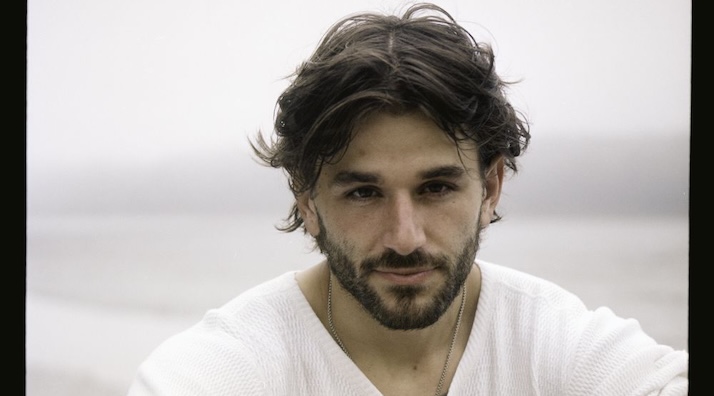
Haiden Henderson Finds Beauty In Reinvention on Debut Album ‘bleach’
 Haiden Henderson has never been particularly interested in staying in one lane. Across “freak for you” and “NSFW,” he has made a habit of pushing pop into more unpredictable territory, moving between distorted guitars, punchy percussion, provocative lyricism, and a vocal range that shifts from gravelly restraint to soaring falsetto. On his debut album, bleach, those instincts come together in a project that feels dark, alluring, and undeniably pop, even when it threatens to spill into something heavier.
Produced by Benny Cassette and co-produced by Henderson, the 13-track album explores the complicated relationship between identity, attention, and the person we become when we’re constantly trying to be wanted. Henderson describes it as “the rise and fall of a performer. It’s the story of someone who never learned how to turn it off.” It’s an idea that runs through the record, where confidence and insecurity often feel like two sides of the same performance.
“When I started writing this, I was sick of what I had been doing," shared Henderson. "I was bored with how safe I felt and wanted to feel on edge again. I immediately started being more hands on with production which made the songs sound raw and unpolished. Even when you mute the vocals, these tracks have so much personality that elevate the songwriting.”
“dumblond” makes for a larger-than-life introduction. Opening in the middle of what feels like an elaborate stage production, the track pairs explosive instrumentation with a vocal delivery that moves between playful declarations and delicate falsetto. The repeated desire to be a “dumb blond” initially comes across as an exaggerated pop fantasy, but the song carries more weight when viewed through the album’s central metaphor. Henderson’s bleached hair has become part of his signature image, a physical expression of the ways he has reshaped himself in pursuit of approval. What sounds like a cheeky character introduction is also the beginning of a more personal unraveling.
That push and pull between identity and performance continues on “i wanna be your girl” and “NSFW.” Both tracks play with traditional expectations of masculinity, with Henderson leaning into femininity, intimacy, and the idea of being taken care of. On the former, he imagines closeness through small gestures, from painting nails to braiding hair. “NSFW,” meanwhile, turns the idea of a trophy wife into a knowingly exaggerated role reversal. Henderson is clearly having fun challenging expectations, and that sense of freedom makes the experimentation all the more enjoyable.
Elsewhere, bleach starts to reveal what sits beneath all that bravado. “where are we running from?” captures the uncertainty of trying to build something with someone who is still carrying their own baggage, while “the show” considers how easily intimacy can become another performance. Henderson repeatedly returns to the desire to be seen, but there is a growing sense that being watched and being understood are two very different things.
“how you like it” brings a tongue-in-cheek dose of pop indulgence, even poking fun at the familiar formula of writing songs for “drunk white girls.” It’s a knowing wink at the audience he’s simultaneously trying to win over. That self-awareness gives way to something more tender on “I HATE THIS SONG,” which captures the strange instinct to revisit a song that hurts because it reminds you of someone. Its central contradiction is painfully familiar: knowing something is better left in the past and pressing play anyway.
The stripped-back “kick my ass” offers a welcome change of pace. Built around Henderson and an acoustic guitar, it trades the album’s elaborate production for a moment of self-deprecation, with the singer acknowledging his own shortcomings. Then comes “domino,” one of the record’s most affecting turns. Written about his younger brother, the song explores the loneliness of feeling emotionally distant from someone who is physically close. Its brighter musical backdrop makes the vulnerability hit even harder.
“freak for you” is an immediate standout, bringing back the tension and infectious energy that made the single such a compelling introduction to this era. Built around a playful surrender of control, it finds Henderson embracing desire with confidence. The production is tight without losing its edge, and his vocal shifts give the track plenty of personality. It’s seductive, catchy, and a reminder that Henderson’s willingness to experiment never comes at the expense of a great pop hook.
As the album moves into “WHAT A TIME TO BE YOUNG” and “landmine,” that balance between spectacle and sincerity becomes even more apparent. The former leans into youthful excess and restless energy, while the latter finds Henderson approaching love with caution, aware of the possibility of getting hurt but willing to take the risk anyway. By the time the title track arrives, the record’s central question is impossible to avoid. “bleach” turns the album’s defining image inward, wondering whether changing yourself for other people has left anything of the original person behind.
It’s a fitting conclusion to a debut that is as interested in the performance as it is in the person underneath it. Henderson has a knack for making the unpredictable feel inviting, pairing darker sonic textures with pop instincts that keep even the album’s most left-field moments within reach. bleach is provocative without being one-dimensional, playful without losing its emotional footing, and at its best when those contrasting sides collide. Henderson may still be figuring out who he is when the spotlight fades, but here, he’s making every second of the performance count.
Listen to 'bleach' below: