Jonah Kagen Had a Barbeque, Took a Breath, and Pivoted [Q&A]
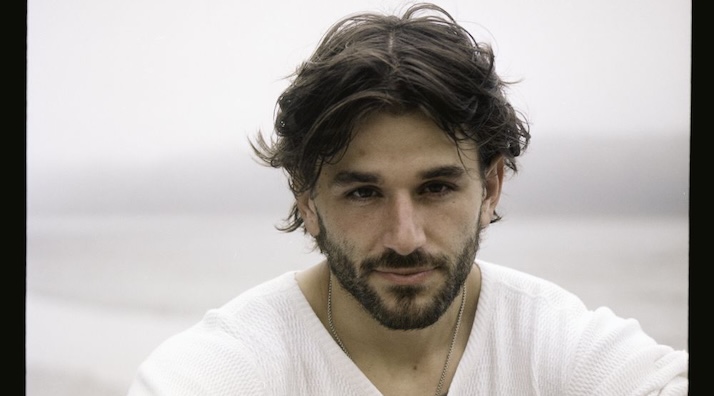
Photo by Olivia Bee
Just under a month and a half ago, Jonah Kagen was out on the road opening for Dermot Kennedy in amphitheaters across the US. His seven-song set at Forest Hills Stadium in late September spurred this writer to request a setlist.fm Q&A, which was granted.
Two weeks later, the tour was indefinitely postponed due to an unfortunate and unsustainable vocal injury on Kennedy’s part, and what was seen as a critical portion of Kagen’s album campaign was halted.
For what was our second chat is less than a two-month span, and third overall, we sat down in a bustling midtown Manhattan coffee shop to discuss the extenuating circumstances that led to his hasty yet well-executed pivot. Said pivot quickly led to the announcement of a headline run of tour this coming winter, as well as yet another short stint with friend and “Burn Me” collaborator Sam Barber in Australia. Following this interview, Kagen headed off to a business meeting at Peloton. Just… cool guy things.
Key points of his new album, the self-written, performed, produced, and mixed Eternity of Everything, out now, made up the majority of our conversation. The record, Kagen’s swift follow up to 2025’s Sunflowers and Leather, was developed and created with the resources befitting a consistently impressive rising star in his field of Americana and folk. This is in stark contrast to that of S&L, a project Kagen admits was a bit of a “cop out” due to the physical limitations he furrowed upon himself. His detailed reasonings and caveats for both projects can be found below.
Despite this, Eternity of Everything contains a plethora of decisive cornerstones within Kagen’s catalog, such as the chaotic canvas of the title track, refined huskiness on “4 AM,” multi-act layering on “Silhouette,” extreme confessional storytelling on “Drink By Fires,” and what Kagen describes as his favorite song he has ever written with closing number “Words From A Wandering Man,” among others.
Also on this record, he explores fresh and uncharted territory with the addition of a new instrument in the mix, and complicated lyrical and melodic cadences he found himself audacious enough to shoot for. These rather innocuous latter bits do not necessarily enhance the tricks and tools Kagen is primarily specialized in, instead pinpointing Kagen’s steadily growing list of strengths. This is particularly true for “Drink By Fires,” a tune that sees a number of Kagen’s intentional choices of verbiage reflect both a son and a brother unsure of how to communicate feelings of fear as it pertains to those closest to him fighting a losing battle with the passage of time:
“I’ve been talking to my daddy, he’s been tryin’ to retire/ Just so he can come and see me play some shows and drink my fires/ We’ve been playin’ games he made up for as long as I have known him, and I promise we’ll keep playin’ til’ this bar says they are closing.”
OnesToWatch: Before we get going, who are your Ones To Watch?
Jonah Kagen: First of all, the last time I did a OnesToWatch thing, I said, Emma Ogier. And sure enough, she blew up. She’s out with Dominic Fike right now.
But hold on, let me see if I can find a proper one. I wanna find one that's niche enough [Flips through his Spotify]. Okay. I'm gonna go with Aaron Rowe. He has an absolute canon of a voice, and it's very possible that it might cross over into Irish groups like Amble and Kingfishr. They've started to have their thing over here. I would put money on Aaron to keep that alive.
Okay, so. How did you pivot once things went down with the Dermot tour? What was the first call you made?
Oh man, well, my first call is always my sister, who you obviously know. Kylie and I have just done this whole thing together. We just kick into a similar mode of “Alright, lets go” mode when it's time to fix or do something.
The Raleigh show was canceled in the middle, then the show after that got canceled and we were like, “Okay, well, Nashville will still be on, so let's all go home.” Pretty much all my band lives in Nashville. and it was really sweet, because everybody came to my house, and also, at that point, I had just gotten the master’s back for my album. I was making mix edits while I was on the road, and I was in my head about everything. But, the band hadn't heard the album yet.
And so, everybody's in their head a little bit, so I was like “Why don't we have a barbecue, and we'll listen to the album?” It ended up being the sweetest night ever. We made a bunch of food, and my guitarist made a big brisket. It was the whole band and crew, some of Dermot's crew, our bus driver, my neighbors, my parents drove in for it. We were supposed to leave that night to go to Atlanta, and I got the call that the rest of tour would be canceled while we were in the middle of the barbecue. I thought, “Okay, let's listen to the album and have a moment for everyone to enjoy the food, and then we can break the news.”
So, we listened to the album, and everybody was like, “Ahhhhh, it's great!,” and we had to be like, “Alright, the tour is canceled, so this is an end of tour celebration.” My agent showed up with a cake that said, “The tour is canceled,” and a bottle of champagne. So, we all just mourned it together. It was emotional, but it was very wholesome. Those shows were SO so cool and so special, and it's just a cool world to be around and was so validating. I knew it would be a financial and emotional hit, but I made sure everybody was taken care of. It was, honestly, an oddly bonding experience for everybody. and we're ready to go again, for sure.
Does the concept of making a record while stationary versus making a record while traveling affect the way you make songs?
Absolutely. I've said this before, but for the first album, I felt like some parts of it were a bit of a cop out emotionally. There were physical limitations when it came to recording, because, if I'm on the move and I have a shit recording, I could be like, “Well, that's because I was in a shit place!” I wrote about this because this happened to me. So, the difference was that physical limitations didn't really exist anymore, and I didn't have the excuse, which meant I had unlimited options for what to try, especially in a professional studio with every piece of gear you could ever imagine at your disposal. That's not true when you're moving and when you're on the road. Same thing emotionally. It was just me and my thoughts.
I think they both have deep value, particularly because you don't allow yourself the emotional cop out. So, I think that's why I feel really proud emotionally of this album… because I allowed myself to go there. However, when it comes to actual recording, I kind of prefer the limitation, because it forces your brain to do something different. And so much of the music that I've been so inspired by was on four track, eight track, recorded in tape, and you can hear the imperfections. The next record will likely be some hybrid of the two. I don't wanna give myself the emotional cop out again, but I also DO want to record with some limitation. That just brought out so much creativity. Same with this one too. I'm not dissing the way that I did this one by any means. I've learned a lot about how I like to record by doing both.
At what stage did you decide “I'm gonna pass this along to a second ear”?
At the very end. Everyone was asking for demos. We were coming up on a deadline and I was like “Trust me that they're getting done.” My sister did, but nobody else really knew anything. Then I just was kinda like, “Here's the album.” That was really nerve wracking. I would also do that differently now, I think. But, for whatever reason, the isolation lent itself to, “I don't wanna bring anybody in, even opinions wise.” So, I would say first mix pass on the album was the first time that I really shared anything with anybody.
You weren’t there, but I heard some of these songs in the office back in March.
That's right, I forgot about that! Yeah, you were part of the original second ear. When you heard it was when I was showing people for the first time. The label had just gotten that from me, and I still made tweaks up through maybe a month or two after that. Which, again, I would do that differently too. I don't know, man. There's a lot about this album, like the recording process, that was a bit of an emotional clusterfuck for me. But, I learned a lot and I'm happy that, at the very least, it was in welcoming hands and not out into…
… The void
Yeah, exactly.
“4 AM” is sung, and played, with the kind of grit that you are very capable of doing but it's still shocking when you do. What does that kind of surrender feel like?
It’s very emotional, man. I think it's necessary for this type of album. It's uncomfortable until it's not. I found with recording a lot of these things, those moments require that it's necessary to have that surrender. And it's almost a relief. It IS a relief once it's recorded. Usually when I'm recording vocals, I'm not doing more than three takes because I think once you hit the emotion, even if you miss notes, it’s captured. Feeling like the emotion is there, and I don't have to sit in it anymore, is very relieving. What I wanna get on the recording is whatever this song is about. I want you to HEAR it. And so, it might take a second to loosen up, but most of that recording starts with sitting in it before I even record. And just being like, “I have to go here first,” and then DOING it. Once it's done, I'm like, “Alright, God, I can stop feeling that for a second.”
What does that “sitting in it” feeling feel like?
Oh, it SUCKS, man. I think I have a slightly different take than a lot of writers, but I don't enjoy that feeling at all. I can't listen to sad music when I'm sad. I don't prefer to FEEL that way. But the thing that I feel is service. I really feel like I'm doing work in a service position, and the reason why I go back to those emotions, and why I go sit in it, is so that I can make something that I can give away that will help other people. That way, my pain feels like it's somewhat justified or that it's at least at the very least useful. That's kind of what fills my cup. The sitting in it does NOT feel good, but I feel that it has a purpose, so it feels important. I feel the same way performing. My favorite types of shows are when you know the show is so well rehearsed, and it's comfortable, and I'm not even thinking about the music, I'm just in the emotion. That emotion still SUCKS, but the music part is FUN, and I can see it landing with people and I'm like, “I'm doing my job.”
Since you are so guitar based, does a piano ballad like “Settle Down” come from a different place musically?
Yeah, it does! It's a really good question. These ARE great questions, by the way. Every time I play the piano I feel like a bit of a fraud, but I've gotten to the point now where I'm good enough that I'd like to incorporate it into my shows. So, it's a different texture. As far as actual writing goes, I still wrote “Settle Down” on the guitar. I write on the guitar always. Maybe that'll change one day, I don't know. But it was more so just a production choice of what I felt like was going to support the lyrics. So, different musically, definitely, but writing wise, no. And I think that piano will definitely be a part of my show soon. I just gotta label the keys for a little bit. I gotta put stickers on there.
The title track… when it gets to that breakdown, I can't find a count for a little bit…
[Jonah laughs]
… was that intentional?
Yeah, I wanted that song to feel like a mess. I think there are a few different songs on the record where that happens… where you at least you get a tempo change or a signature change. I love stuff like that, so I wanted to have it be like a, “WAHHHHHH,” and then suck it back. There IS a tempo and there IS a count, it's just the musical whiplash of going from, “WAHHHHH” to completely out. I really like songs that make you just kinda shrivel up.
That song has everything from the breakdown, the big note, the falsetto ad libs, the little jammy fake out in the third section. When you started writing that, was the canvas always supposed to be THAT at the end?
Yeah! My drummer really brought it out though. I told him to just go basically berserk, which was cool. But, when I wrote that, I knew that it was going to be probably my biggest production challenge of the record, because I had an idea of what I wanted it to sound like. I had horns in my head, I had big drums, all these things. I was like, “This is either gonna sound like shit, or it's gonna sound awesome.” My favorite songs are ones that kinda toe that line. So, I knew from the beginning, as soon as I wrote the [Jonah starts singing], “Bet you'll come on like lightning and strike me,” I was like, “This is gonna be a weird one, and really big, and I'm gonna have to MAKE it big.” It still started on the guitar, but I was like, “Yeah, this is gonna be an endeavor.”
Did that take the longest?
That one took a really long time. Production wise, I knew what I wanted it to sound like, but it took the longest just technically to get everything in there. As far as figuring songs out goes, “Don't Feel Right” took longer. Mostly because I had the melody, and I knew the melody was sick, I just couldn't find what I wanted it to do, and it took me a really long time to find it. Ironically, it ended up being called “Don't Feel Right” 'cause nothing felt right…
… It's also a song about feeling uneasy.
Hundred percent. I think that helped me find it, to be honest. I was like “nothing feels right,” and I was like, “OOOOOOP, okay, let's talk about that.”
How are you with being able to act on those instincts when you're in that situation and you feel like it's going south, but you don't know what to do with it?
I have systems in place, definitely. I think it's just being honest with yourself about how something is going. “Don't Feel Right” is one where I knew it was there, I just needed to stay in it for a certain amount of time. Some of them, you need to just drink an entire bottle of wine. Some of them you need to just go for a walk. Some of them are like, “This isn't gonna work,” and you have to scrap the entire thing. Trying to force the thing that you want never works. The answer is listening to your intuition, and then acting on it.
Do you feel like you've experienced anything that you hadn’t experienced yet while making this?
Definitely. A lot of doubt. There was a lot of fear. With the first album, it's like you're an underdog still. And I still feel that way in a lot of ways, but now I've had something that's worked on a relative scale for me, and I've had something that people like. To take a risk now felt like it carried a lot more weight than it did before, because I had to force myself to take the risk rather than just be like, “Yeah, of course I would do it. This is what I like.” This time, it came with a doubt that I was not used to. But I'm glad I plowed through it. It didn't affect anything, it just made it emotional.
Was it liberating or daunting to then have to say, “I have to go write about this now”?
It was both. I think more daunting than anything. The liberating thing now is that it exists, and that I get to give it away. I am very excited for that. I'm excited for the songs to stop being mine, and to become someone else's now.
What song are you most looking forward to giving away?
My favorite song I think that I've written is “Words From A Wandering Man.” I think it just says exactly what I want it to say. I'm really, really excited for people to have “Ain't Convinced.” I'm really excited for people to have “Silhouette.” I think “Drink By Fires” I'm really excited for people to have. I also am just excited for people to hear something different. I'm excited for “Better Than You.” I just think this part, when they when they become someone else's, that's the reason why I do this. I get a hit. I get to just sit in that emotion, and I'm very much looking forward to that.
Listen to 'Eternity of Anything' below: