Zacchae’us Paul ‘JAZZ MONEY VOL.2: SWINGIN' R&B' Track By Track [Q&A]
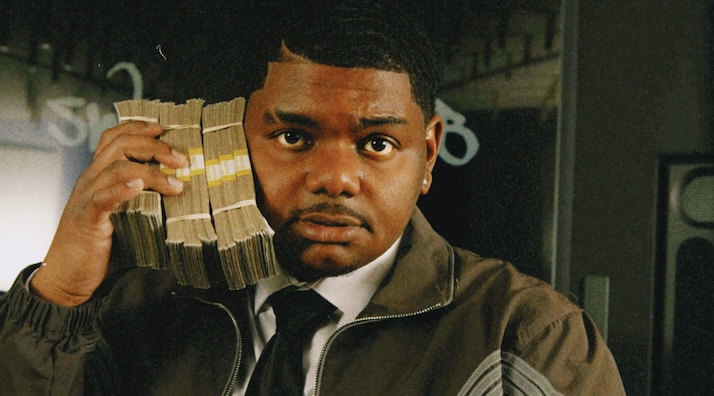 Photo by Royce Isaac
Singing, swing and bring Jazz a fresh new life and a fresh face; the multi-talented instrumentalist and creative Zacchae’us Paul is a man that is hard to put into a few words. We skipped the burden of trying to surmise this mans talents and let both he music, and the musician speak for himself here:
1. "THE INTRODUCTION"
Zacchae’us Paul: Having Marshall Allen on this album is one of the greatest honors of my career. His contribution is more than a feature, it's a message to the youth from one of our greatest living elders. I wanted him to introduce the concept because he represents so much more than music… having his voice open this project gives the album a deeper purpose and a foundation that perfectly reflects what this music is meant to stand for. The message of this album is simple: playing for money and sex will lead you down a dark path. It's about enlightenment. That's my motto.
2. "SWINGIN’ R&B"
The title track of the album represents meeting my wife, Destiny Paul, and everything God taught me through the relationships that came before her. I moved in with girlfriends too early. I took on financial responsibility far too soon. I gave husband qualities without receiving wife qualities in return. I kept pouring into relationships that weren't built on the foundation God intended, and eventually I realized that many people will take as much as you are willing to give if there are no healthy boundaries.
Through all of that, I came to understand that marriage is meant to be a place of safety—financially, sexually, emotionally, and spiritually. More importantly, I had to learn my own worth, build my self-esteem, and stop giving away parts of myself that were meant for the covenant of marriage. This song captures that realization.
3. "SHE F*CK WITH THE RACKS"
This song tells the story of two homegirls who are down for each other through thick and thin. On the other side of the coin, it's also about the women who are only around because of money—those whose loyalty is tied to a dollar instead of genuine love. Rhythmically, this record is one of my favorite experiments on the album. I created an electronic swing groove that I call the West End Bounce, or Atlanta Swing, built around a chop from Terri Lyne Carrington's ‘TLC and Friends.’ My goal was to make something that could live in the clubs while still carrying a deeper purpose. The music is meant to move your body first, but your soul soon follows.
To me, that's Hood Jazz—music rooted in the neighborhood, informed by tradition, and designed to make people dance while reconnecting them to something greater than themselves.
4. "SISTA SISTA"
Sister Rosetta Tharpe is the inspiration behind this song. She was playing what we now recognize as rock & roll at a time when Black artists were constantly being exploited—our music was borrowed, repackaged, and often outright stolen without proper credit, royalties, or ownership. Because of that history, generations of Black people grew up associating many of the genres we created—rock, country, and even jazz—with white artists. When you really study this history, you realize this isn't just a story about music—it's a story about ownership, identity, and who gets remembered. Sister Rosetta Tharpe stood in the middle of all of that with grace, faith, and an electric guitar that changed the course of popular music forever.
I also wanted to honor her in my own way by presenting it as an a cappella arrangement—something you rarely hear today. For me, this is where Rhythm and Blues comes back home to jazz. It's a reminder that before the labels, before the categories, before the industry divided our music into genres, it all came from the same well of Black musical expression. This one's for you, Sister Rosetta.
5. "STAY"
This right here is a classic R&B record featuring one of my closest friends and one of my groomsmen, donSMITH, produced by Malachi Mabson of Down To Mars. I wanted a record that reminded people I have range—that I can step into this lane just as naturally as any other. Growing up in the church gave me a foundation that allowed me to understand all of these genres because they're all connected. I couldn't make authentic jazz without understanding gospel. I couldn't make authentic R&B without understanding jazz, blues, and the church. I'm an R&B artist, and I'm a jazz artist.
The only difference is that I'm presenting this work under the umbrella of jazz because my mission is to re-center jazz in a Black cultural context. I was introduced to jazz through John Coltrane, Duke Ellington, and the avant-garde movement, but I was also raised on Anita Baker, Maze featuring Frankie Beverly, K-Ci & JoJo, Marvin Gaye, Sam Cooke, and The O'Jays. Add to that the quartet tradition—the Canton Spirituals and my father's group, Walt Beasley and the Gospel Explosion—and you can hear how those harmonies shaped what eventually became modern R&B. To me, none of these styles exist in isolation. They're all connected through the Black musical tradition. This record is proof that I don't have to choose one lane. I do this.
6. "JAZZ MONEY VOL.2"
donSMITH and I got together at Chelsea Studios in Manhattan to create the title track. I chopped up a brand-new sample and wanted to recreate that same magical feeling from JAZZ MONEY VOL. 1, but with a completely new perspective and a deeper message. This time, the theme of the album centers around love—specifically honoring Black women and recognizing that they deserve love, care, and celebration through both the joy and the pain they experience.
I also brought back a piece of the original JAZZ MONEY VOL. 1 vocal chop by placing it at the end of the new sample I created. For those who caught it, that vocal sample is actually me. It comes from my song "Hot Fries"—a hidden connection between the two projects that ties the JAZZ MONEY universe together.
7. "LOOK TO THE SKY"
In 2025, I asked Eric Wyatt to send me a few songs to write lyrics to. He sent over several compositions, and out of all of them, I was immediately drawn to "Look to the Sky." As I was writing, I imagined myself speaking to my future daughter, Jazmine Paul. The lyrics became a letter of encouragement—a reminder that no matter what life brings, she can always look beyond her circumstances and keep her eyes fixed on hope, faith, and God. Months later, Eric shared something with me that gave the song an entirely new meaning. In an interview, he explained that he originally wrote "Look to the Sky" in honor of his mother after she passed away. At the end of her funeral, he turned to his sister and simply said, "Look to the sky."
When he told me that, it gave me chills.
Without either of us knowing it, we had both approached the same composition from places of love, faith, and family. His version reflected the love of a son for his mother, while mine became the love of a father for his future daughter. Different stories, but the same message of hope.
8. "FUEL"
“FUEL” is a song inspired by Ezekiel 37:1-14 — The Valley of Dry Bones. This passage has always stood out to me because it represents restoration, resurrection, and the power of God to breathe life into something that appears completely finished.
Musically, this track was built around a new rhythmic language created by my Atlanta homie Munir Richard. I encourage everyone to check the credits and listen closely to the instrumentation because Munir brought so many unique musical elements together to create the foundation of this piece. The bass was provided by my Atlanta brother Brandon Boone, whose playing added another layer of life and movement to the record. The rhythm itself represents the rattling of the bones coming together—the sound of transformation happening in real time. Every instrument is part of the resurrection story. What begins as scattered pieces becomes something powerful, organized, and alive.
9. "NEW ZACH SWING"
The original title of this song was going to be New Jack Swing because it was heavily inspired by Teddy Riley and that entire era of music. But I kept asking myself: what would New Jack Swing sound like if it leaned much more heavily into jazz? This track is what I imagine New Jack Swing sounds like when viewed completely through a jazz lens. The foundation of the beat came from stems from my remix of "Banana Laffy Taffy," which I completely reworked and transformed with my signature KeyBass sound, layered alongside Morgan Guerin's second-line rhythm. From there, the record took on a life of its own.
10. "BETTER MUST COME" / 11. "GUIDE ME, OH THOU GREAT JEHOVAH"
I knew I wanted a song on this album that centered on God's love, and I wanted to reinterpret a hymn in a way that felt authentic to my musical language. Rather than simply covering the hymn, I wanted to reimagine it through the lens of Swingin' R&B. I'm especially proud of how this track came together. It captures exactly what I hoped this album would represent: honoring tradition while pushing it forward in my own voice.
12. "CHERRY LAFFY TAFFY"
I wrote a suite for every flavor that Laffy Taffy has ever released. At first, you'll think it's about candy. Then you might think it's about heartbreak. In reality, it's about both. It's about losing someone you thought was your soulmate and longing for a season of life that has already passed. We spend so much time wishing for yesterday that we forget God has already prepared tomorrow.
Sometimes the blessing you've been praying for doesn't taste the way you expected. Sometimes the flavor you keep avoiding is the very one that ends up changing your life.
13. "SHE BAD"
This right here is my classic HOT 97 banger! I had a blast producing this record from start to finish. I brought in my homie Tray Render from Atlanta on bass and Malachi Mabson out of Kentucky on the talkbox to really take the track to another level. Everybody brought their own flavor, and together we made something that feels both timeless and fresh.
At its core, this song is about the love of a woman and the reality that no matter how much you love someone, they still have free will. You might think the relationship is forever, but if she decides to leave, she's going to leave. Love can't be forced—it has to be chosen every day.
14. "PULL UP ON ME"
This track is my take on the spirit of Marvin Gaye's "Come Live With Me." It's that feeling of complete certainty when you've found the woman you're meant to spend your life with. There are no games, no confusion, and no unnecessary complications.
The message is simple: pull up on me, and let's build a life together.
15. "KEYBASS SYMPHONY IN C"
This particular composition combines the swing language of jazz with rhythmic influences from across the African diaspora. I wanted the groove to feel both familiar and ancient—something that could swing while still carrying the pulse of African rhythm. It's another example of what I call Hood Jazz: honoring tradition while speaking in a contemporary voice.
16. "TEN OUTTA TEN"
I've always felt a connection to Zaytoven. We're both preacher's kids and organists whose musical foundation was built in the church. Even after all of his success, he still plays in church today. That has always inspired me because it reminds me that your gift belongs to God before it belongs to the industry.
Ironically, trap was the first style of music I ever learned to produce. I started making beats in middle school before I ever considered myself a jazz musician. From there, I became obsessed with exploring every branch of Black American music—jazz, gospel, blues, R&B, soul, funk, hip-hop, and beyond. To me, they're all connected. This record is where those worlds meet: a tribute to one of Atlanta's greatest producers through my own musical language.
17. "THE ERIC WYATT INTERVIEW"
This conversation was part of a larger interview recorded at Chelsea Studios that will be released through the Swingin’ R&B podcast platform. In this discussion, we explored the current state of Black jazz spaces, the history of jazz as a neighborhood art form, and the importance of preserving the cultural roots of this music. It was an incredible conversation about history, culture, and the future of jazz. Having the opportunity to interview a living legend and learn directly from someone connected to this lineage is a true honor. To sit down and receive knowledge about my ancestral art form is something I do not take for granted.
This album is not a fusion. Fusion implies combining separate things. This is a continuation—a continuation of where this music has always been going. It is rooted in the past, present in the moment, and looking toward the future without chasing trends. The goal is to honor the foundation while allowing the music to evolve naturally.
Listen to 'JAZZ MONEY VOL. 2: SWINGIN' R&B' below: