
Kenny Mason Turns Trash to Treasure With BULLDAWG
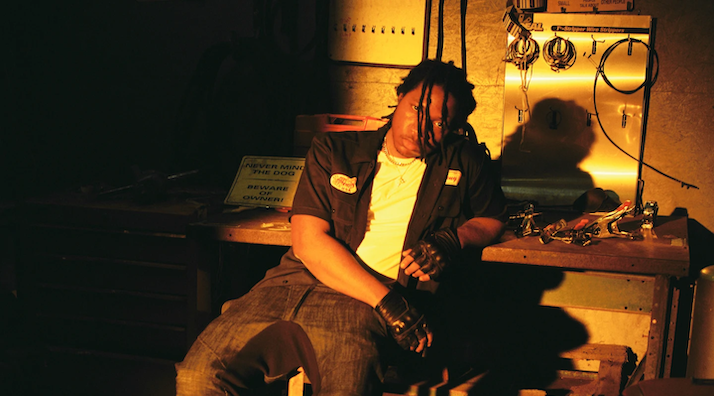
BULLDAWG is Kenny Mason in final form. Not because he’s done evolving, but because the Atlanta emcee has sewn together the fabrics of every world he’s been pulling from: Southern hip-hop, punk, alt-rock, underground angst and an avant-garde instinct that makes genre feel more like a suggestion than a rule.
At the center of the album, Kenny frames the world we live in as a “junkyard” — a place where artists, people and ideas are constantly challenged, judged, dismissed or repurposed. But the BULLDAWG isn’t interested in being defeated. He’s set on defying every boundary and defining his own self-worth, refusing to wait on the world to determine his value. On BULLDAWG, Kenny Mason exhibits the art of making something out of nothing — an almost impossible feat in a world constantly trying to convince you that what you are, where you come from and what you create can be thrown away.
That’s what makes BULLDAWG feel like Kenny Mason’s most complete body of work yet. It’s a full picture of his creative ethos without an overly explained backstory: the lyricism, production, hooks and unapologetic Atlanta shit that can’t be cleanly interpreted, only felt and translated. Songs like “JUNKYARD FREESTYLE,” “CITGO,” “FIND GOD” and “COME TRUE” don’t just show range; they show an artist who’s comfortable with the fact that his lane was never supposed to look like anyone else’s.
Ones to Watch: I always like to start by getting to know an artist’s creative DNA. What were your parents listening to in the crib? What were your siblings putting you on to? What were you discovering through movies, video games and culture? What created your creative foundation before you became Kenny Mason?
Kenny Mason: I’m Black. So, hip-hop raised me. But when I was probably 4, 5 or 6 years old, and I was coming into consciousness of what was being played around me, I remember my dad playing a lot of Tupac and Snoop. A lot of Death Row stuff. Lots of R&B — Keith Sweat, Tony! Toni! Toné!, stuff like that. He played it religiously—after work every single day. He had his routine of playing music and then playing a game. As I got older, I adopted that same thing. I really loved Lil Wayne’s Tha Block Is Hot album. I loved everything about his persona and character. I just thought he was so cool.
Your a kid of the early 2000s—how did video games influence your taste?
As I got older, I started playing video games more, and that introduced me to rock music — games like WWE SmackDown! vs. Raw, Madden 2005 and Tony Hawk’s Pro Skater 3 and 4. Video games were my gateway to alternative music.
What ignited your desire to make music yourself?
My older brother was the first person I knew who was actually rapping.. I always looked up to him. I never considered being a rapper, but I thought what he was doing was cool. He was doing local shows and performing at skating rinks and stuff like that. I kind of worshipped him as my older brother, so anything he wanted to do made me start thinking about doing it. But it wasn’t until middle school that I actually started writing. I started writing raps because I had a lot of time alone since I moved around a lot. I listened to Lil Wayne so much that I memorized the lyrics to every song. I memorized the lyrics so much that, little by little, I started replacing his name with my name or replacing little things he would say with things I would say, or things that fit me a little more. Then it became like, “OK, I have my own verse to this beat or this song.”
So it started as a creative outlet?
Facts. A creative hobby. I’d be riding a bike, memorizing raps and stuff, and when I got home, I’d write them down. Around ninth grade was the first time I actually rapped out loud for people. And it was 100% because of girls. I rapped one time, and this girl liked it. Then I was like, “OK, I’m going to do this. I’m trying to make this my job.”
You mentioned seeing your brother perform at skating rinks, which feels very Atlanta. The skating rink has such a deep place in Black teen culture and Atlanta culture specifically. How did Atlanta form you creatively and mold you as a person and artist?
Community, bro. That’s the No. 1 thing about Atlanta, especially when I was growing up. The skating rink and the teen clubs — specifically the teen clubs inside the skating rink — are where a lot of people got discovered. A lot of people I knew locally got discovered and blew up. As I got older, the underground rap culture and underground alternative culture started bubbling up and blowing up. Stuff like Awful Records and the Department Store era introduced me to the idea that you don’t have to be signed to a label to get your voice out there and show your talent. All those artists blowing up from the underground and SoundCloud was huge for me. That gave me a lot of hope and ambition, even when I wasn’t good yet.
Awful Records was huge for me in high school, too. I went to high school in Charlotte, North Carolina, so Atlanta felt close culturally. Were you actually in those circles, or were you watching it from the outside?
I was trying to be in the circles. I wasn’t in the circles. I was only about 18, fresh out of high school, and I was trying to put myself anywhere I felt like there could be an opportunity.
I knew a few people here and there — friends of friends and stuff like that — and I was networking, but I didn’t know those people directly. They were like internet stars to me. I was just trying to position myself. I remember seeing EarthGang and JID and being like, “Whoa, y’all are rapping fire, and you’re getting traction. You’re getting signed to Dreamville.” That was really cool to see, but I was nowhere near that socially. Parasocially, maybe. But it was hella inspiring. Now it’s cool to call these people my friends.
I love exploring lineage in music. Atlanta is one of hip-hop’s Meccas with a lineage that runs from Dungeon Family and Outkast to Future, JID and now artists like you. How do you think about being part of that thread as a new-generation Atlanta MC?
Anybody who feels like I’m carrying that lineage or puts me in that musical DNA, I’m grateful they give me that. I’m grateful that’s their opinion of me. All I’m doing is trying to be myself. I was raised on Outkast. My mom religiously played Outkast. That type of stuff is bred into my musical psyche naturally. I think I have natural tendencies from listening to so much Three Stacks. So anybody who thinks that of me, I’m overly grateful. At the end of the day, I’m just trying to make what I think is cool and give people who think what I think is cool a voice. It’s the ATLiens, bro. We’ve got our own world here. We’ve got our own planet separate from everything. That’s how I think about it. We’ve got our own way of thinking, our own way of talking. What’s understood ain’t got to be explained. Nobody’s a celebrity here. Or everybody’s a celebrity — that’s the thing. Everybody’s a celebrity. The confidence, the self-esteem and the audacity to be different.
BULLDAWG is framed around the world being a junkyard and you being a bulldog who got it out the mud. Where are you coming from with that theme? What do you mean when you say the world is a junkyard?
I was coming from this theory or perspective I had on artists in 2026 — or artists nowadays. I feel like being an artist is the most common it has ever been in history. Even content creation is art, so in my theory, most people today are artists. I feel like in today’s time, art is so undervalued, partially because everybody is doing it, but also because of the mediums everybody feels like they have to participate in. People end up undervaluing themselves, not expecting great things out of themselves or not giving themselves time to make great art because they feel like they don’t have it. There are all these paradigms the modern consumer puts on artists, and I also feel like the modern consumer is also the artist. It’s a weird dichotomy. By the end of the album, the answer is that you give the value yourself. You don’t let the external world give the value. You don’t look at your environment like scraps. A real bulldog, a real junkyard dog, looks at the scraps around them and makes them into gold. That’s what junkyard workers do. It was just a big metaphor for that. The world treats us like scraps, but we’re really treasure — depending on how you look at it.
“Junkyard Freestyle” feels like the ethos of the album. You’re barring up, but you’re also looking inward as a creative and saying, “I’m not doing this for anyone else’s approval.” As a professional creative, how do you deal with criticism when everybody is a critic and, increasingly, everybody is also an artist?
I believe you have to work on your self-esteem like a muscle — the way you go to the gym, the way you study and practice a craft. Your self-esteem, self-love and self-worth have to be consistently worked on like anything else. Especially if you’re an artist making art and putting yourself out into the world for criticism. My objective isn’t for people to judge whether my music is good or bad. That’s not what I’m doing it for. I enjoy making music, and people have told me my music has saved their lives, that they need my music. That’s what I’m doing it for.
Tell me about the collaborations on the album. Each feature fits perfectly on the album and feels intentionally curated. How were those sessions?
Dom and I have had plenty of sessions. It’s funny: All the songs we made in sessions never came out, but this is the one that did, and we recorded it separately. The reason is because “Find God” was originally made for his album and was originally his song. He sent it to me about two years ago and said, “This song is perfect for you. I hear a verse from you on this. I want you to have free rein and do whatever verse you want.” He was gracious enough to let me have it. That’s how that went. I’ve been friends with Dom for about six or seven years now. He’s always been a homie, but we finally had the right timing and the right song to come out.
The Paris Texas record feels very on theme, too. It dives into identity, and with your genre-bending approach — the punk, hardcore and alternative influences — there’s a real countercultural ethos there. How do punk rock, hardcore and that Black alt sensibility align with you?
Paris Texas is Louie and Felix, and I feel like I’m kindred spirits with them as far as Black punk or Black alt. I feel like we wear that flag very proudly and very well. That song was incredibly easy for us to do. I made the song probably last year, and I forgot about it. My producer — we have a mutual producer named Dilip — does a lot of Paris Texas’ stuff and a lot of my stuff as well. He reminded me of that song. Even when I first made it, I always felt like Louie and Felix would go crazy over there. Those dudes absolutely smoked their verse. I just sent it to them when I knew they had time, and they got it done. I feel like it’s exactly what a Kenny Mason and Paris Texas song would sound like. It’s very fan service, punk-rap.
I know that one is going to go crazy live — perfect for festivals and mosh pits. Another standout for me is “Citgo.” I love the double entendre: “This shit gas, we pushing this gas.” It feels very Atlanta. What do songs like that bring out of you?
I like making songs like “Citgo,” or the gas station songs, because that’s when I can be unapologetically Atlanta rap. It’s just very fun for me to do those songs. The gas station is a ritualistic area for Atlanta shenanigans. It’s always fun to do that.
You’ve got a lot of different worlds living on this album. For you, which record do you hold closest? Which one is your baby? And which one best represents the thematic ethos of BULLDAWG?
It’s 100% “Come True.” “Come True” is my baby, for sure.
For this album, I started teaching myself to play guitar — actually, for the first time ever. I was going days and days trying to make riffs, and that was the first riff I really loved. I was like, “Oh, I figured it out.”
It evolved into this demo I could not stop listening to. I was like, “Man, I’m going to perfect this song until it’s good enough to go on the album.” It feels good to have actually played guitar on a song that made the album. That’s a big personal accomplishment.
Do you see yourself doing more live instrumentation? Could we eventually see something like a live Kenny Mason album, or a Roots-style performance with all live instrumentation?
Absolutely. I’ll keep working on my skills and get to a point where I feel like I’m skilled enough to do that. But absolutely, for sure. Hell yeah.
To wrap up, what’s next for Kenny Mason? Can fans expect to see this album on tour? What are you most excited for?
The American BULLDAWG Tour is what’s next. Definitely come out.
This is the most fun part of the whole album thing: the tour. I feel like the albums are especially made for a tour. This is where the community comes together and celebrates what we built together. That’s absolutely top priority. And maybe a deluxe.
How soon?
Can’t say. But it’ll be for sure this year.
![ONE OR EIGHT’s Debut EP, “EN-GÏNE,” Captures Who They Are Right Now [Q&A]](https://s3-us-west-2.amazonaws.com/onestowatch-v2/o_o_e__m_a_i_n__t_r_a_n_s_l_a_t_e_3_2_light-1791504764.jpg)
![Moody Joody Draw Us Closer to their Debut EP, Plain Jane [Q&A]](https://s3-us-west-2.amazonaws.com/onestowatch-v2/unnamed-1791228468.jpg)