Lukas Graham Retraces His Roots On Brilliant New Album ‘Good Times’ [Q&A]
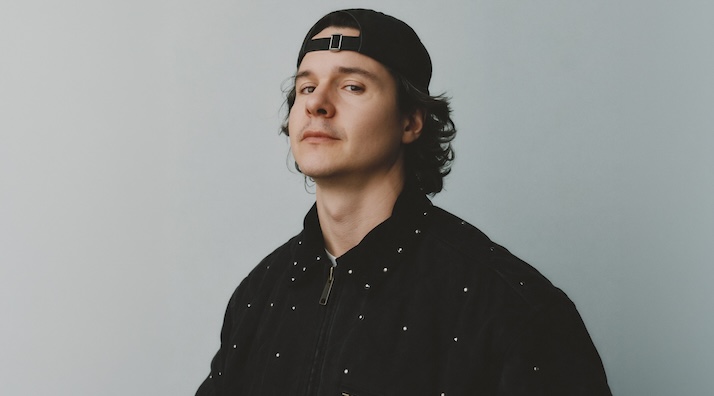
Photo by Frederik Barasinski
Rarely do we get to wrestle with the themes of a celebrated songwriter like Lukas Graham; so much of where we live editorially is about youthful indiscretions, emotional insecurity and self discover. On Good Times, the OTW alumni commands from a perspective of fatherhood, success and happiness while still delivering that seeking lyricism he's been famous for for over a decade. It’s an album that sounds like a writer taking his time, retracing his roots, honoring his sonic heroes and inspos, a confident declaration of both time passing and the nuanced emotions it renders. Ever so generous with his time, Lukas joined us in our humble studio to offer advice, wisdom for the next generation and a genuine enthusiasm for life & music that was infectious:
OnesToWatch: Welcome in, we’re so happy to have you here – going to be a very chill interview.
Lukas Graham: That’s the nice thing about being a musician. I talk to a lot of sports guys about this: half of the stadium that shows up is there to see them lose. No one comes to a Lukas Graham show to see me lose. As a concert goer myself, I have all these expectations, but I try to leave some of them at home and just be surprised, like a New Year's Eve dinner. Don't expect too much and it'll be okay. I don't think I ever really walk into an interview with someone just trying to catch me out. It's just about music.
That’s somewhat surprising to me, usually we're the most gentle interview. Do you know the quote, “it's not enough that I succeed, but others must fail?”
Yes, but I would not subscribe to that personally. Especially in the space of music, sometimes people feel that if someone else is releasing music that's successful, it somehow makes less space for them. But my experience is that the more people go out and see live music, the more people will go out and see live music. It's like a self-enlarging snowball. The more music I listen to, the more music I will listen to.
This is beautiful. I want to just print this and put it on the side of the building.
It’s true though. I have kids, and it’s not like I have a partialed out piece of love for each of my three daughters. I still have 100% love. There's just more of it.
I love this. We need more of you in the universe, I believe, right now.
Well, I'm glad you think so. I think sometimes when you go into that deepest darkest part of your own soul, the universe maybe needs a little less of me and a little more of someone else.
If you could pick anyone that the universe needs more of, who would it be?
I have a wonderful wife at home.
That is a great answer. No wonder you're happily married.
Before the interview started, you asked what I learned over the past 10 years? I think understanding your own darker sides is a big part of becoming a parent and an adult. I’m realizing all of the baggage I’m carrying from my own childhood and upbringing, how much of my mom is coming out of my mouth when my kids misbehave, or how much of my father comes out when something goes wrong at work. It's an interesting experiment to try and minimize those.
Wow, that's beautiful. I suffer from that as well.
We all do. To a larger or lesser extent.
Circling a little bit back to the music. You've been a prolific songwriter for some time now. Has your process changed? And if it has changed at all, what has changed?
It has changed immensely, in the way that I now have more self-imposed deadlines. Especially when I'm in, like when I'm writing in Denmark, I want to get out of my studio so I can pick up my kids and have dinner together. When I’m writing in Los Angeles, we need to get out early enough so that Stefan can go home and have dinner with his kids. And I used to think that creativity was something we had to wait for, and struggle for, and if I just keep at this song, I'll get there in 5, 10, 15 hours. We'd end in the middle of the night instead of saying, it's four in the afternoon, we didn't get it. Let’s get dinner, I'm going to get up early tomorrow, have a workout, go back to the studio, and try again with a new approach. I kept doing the same thing every day. It was like banging my head against the wall. It was great when I stopped. Now, the self-imposed curfew is so helpful. Sometimes stopping at the really hard point is the best thing to do, because then the next day is going to be interesting, rather than feeling the burnout of overexerting yourself. Creativity, the meaning of the word is to be filled by the breath of God. It doesn't happen all the time, and that's okay.
Really well put. Given songwriting has changed structurally from the influx of production tools, do you go about writing a song or creating an album in a different way? Have tools made you better or lazier?
I still write almost everything by hand in the same types of books that I've used for the past 15 years. I got my first version of these books when I was 20, so it's been almost 18 years, almost. My basic toolkit is the same. I like permanent pencils rather than erasable pencils. I also notice when writing on a phone, sometimes I'll erase a lyric to write the revised one. But in my books, I have all the previous versions of a verse. That can be super helpful because sometimes what you thought was bad was great and what you thought was great is insignificant. Often you don't know.
Right. Do you find you've become more or less critical about your work as you create?
I'm more critical when I need to be. We've developed a system of the green zone, the orange zone, and the red zone. In the green zone, everything goes, and you're just trying to figure out something and get somewhere and get started. The orange zone gets more critical, we’re asking what's working and what's not working. In the red zone, we start killing things. I am a master of the Kill Your Darlings' art. I think I have a thousand recorded songs that are not released.
Wow, a thousand.
My book stack keeps growing back home. My bank lady keeps telling me I need a fireproof safe for the lyrics, not anything else.
I would agree.
Yeah, I might listen to someone's advice now that I'm a little older. But to your point, it's become easier for me to now let go of something that's not good enough, even if I love it. Everything can't be a single, and albums aren’t meant to be projects full of big radio songs. You need musical palette cleansers, if you will.
That makes a lot of sense. It’s true in a live performance, it’s true when you're eating a good meal. It needs to be paced, you can't just exert constantly.
Yes.
Because you mentioned how many songs you have, and I always find self-editing so interesting as an artist, how do you decide what songs make an album?
There's a very, very close group of people around me, and if we all agree a song is good enough to be on an album, it can go. I'm also very acutely aware of the fact that I don't always know when I'm at my best, but a couple of the people I've worked with since I started my career, they have a better sense of that. But, sometimes I put my foot down and say, I really love this, I want this to be on the album. There's a song called “Freeton Road” on the upcoming album that I was insistent on. Only once the album was more or less done and “Freeton Road” sat in its place in the running order was there a change of heart in others to be like, “Ooh, now I see what you saw.” So sometimes you need to trust your heart and hope to die. And sometimes you need to trust in the guidance of the people you have placed your trust in. I have amazing managers, I have a great co-writer called Stefano. I have a really wonderful producer and keyboard, instrumental multi-instrumentalist, Mr. Eeezy. My wife rarely interferes, but when she does, I listen to it. On this album, it's been fun to hear her sing some of the songs around the house as I've been playing demos and listening to mixes and noticing it's not necessarily the same one she's been singing, which I think is a good thing. It's a great test audience to have. Especially the kids. My two-year-old, when she's bopping to a song, that’s a pretty good sign. If you have an 18, 20 month baby that doesn't want to dance to your uptempo tune, maybe go back and revisit a thing or two.
That's definitely a unique approach to figuring out if the song is good enough, I love that. Let's talk about the album. It seems to an outsider that your albums sort of speak to each other and they sort of are almost anticipatory of the next work. Is that true in this album as well?
What's weird about Good Times, which is the album title, is that it almost, timeline-wise, fits into a previous part of my musical journey.
Interesting.
Some of the songwriting style is more closely related to “Drunk in the Morning” and “Seven Years.” Sonically, the instrumentation is taken out of my childhood. But at the same time, some of the big massive hooks are taken out of how I've been writing for the past couple of years. So it’s a bit of an eclectic mix. I just had a feeling of being at a point in my career where, sure, a couple more milestones would be great, but I don't really feel like I have a lot of things to prove. I want to release songs that I would want to sing for the rest of my life. I want to release songs that make me feel something. It’s funny saying all that out loud, because that's how it was 10 years ago. As it happens as adults, life sort of shakes you up and I think I ended up in a more pop lane than where I belong. So with this album I wanted to go back to the music I grew up with. I’ve gone back to the folk music inspiration and the simpleness of that approach rather than trying to make a pop record.
Beautiful. When you finish an album, do you ever assign any sort of ambition to it as a project, or do you just feel comfortable releasing it to the world and letting the audience decide for you?
Not having ambitions for this album was a big part of the creation for me. That mindset was robbing me of the joy of creating it. I get a little sad to say that, but some of the ambitions that I've attached to earlier work made it never good enough. With concert reviews, a bad review is what it is, but a good review often isn't even good enough, right? It's the same with being too ambitious or being ambitious at all on behalf of something as intangible as art. How can we rank art? Even genre classification is just there to help people figure out if they like something before they know it. My dad had a saying about people and music – that they don't know what they like, but they like what they know – which is a really funny sentence.
A lot of truth to it too.
There is a lot of truth to it. As we get older, people stop listening to new music, and disavow it just because it's new. Several studies have been made on how many people past the age of 30 actually listen to new music. I'll go back to the albums I listened to when I was a teenager, in my early 20s, when my career was taking off, and it’s just revisiting nostalgia.
I've read that as well, that usually by 30, most of your choices are set. You're familiar with things. What about anticipating anything from the audience? Are you really just willing to surrender and let your audience listen? Or do you hope that they feel something that is there – a message you're trying to convey?
I've always had this inclination towards a little bit of education. My dad was Irish. That's why I grew up listening to so much folk music. That's why we spoke English at home, why I ended up being a songwriter in the English language and not Danish. So on this album, I also had that one ambition. I insisted to my managers and the producers and Stefan who I wrote it with, that I wanted a lot of the people I got to know through my dad to play on it. There were so many folk musicians who came through Denmark and Scandinavia when I was a kid, sleeping in our house, having barbecues on the porch. We went to Nashville and got a lot of these legends to record on the album, background vocals and instruments, and the same thing we did in New York, had some of my friends come down from Boston and from upstate New York to record. We made that cultural connection. I got my favorite Irish Piper from Manchester to record some Irish bagpipes, called the Uilleann Pipe, and flutes and whistles, and another whistle player, Alan Doherty from Dublin to put some stuff down. It was very important for me to establish the cultural connection. It wasn't just a folk album for the sake of making a folk album, but it was also a way for me to reconnect with a cultural heritage that I still am a part of.
Love it. Going to pivot to some more fun questions. You've mentioned your team a lot, which you don't hear a lot from musicians, but I've always thought of music as a team sport as well. You need a lot of people working in the same direction for success. What's some advice you would share in terms of picking good teammates, finding people that can both support you, but critique you in a way to get the best out of you?
It's easy once you get a sense of air under your wings, to exchange your very honest people around you with “yes men” and women. I value my managers and I value their opinions. I've had the same managers since 2010.
They must be doing something, right?
Yeah. They're lazy enough to work smart… I’m messing with them. They’re amazing. Some of the most talented people I know that didn't make it, it was because they had bad management. So there's this push and pull of trusting the people you came up with, but also being prepared to let dead weight go. Figuring out what's what is really, really tricky. At the end of the day, no songwriter, artist, or band can make it solely on their own. You can say it, you can feel it, you can speak it and it can be a motivational thing inside you, but if you look at the positive version of codependency, in some sense it's an ecosystem, and it's an ecosystem that you're moving from the ground up. You don't build it from the top, you don't build it from the artist, you're building it from the groundwork. Our very earliest record label that signed us back in Denmark in 2010 was shut down, and when that happened we took Christine with us into our management company. She had worked as an assistant at the front desk of that label and worked all the way up until she was high up in the label that then got shut down. And she wasn't brought into the new label. But here we got a jar head, right? What are we going to do without our jar head? So what she's doing now, is basically keeping everybody on their toes, be it Fred, the social media guy, or be it Lasse or Casper, the other manager, Christine is going to always send the email out to keep people accountable. I remember we came to New York to release the pink album and everyone was waiting for bags, and Christine was sitting on the floor of the airport with her laptop and I was like, “What are you doing?” And she says, “I got at least 20 minutes of emails while you guys are fixing the bags.” You can't let somebody like that go. I think that a lot of people forget that you have to build it from the ground up. It's one of the reasons I can still tour, I can still release, I can still promote. The same goes up with the home. You need a home that's functioning. When I'm gone, someone else has twice the work. It's a team sport. You've said it.
Another thing I take away from your songs is a sense of community and family – you mentioned it with Good Times, some history, some lineage. If you could look into the last stages of your life, what would make you most happy?
I would like to still be able to sing songs. And I think I said it in seven years. I hope my children come and visit once or twice a month, depending how far away from me they choose to live. I think that's pretty much it. I'd like to be a raisin with my wife and sing a few songs here and there and sometimes the kids come over.
If you could be at your most zen, your most relaxed, what would you be doing? Where would you be?
I would be in the tub with one or two of my daughters. We can't do that forever since they're getting so big. We only had a shower where I grew up, didn't have a bathroom until I was six, and my dad dug the sewer system for it. But when we went to Ireland to visit my grandma, she had a tub and I remember sitting in the tub with my dad or my sisters. It was cramped, but it was the best, and I do that with my kids now. It is pure joy just to be in the tub, washing everybody's hair.
Beautiful. You have a family, so you're probably put in the role of chef often, but say your managers, everyone, shows up and they’re hungry. Can you whip up a meal? And if so, what would it be?
Oh, that depends where we are. If it's Lasse coming over, we whip up a good Pad Thai or a Pad Kao, a little fried egg on there, some fresh chilies. But if it was a big birthday party, I’d make it easy, cook it the day before, do a coq au vin.
I don't know what that is.
It's a chicken and veg and a red wine and you just stick it on the stove. Once it's done, you cool it down, and then you wait for the guests to come in and you heat it back up and boil some potatoes and you're rolling. If my kids could choose, though, it'd probably be Mexican wraps. We spend so much time in LA.
Last couple of questions, thank you for sharing your story with us. I’d love it if you could create a dream bill, dead or alive, any musicians you would want to perform with.
I would love to be a part of Crosby, Stills, Nash, and Young. You know the record with the golden cover? I remember my dad had that. After he died, my sister took it and was like, "You can afford to buy a new one.” So I did. I would love to be a part of that album. Also, to sing with Adele or just have a chat with her about her vocal control. I think she's so impressive. Never met her. I'm a very private guy at the end of the day. I don't go out and meet a lot of people. Maybe I’d want to meet Michael Jackson. But then I’d have to choose between him and Prince and it becomes tricky.
Well, you can do both in this scenario. I would also love a non-music recommendation. So something you would put a friend on to, something you've read, an activity you've done, a place to visit and anything you want to share.
I've been big into Russian literature. After my dad died, I asked some of my really close friends and my older sister to recommend books to me, because that's what my dad used to do. And Julie, she's my pseudo-sister, married now to Jacques, one of one of my closest coworkers. She gave me Anna Karenina by Leo Tolstoy for my birthday a few years back. I'm rereading it now and it's such a trip. It's a really beautiful novel, like a pioneering stream of consciousness. You're hearing a conversation, but you're also reading people's thoughts while they're having this conversation. It's very deep and it speaks to me.
I would also love some music recommendations. Given the album especially referenced a lot of folk music, is there anyone you’d like to highlight?
They're not a band anymore, but they were called Crooked Still. Just amazing players. Several of them are on this new album. Can't call him newer up and coming in any way, shape or form, but Tim O'Brien is playing octave mandolin and singing vocals on several songs on the album. Mike Miranda and Ruth Ungar, their band called The Mammals. They came down with their kids to do background vocals in New York.
Beautiful. Finally, let’s end on your words: it can be advice, anecdotes, jokes, promo, shoutouts, whatever you want to do.
My manager probably wants me to say, “Good Times, it's out August 14th.” To anyone listening to this new or old: being an authentic version of yourself is just better than being a bad copy of somebody else. The idea that everybody else has already taken. We fall victim to that a lot, we attempt to mold ourselves into something we aren't necessarily supposed to be. Some of the people that I hold closest in my life are still the ones that have allowed me to change over time. Being an authentic version of yourself is just incredibly valuable.
So well put. It was so wonderful speaking with you, man.
Thank you, you as well.
Listen to Good Times below:
![OSTON Examines Her Own Self-Discovery From A Bird’s Eye View on Debut Album ‘Isn’t That Sweet?” [Q&A]](https://s3-us-west-2.amazonaws.com/onestowatch-v2/a_u_s_t_i_n-6-24-1790280524.jpg)