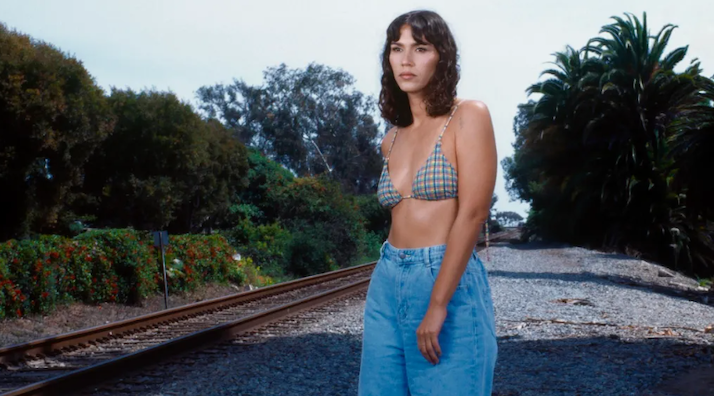
Meet Selines: The Bilingual Bronx Storyteller Bringing Her Mexican-American Roots to Latin Folk
Latin folk and alternative influences strum through the guitar and vocals of selines' latest album, (nostalgia). The 21-year-old Mexican-American singer-songwriter, who grew up in the Bronx, New York, shares her dual cultural identity throughout the project, splitting the album into a Spanish side and an English side, giving both bilingual and non-bilingual listeners a chance to fully immerse themselves in her world.
Her vocals are warm and honest, emotionally carrying themes of growth, identity, and connection. Featuring collaborations with Fabio and ROSALES, (nostalgia) is an intimate and deeply felt experience. selines embodies the calm, quieter side of New York City, and the lived experiences woven into this album are ones that will stay with listeners long after the last song.
Ones To Watch had the opportunity to chat with selines and learn more about her experiences as an artist, the story behind creating some of the songs, and growing up Mexican-American.
OnesToWatch: You grew up bilingual, and you've described that experience as "confusing." When did that feeling change, if it did, throughout your life and into your music career?
selines: I would say it took a while to feel like being bilingual was a normal thing. It was confusing at first as a kid. I would accidentally say something in Spanish while I'm talking to my friends, and they'll look at me and be like, wait, what? I don't just mean bilingual in the sense of Spanish and English, I also mean it like in Spanish. Growing up in the Bronx, there were not a lot of Mexicans around my area, so most of my friends were Puerto Ricans or Dominicans, and even our Spanish is different from each other. I couldn't really talk to them in Spanish as I talked to my parents in Spanish, so it was confusing trying to navigate all of that. I grew up just feeling less confused, but still just feeling like an outcast.
My parents are immigrants, so they've been forced to learn English as well. They also decided to try to learn the language, and at home they would be like, 'Try to talk to me in English, I can practice,' and they would be confusing there because I'm so used to speaking to them in Spanish. It started feeling less confusing once I got to high school, and more Mexicans started surrounding my area. I felt there were just more people I could talk to and it always felt like a little special thing. We would have projects in school where they would even just mention the word Mexican, and I'll be like, oh my gosh, that's me, or I'll see a girl wear a Mexican jersey, and I'll just be like, whoa. I just felt like a spark, where I was like this shouldn't be a confusing thing and it's just a normal thing. It's been so normalized as I was growing up, but I just didn't realize it, so I dove into that, and it started feeling more comfortable.
How important was it for you to create Spanish and English versions of the same song, such as "Lugares" and "Places?"
It was a little complicated. I've always been used to kind of just expressing myself in Spanish, because of the way I choose to write. I feel like the Spanish language has a lot more words to offer and a lot more meanings to certain words. I got so used to writing how I felt in Spanish, but in my head I would sometimes communicate these thoughts or write them down in my diaries in English. The difficult process was finding certain words to give the direct translation from the Spanish songs to the English songs, but I realized that the way I wrote them in my diary or my journal were the same emotions as when I was singing in Spanish. When I decided to make the album and have a side A and side B, I was 100% sure that this album was going to be mostly Spanish. Side A is who I am, what I've known my entire life, but side B is also a part of me and what I grew up with my entire life. I just felt it was like the most real and authentic version of myself, feeling these same exact feelings in both Spanish and English.
This is your second album. What feels different about who you are as an artist now?
My first album, Circo De Amor, was a very sad album. I wrote that when I was 18 and at that age, we feel so many new emotions, where you're expected to be grown about these feelings. You're expected to not cry about certain things because you're 18, you're an adult, you're supposed to be grown already. I was just very insecure about the music that I was writing, and I wasn't really trusting my project, so I created this whole character around it, so if I ever received any criticism, it was never really me, it was this clown character — these songs are so dumb, then oh well, the character wrote those songs, not me, even though they're actually me.
(nostalgia) was a very long and mentally exhausting process of having to dive into these feelings and convince myself that I am doing this, and this is me; there's no reason to hide behind another character; there's no reason to let that fear take over again, and I started trusting myself. I always say the hardest lesson with my music career has been learning to love and trust myself in my vision. With this album, I definitely did, and I dove straight into that feeling. I laid out the most vulnerable part of me, and I'm so happy to see that people are receiving the songs, because in some way, it feels like they're receiving not just the lyrics that I wrote, but the feelings that I poured into them.
You were working as a nanny in Manhattan while building toward this album. Was there a moment that made you decide to go all in on your music?
New York City is such a fast-paced city; you have to keep up with a lot of things, no matter what. I knew I had decided to pursue my music career when I took a break from school. I love school, so it was a huge decision for me, as well as deciding to step down from my job. Since New York City moves so fast, I just felt like there was not a lot of time or not a lot of me invested into my project, and I was just writing music whenever I had the chance, or making songs whenever I had a break. I just decided that if I really want to give the most authentic version of myself in this project and to my audience, to the people that like my music, I have to put more parts of myself into these songs and really just dive into writing and kind of sharing that part of myself. There was no time when I worked as a nanny, I just made the decision to step down and invest more time in myself, but also in the music that I make.
Has New York influenced your music?
A lot of people ask me that question, and it's always a little difficult to answer, because you don't really hear those influences in the songs that I make. You hear more of the traditional guitar and what folk is about — it's just your guitar and pure emotions. I think it did influence me in the sense that I really didn't listen to this music around me. I grew up listening to a lot of bachata as I was going to the supermarket or listening to a lot of salsa as I'm trying to do my laundry outside. Once I dove into Mexican folk or indie folk, I was like, man, why not make something different? There's a lot of quiet girls and people out there that listen to this music, so why not be an artist from New York that shows that even though this is such a small genre, there's someone in this huge city that is trying to make it out with this genre, and just remind people that even though New York City is so hectic, there are people and places that are just calm and quiet, and represent that side of New York as well.
What was it like working with the different artists featured on your album, such as Fabio and ROSALES?
Fabio is such a high energy person. When we got into the studio, he kind of took over the session, which was very relieving to me, because it was my first time working with someone in the studio. I'm huge on this is my music, it's like my child. I don't want people touching my songs and moving them around, but Fabio made it very comfortable to get in that mindset of it's okay to work with people, and some people are just more comfortable being able to share their ideas. It built that confidence in me, where I was like if I have an idea, I can say it, and it's fine. That's the whole point of these sessions.
Working with Fabio was a completely different feeling, and compared to ROSALES, who is another feature artist. ROSALES is into the indie folk sound, so we share a lot of similar music. When it came to working with ROSALES and this indie pop song it was like us two in a new genre, and how can we include these very sentimental feelings into what is a more upbeat song. It was like a challenge for both of us but we had a lot of fun converting those very sad feelings into what is more exciting to hear and what has more energy. These are different artists and different genres overall it was fun working with them.
"Volvere" is one of my favorites. What was it like creating that song?
I love that song. It's a love song about a long distance relationship, and it's such an underrated feeling, because so many people are like, oh no, long distance doesn't work. There's like a lot of negative stigma around it but I just think it's incredible how you can love someone from a completely different state or sometimes even country. The love is so strong that it kind of draws you two together. It gives you something to look forward to seeing and appreciating this person.
When I went into the studio, I told Besada, who's the other writer of the song, I told her 'I am in a long distance situation right now' and I hope it turns into this beautiful relationship. I'm kind of just exploring that feeling of the crush and all these butterflies, so not only in the way that we wrote the lyrics, we're saying, 'I'll be back, I'll carry a picture of you.' It also just the music itself, the ending of that song is also very upbeat, very exciting, because that's how I feel when I was experiencing all this love and emotions, so just being able to put those lyrics and the song together it's like a direct representation of how I felt at the moment, being in love, falling in love and exploring this new feeling, even though it's like physically we're so far apart from each other, but I still feel the same way every time.
You performed at South by Southwest (SXSW). What is it like for you to perform live and interact with an audience?
I love performing live, especially now since I get to work alongside a band. I've always been a solo artist and a solo performer, but once I got the opportunity to work with a band, it just made performing much more exciting. South by was so fun, being able to just come back to this festival. I went to South by when I was 18, and I got the chance to come back as a 21 year old. I know not a lot of years have passed, but I've definitely grown mentally in my music as well. Coming in big with a band and with these new songs, was so exciting, and I just love performing live.
![Tommy Lefroy on Crumbling Empires, the State of Surrender, and the Age of Precarity [Q&A]](https://s3-us-west-2.amazonaws.com/onestowatch-v2/unnamed-1790979504.png)
![Isabel Dumaa Daydreams Indie-Pop Perfection on "James Dean" [Q&A]](https://s3-us-west-2.amazonaws.com/onestowatch-v2/screenshot2026-09-25_at3.36.57_p_m-1790376009.png)