Benny G’s Audience is Growing and We're Along for the Ride [Q&A]
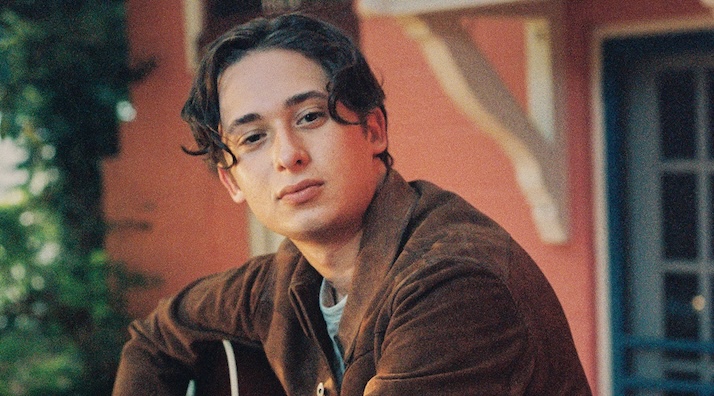
In the early stages of our interview with Benny G, a fellow Long Island boy out of the town of Merrick in Nassau County who is bridging the gap between country and blues, he nonchalantly stated he was prepping for a “writing retreat kind of thing” with Dan Wilson. Once he’d had some ideas fleshed out, he was planning on going shoe shopping later that day.
“THEE Dan Wilson?,” We asked, not allowing him to gloss over that.
“Yeah man! From Semisonic. He’s a genius,” he replied with a smile. At just 19-years-old, Benny is already adept at compartmentalizing these unique milestones.
Wilson is hardly the first standard bearer Benny G has crossed paths with, having come up under the tutelage of renown musician and educator Tomo Fujita and finding a fan in country legend Vince Gill. This past April, Benny made his Grand Ole Opry debut at the behest of Gill, and the pair performed a duet of Gill’s tune “Whenever You Come Around” at the event in addition to Benny’s performance of his own “Pretty Girls.” When asked what lessons he’s taken from working with artists of this stature, Benny confessed not to a technical lesson, but an ethical one: Stay grounded, and make it about the music.
Benny G recently released his EP When You Know You Know. Told in chronological order, the project details the jittery butterflies of a new relationship (“Pretty Girls,”) through to near or post-breakup clarity (“Price of Love”). Throughout, he impressively embodies the robust grit of Chris Stapleton in the upper regions of several of the tunes, most notably on “Hell of a Woman” and “Price of Love,” the latter of which features a well-earned key change in its back half. On opening track “Pretty Girls,” Benny sings with the kind of pliability that can only be associated with the tenderness and fragility of a honeymoon phase. He lingers onto the tips of each of his S’s in the tune, as if he cannot bear to complete his lovestruck confessions.
He is currently on the road opening for Ty Myers on The Legal Tour (handpicked by a member of Ty’s immediate family, mind you), and performed much of WYKYK, alongside covers of CCR’s “Have You Ever Seen The Rain” and a sadly shortened rendition of Billy Joel’s “New York State of Mind,” at their recent stop at NYC’s Pier 17. For what was essentially his hometown show, he came out swinging, vocally and musically, by showcasing his proficiency of multiple instruments and repeatedly hitting his vocal marks within just his 25-minute allotment. For future headline shows, he plans to expand his trajectory with a longer runtime.
Like many other up-and-coming acts in this field, Benny, who seeks recognition as not just a skilled and sensible guitar player but as a well-rounded and versatile creative, has used social media to grow his audience within the adult contemporary market. As of late, he has been adopted by the country community, opening himself up to new world of possibilities as well as eyes and ears. We touch on all of this, and more, in the conversation below:
OnesToWatch: At what age did you start working with Tomo Fujita?
Benny G: I was 13, I think. I studied jazz growing up, and then I was a School of Rock kid. They have their All-Star program, where they pick and choose through the kids from all their franchises and form their national flagship mini band. I got selected for that when I was 12, played Lollapalooza as a guitar player, and got to do all this cool stuff. I stumbled on this guitar influencer at Lolla named Nicholas Veinoglou. He studied with Tomo, and played with the pop singer Bazzi. I went up to him, as a 12-year-old who didn’t read the room, and asked for advice. Without even seeing me play, he offered to introduce me to Tomo. I went up to Boston and worked with him for the three most informative years of my guitar playing.
Do you feel like you skipped over the Long Island scene?
I did it for a little bit in my teenage years. I’d play KJ Farrell’s, 89 North, and Revolution and other places opening for a few regional acts with some bands I was in, including an alternative band called Sons of Sound. We played to nobody, it was just our friends and their moms. And, along with the School of Rock stuff, there was a lot of state fairs and festivals.
What’s the most underrated music spot back home?
Everyone knows Stephen Talkhouse. That’s the one with the most history. As big as I’ll get, I’ll always want to go back and play there in the summer.
How have you gone about shaping your narrative as a young and prominent blues and guitar player?
This isn’t a dig, but when I was starting to get out of bands and become a solo artist, I made the distinction that I wanted to be more like John Mayer and less like Joe Bonamassa. And I LOVE Bonamassa. He’s one of my favorite guitar players in the world. I really got into songwriting and melody craft, and all the things that make songs enjoyable. The guitar is my tool… it’s a huge part of the live set and of me as an artist. I knew I wanted the songs to dictate my artistry as opposed to the guitar playing.
Aa a new age guitar player, what are the marketing tools you’ve used to connect with new audiences?
I used to hate social media, and I was so against it, because it didn’t feel real. It would bum me out. I’m a musician. I didn’t want to be a TikTok star, I just wanted to play shows. Once I let go of that jealousy, I decided I was going to do my own thing and not cater to anyone. I was going to present what I wanted to put in the world. Social media is what introduced me to Ty, and to any other celebrity who has gotten behind me. it’s allowed me to build a fanbase that is growing slowly, but it feels like social media is leading the charge in the marketing of what I’m doing. It is building that community out of moments, and the music.
When songs of yours like “I Got A Feeling” or “An Hour or So,” pop off, do you feel like the audience it reaches is just a wider net of adult contemporary listeners or is it a mix of that and, quote on quote, pop fans?
I love country music, and I feel like I’m getting thrown into that umbrella because of the Ty affiliation and some of the country-centric festivals I’m playing. Most of the fans that are coming to me are from the country fanbase. When they hear my voice, a lot of people will compare me to Chris Stapleton, because it’s raspy. Social media is broadening the audience a lot too. A lot of the pop, rock, and adult contemporary fans are digging into it too, but it’s mostly country fans. People can call my music whatever they want. I don’t care about genres.
When you reach up near your second passage on “Hell of a Woman” and other songs, you widen your vocal tone enough to be able to execute the rasp you use. At what point in your range do diction and pronunciation take a backseat in favor of you being able to get the notes out?
Another great question! I naturally have a high voice, which helps with most of my singing. I used to really fuck up my voice, but I’ve gotten some help from vocal coaches, so I don’t hurt myself anymore. The G to A range, like where I’m at in the chorus of “Hell of a Woman,” that area, is where I have to focus on the technique and the tone. That’s my breaking point.
Aa far as your guitar playing goes, when you’re in a solo or going through a passage, how do find yourself able to release the tension and come back to earth?
I feel like most people who follow me on social media follow me for my singing. I just try and remember, especially with the opening shows for Ty, people are coming to hear vocals. This is a show about singing, and songs, not a show for me to whip out my hottest licks. So, I try and have a little bit of restraint. I have no fear in taking a solo here and there, but, for the verses and choruses, it’s like, “Let’s play chords!” Let’s make sure nothing is outshining what the song and vocal delivery of it should be.
I did notice that, because you played, like, one-third of “New York State of Mind” when I saw you…
[Laughs] It’s kind of a cop out, if I’m being real with you, because that song is on an Instagram poll people can vote on. Whatever wins, I’ll play a shortened version. I only have 30 minutes with Ty, so, for MY shows, it’ll be longer segments.
What’s one technique you want to master on guitar by, say, age 25?
I’ll never be the fastest guitar player, but I’m trying to up my slide playing a lot. I’m trying to incorporate it in the show. I never considered myself much of a slide plater. On a record, it’s more about the right hand and the pocket, whereas a lot of my lead playing is standard finger playing. I love slide players like Derek Trucks or Sonny Landreth. There’s so much technique involved, but there’s such a beautiful tone that comes out of it. And being in Nashville, the way all the steel players approach what they do is so beautiful. I literally practice slide every day trying to play Allman Brothers and Skynyrd songs.
How many times do you need to hear a song before you can give a rough playback of it on guitar?
Depends how hard it is! If you play me a song with a standard progression, I can play it after hearing it once. If it’s more complicated, I’ll need a few more listens.
Is singing the same?
The problem that stumps me with singing is lyrics. Lyrics are like… the devil. I just CANNOT get my head around it. Even if I have to memorize one of my own songs I wrote myself, it takes me so much longer than most. I can sing the vocal melody back, but the phrasing and lyrics get me.
Was the message within “Price of Love” something you had been wanting to talk about broadly, or was that based on a personal conversation?
Sometimes my songwriting is subconscious, sometimes I’ll have titles on my phone, or melodies in my voice memos. I’d had that concept for a long time. You think love is this beautiful thing that, when you’re in it, it’s all perfect, but if you don’t pull your weight, you’re kind of screwed. The EP is a love story that didn’t work out. I wrote that a long time before the rest of them, and I’d had that title. I was kind of just scatting, if you will, the lyrics out. freestyling, and putting words down.
What about that song earned its key change?
I wrote it as a piano ballad, and I was listening to a lot of Elton John at the time. When I made the song more of an acoustic guitar groove song, I didn’t know if the key change would make sense anymore. [Pulls his guitar off the couch, begins to strum] It was like an Adele song. All those big piano ballads, those David Foster songs, have key changes, so I felt like it fit well enough. I feel like I don’t hear enough key changes in music anymore, so I wanted to be the one to do it.
For a song like “Pretty Girls,” how did you find singing in what is a significantly softer tone as opposed to your grittier songs?
It’s a softer song and more rootsy. It’s more about the acoustic guitar playing and the storytelling. When I first wrote it, I was trying to do my thing and sing it a bit louder, but, with time, I realized it didn’t fit the song. Most of the EP is cut completely live, and with this song, it’s one take. I was trying to live in that emotion, because the story of it, of not being good at communicating and not knowing how to assert myself, is really delicate. If I was screaming it, it would sound off and weird.
What are the origins of the title of the EP?
It’s a lyric in “I Got A Feeling” that says “when you know, you know.” When you know something is done, it’s done. It’s just a feeling, that gut instinct. I knew I wanted this EP to be this young love story and have somewhat of a cohesive story. It’s starts all lovey dovey, and by the end, it all falls apart. Even outside of that meaning within the song, it’s a cool phrase that a lot of people use, but I hadn’t heard of a project title with it. The meaning within the EP itself led me to use it.
Listen to When You Know You Know below:
![10 Questions With dearALICE [Q&A]](https://s3-us-west-2.amazonaws.com/onestowatch-v2/dear_alice-_london-_studio_cerise-18_v02-1790902654.jpg)
![10 Questions With Anabel Rose [Q&A]](https://s3-us-west-2.amazonaws.com/onestowatch-v2/d_s_c_f3381-1790802788.jpg)