
How ggwendolyn’s Self-Diagnosed ‘Superstar Syndrome’ Became A Vessel For Her Greatest Artistic Achievement Yet [Q&A]
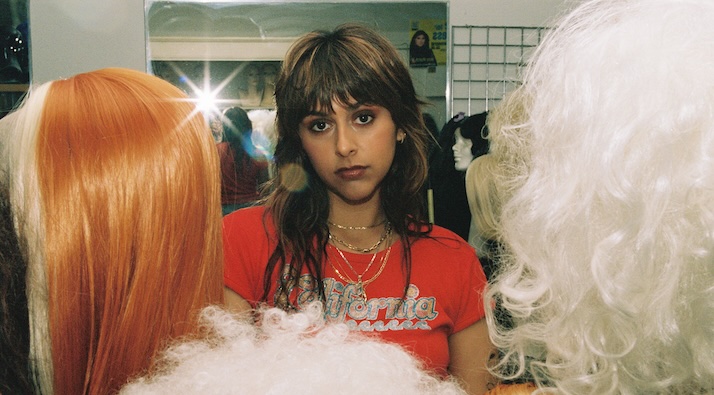
Photo by Nicholas Woltersdorf
ggwendolyn knows how it feels to be stuck in the title of “rising star,” one who is perhaps expected to wait for others to determine when a debut record might make sense. There comes a time when waiting for the right moment is a myth and the only thing left to do is take matters into your own hands. This is the genesis of Superstar Syndrome, a story of perseverance fueled by a passion that no industry could ever take away. It’s the mission statement of Los Angeles native ggwendolyn’s life and is dissected through 11 tracks rich in expertly crafted instrumentals and poignantly honest songwriting. It spends time with every emotion that comes with pursuing a dream; the good, the bad and where the bulk of truth lies, somewhere in between. There’s no outcome that can affirm or deny the brilliance of ggwendolyn’s monumental debut album, because the act of making it was the success she was searching for all along. We sat down to chat about Superstar Syndrome’s unique recording process, honoring her heritage along the way, and the lifelong pursuit of being an artist:
OnesToWatch: How does it feel to finally be putting out your debut album?
ggwendolyn: It feels surreal. And long overdue. But exactly right.
You're no stranger to putting out music, but how did it feel to sit down to put together a full length project?
As early as I can remember, I was a fan of albums. I always knew that I wanted to make them. One day I was just like, “Okay. I'm ready.” I went out to Arizona with Ryan [Raines] and the goal was to make the album in one week.
Did you?
9 out of the 11 songs! Well, we made 15 songs in a one week span. Some of them were duds, obviously, but a lot of them were the start of songs that are on the album. It had been a few months since I worked on music and it all just poured out.
How do you think growing up in LA impacted Superstar Syndrome?
I have so much respect for people that move to a new city to pursue their dream. But for me, I was always just right outside. From a very young age I was surrounded by people who became successful at like 12 years old. [Laughs] It adds a weird layer of pressure, always being one degree away from someone who could change your life.
You experimented with so many different genres and sounds before this album. Which makes me wonder, how did you dedicate yourself fully to the cohesive sound of Superstar Syndrome?
When we first started the album process, I just wanted to write songs. I wanted to write them on a guitar or a piano and not overthink the production, because every ggwendolyn song up until that point had been produced as it was written. I wanted the songs to feel classic, so the process was very old school. After we went to Arizona, there were 10 songs that felt really cool that I wanted to flesh out. They all came to the studio and together we asked, “What could this be?” We just got together and jammed on the songs as a band; Ryan, Tim McNally, Nyan Feder, Mikey Ferrari and I. My dream has always been to be the lead singer of a band and for the first time it felt like it was happening.
How do you approach making classic records about modern topics?
This album is always teetering that line. I wanted to make it feel timeless, but also write the daily struggle of being a person with dreams and aspirations in 2026. I don't want to speak for generations before, but I do feel that the future feels scarier than ever. There are so many more things affecting it, because new problems exist. In a lot of my old music, I've written in hyperbolic ways, whereas with these songs I wanted to be as literal as possible. I'm not trying to beat around the bush.
There are so many different sounds at play in this record. Do you associate it with a specific genre?
It’s all of the things I love thrown into one, but the most solid filtration of it. The genre that I'm always referencing is rock, but at the same time I'm such a pop songwriter. Also Americana, which is where country comes into the play. It’s a trifecta of pop, rock and country.
The phrase “pursuit of fame” can sound superficial, but in this album you communicate it in such a pure way. Do you resonate with that?
Definitely. That’s the North Star of it all. How do you balance it? This thing that sometimes feels like a curse, but also the biggest blessing. I could be a person who doesn't have any aspirations or anything that makes them feel joy, so I feel lucky to have a calling to something. But, with that, there's the fear of failure and what it would mean if I don't reach the threshold that I feel I deserve. At the same time, knowing people that have become successful, I’ve seen that even when they reach those goals, there's always another thing. This album was my attempt at coming to peace with the reality that my love for art and music is going to be there no matter what pinnacle I reach. And if I do reach it, there's always going to be another one. As long as you have that [love for art], it's never gonna go away.
Is “Normal Ave” in the same neighborhood as “Crisscross Way”?
They're actually in two different places. “Crisscross Way” is in Arizona and “Normal Ave” is in LA. “Normal Ave” feels like a city, since I’m talking about the pursuit and how I don't know if I will get to a point of being happy. “Crisscross Way” is out in the middle of fucking nowhere with no one around. They're definitely not in the same neighborhood.
How do you cope with the responsibility you sing about in “Don’t Break Up The Band? Besides making music, of course.
There’s a pressure in pursuing something and having all of these people around you who are also going through the process with you, because they're watching you struggle to make it. I think that there's something really interesting about that. Even my friends who are artists, I feel the weight of knowing how talented they are and not understanding why they’re not so much bigger. “Don’t Break Up The Band” is an encouragement to everybody to not give up. It could apply to so many different things, like family and relationships.
I love where “Jock My Style” is placed on the record because it feels like a perfect burst of confidence.
I needed to represent my confident side because I was like, “Oh my god, this is all feeling so uncertain.” But, there's also a side of me that isn't there yet. Before we made it, I just had the title. Ryan was like, “Isn't it ‘jack my style?’” My response was “I don't know or care.” [Laughs] When he started doing that riff, I knew it was going to be epic.
Playing these songs live for an audience must’ve been on your mind a lot while recording.
Definitely. I’m playing a show in LA on September 2nd, which gives some time for people to listen to the songs. I’m so excited.
We have to talk about my favorite lyric on the record, which is in “This So Called Life”; I'm not a sheeple in this steeple. What’s the story behind writing that?
Sometimes you write lyrics that you know are either really bad or really good, with no in between. I was like, “Would I really say this?”
Well, you did say it!
Yeah. It reminds me of something my mom would say, which is why I love it.
Is “Shifting” about a person, your career or both?
That one is really about my career, but I wanted to write it as if it were about a person. I wanted to anthropomorphize my relationship to the music industry and create a fictional character that is constantly making me feel like shit about myself. Like a shitty A&R bro that thinks that he’s right about everything.
“Shifting” is such an appropriate title for that character. All they do is shift to what other people tell them is cool, but what do they even believe in?
They don't have a spine. Whatever’s performing with the highest numbers, that's all they care about. It drives me crazy.
“Tehran” is on another level, from the vocal layering to how personal it is. How long did it take to make? Because, to me, it feels like the most detailed song on the album.
It definitely was the hardest one to finish. It was really hard to get right because I obviously felt deeply about it. I wanted to pay homage to the culture that is half of me. We found an oud player to come play on it, which is a traditional Middle Eastern instrument. For my birthday last year my dad got me a santoor, which is a Persian instrument with strings. You hit them, kind of like a drum, but it makes a pitch. Ryan had played a show and he was like, “You're never gonna believe this. I met someone that plays the santoor.” It just fell in our laps like it was meant to be.
What’s the story behind making “Little Louder”?
It was a free flow. I like to freestyle a lot when I'm writing, so for these songs Ryan would be playing the instrument and then I'd just be singing my little heart out. I remember thinking “Little Louder” might be a cool album title. Honestly, a lot of these songs could be [the album title].
It’s special to work with someone that you can just freestyle in front of. How long did it take to get to that place?
I would say we had a pretty instant musical connection. I met Ryan in 2021 and we did Zoom sessions before finally working in real life. I write a lot in my head and he really respects that. I was watching a video of us making “Superstar Syndrome,” because I had a friend come and document it, and for so much of the session I'm just sitting on my phone, not talking. When you're working with someone like that, it can be strange because you don’t know what’s going on in their head. But we both let each other do what we're doing. It’s really special to create with someone who doesn't try to change the way you are.
“Alright For Right Now” is such a hit, which is reflected in how big and passionate the production is. How do you know where to take a song from the initial idea?
With some songs, it’s just undeniable what it's supposed to sound like and that one always felt that way to me. That was the first song written on the trip [to Arizona].
I’m a tracklist girl so I have to ask, what was the tracklisting process?
It wasn't until they were all done, that I decided. There were a couple different iterations for sure. I also love tracklists because I listen to albums sequentially and I wanted to make sure it told the story I’m trying to tell. By the end, you’re reminded that it's all right. There's so much shit to worry about, but just calm down. Everything's gonna be fine.
Which leads us to “I’m Not Leaving This Time,” the album closer.
If I don't feel like I'm inspired by anything I like to cleanse the energy, set a timer, and see what happens in an hour. For that one, it was a one take type thing. It was interesting, because it didn't sound like anything that we had done yet.
It’s special that you wrote these songs simultaneously, because the ones that capture frustration are balanced by the ones that feel so hopeful.
The year leading up to writing this album, I was going back and forth on whether my time in LA was over. “I’m Not Leaving This Time” is really a declaration that I don't think I'm ready [to leave]. It was really weighing on me. Am I not experiencing all the things I need to be if I've lived in this place for all of my life? But, I just love it here. The album helped me make peace with loving it here.
LA is overflowing with inspiration and fellow artists. It’s hard to live in a place where no one understands the pursuit.
Totally. This city is what you make of it. The people who hate it are the ones in circles of people who aren’t real.
Who are your OnesToWatch?
Kate Stephenson is really sick and writes amazing melodies. Another artist popping to mind is Magdalene. Her visuals are crazy. Also, I gotta shout out Ryan Raines. His music is amazing. One more, my boyfriend's band Wells Ferrari.
Listen to Superstar Syndrome below:
-1792431819.jpg)
![Pauli The PSM Wants You To Call Him ‘Daddy’ In New Single [Premiere] [Q&A]](https://s3-us-west-2.amazonaws.com/onestowatch-v2/pauli_the_p_s_m-_daddy_press_shot_select-1792180428.jpg)
![10 Questions With Isabel van Gelder [Q&A]](https://s3-us-west-2.amazonaws.com/onestowatch-v2/final_artwork__lovesick-1792005364.jpeg)