The Truth with Astrønne
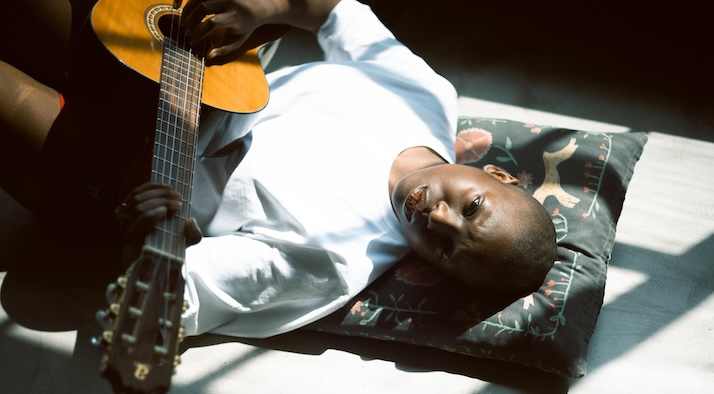
For Astrønne, music has never been about becoming a superstar. In fact, growing up, they didn't necessarily dream of being a musician at all. They wanted to be a writer. Short stories, poetry, comic books and anything that offered a world to escape into and a way to make sense of their own. Born in Douala, Cameroon, and raised in France, Astrønne's relationship with self-expression began with a complicated relationship to language. After moving to France at just three years old, they experienced bullying over their Cameroonian accent. Eventually, speaking became something they avoided, and writing became a refuge. It's a particularly interesting origin story for an artist whose music today feels so deeply rooted in the things we struggle to say out loud.
Astrønne's musical journey began in a way that feels almost too perfectly aligned with the artist they've become. As a child, they wanted to play the drums, but living in a building that housed firefighters meant their mother wasn't exactly enthusiastic about the idea of adding a drum kit to the equation. Piano was suggested as an alternative, but Astrønne wasn't interested. Instead, after attending an orchestral concert, they became fascinated with the harp, and just like that a childhood fascination had unknowingly connected Astrønne to the Cameroonian tradition of griots, musicians and storytellers who preserve collective memory.
Storytelling and identity remains at the heart of Astrønne's artistry. Their latest EP, 123, follows a simple but powerful philosophy: "Truth hurts, truth saves, love heals."
During a spontaneous month-long residency in Brooklyn in 2024, Astrønne began exploring the Japanese philosophy of ikigai, or one's reason for being. The experience led to a realization that their purpose was to spread truth and love through music. It's a mission that might sound idealistic, but speaking with Astrønne, you quickly realize that idealism is something they take seriously. They aren't particularly interested in making music that simply sounds cool. They want to create something that challenges people to think, feel, and question the world around them.
When describing their songwriting, Astrønne compares it to vomiting, a form of catharsis, almost like an exorcism. Rather than forcing ideas into perfectly constructed songs, they allow their subconscious to take over, writing instinctively and discovering the meaning afterward. It's a process that mirrors their own journey of learning to trust themselves. Language also plays an important role in how those feelings take shape. Astrønne describes English as a melodic playground, while French offers a different lyrical texture, one that can feel rougher and more direct on the tongue.
Our conversation moved between art, politics, spirituality, but one of the most interesting parts of our conversation was Astrønne's relationship with the idea of delusion. We talked about how easily people dismiss ideas that don't fit within the boundaries of what's considered realistic, and how much meaningful change requires believing in something before the rest of the world can see it. For Astrønne, that willingness to imagine something different is essential to both artistic expression and resistance. After all, how can you create something new if you're constantly asking the existing world whether it's possible?
Astrønne isn't interested in making music that simply sounds cool. They want to make people question things, challenge perspectives, and feel something real. After a transformative period of self-reflection in 2025, Astrønne began letting go of shame, guilt, competition, and relationships that no longer served them. In their place came self-forgiveness, chosen family, and a renewed trust in instinct. That transformation is woven throughout 123, a project that feels less like an attempt to find answers and more like permission to embrace the unknown.
After speaking with Astrønne, what stood out wasn't just their music, but how deeply they believe in the power of art and how it changes the way we see ourselves and the world around us. In an industry that constantly tells artists who to be, Astrønne is doing something far more interesting: learning how to be entirely themselves.
Listen to '123' below: