
Weston Estate Grows Up and Into Debut Album, 'Open Season' [Q&A]
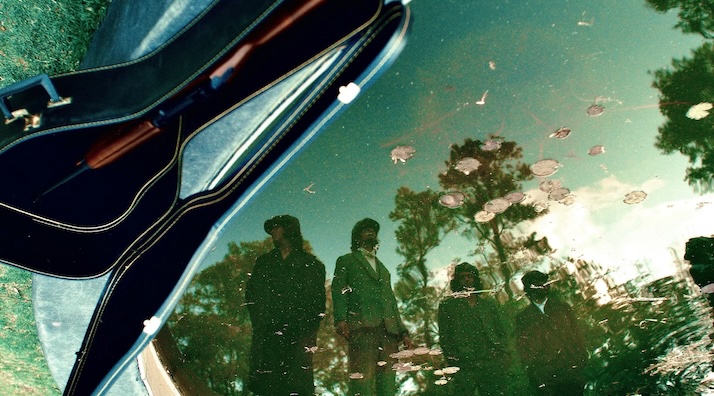
It is that season, the one of music lists: best song, best video and of course the covered best album of the year. Good timing then that the prodigiously talented group Weston Estate drop their debut album Open Season as it is an undisputed candidate for album of the year. From opening track "Stain" to its conclusion on "Blowing Steam," you feel the band dynamism, its deep rooted friendships and competing interests result in an absolute listening bliss of an album. We have the very good fortune of sitting with the band at a shoot in near their rehearsal space on the eve of the album release, and we so much from this terrific interview:
OnesToWatch: Who are you? Why are you in a band?
Abhi: We're in a band because we all agree that music and identity are synonymous, but I think the identity that comes from being in a group is cooler than the identity that comes from just being an individual. We all stand by that philosophy to some extent, which is why we do this. We wanted to showcase what it meant to be someone with our exact identity, being a Diaspora Indian or a 1st generation immigrant child. And we're all of that identity. So it makes us able to share our culture easier when we're in a band than if we were just one person.
Manas: I just think bands are like really fucking sick and really cool. And it's kind of a lost art nowadays. When you think of the big pop stars, the biggest, biggest things nowadays, it's not bands. But I think a band can represent a movement way more than any single artist could. We also just love being a part of something that feels bigger than us as individuals. Something that sums up to something that greater than we could have ever imagined on our own.
Tanmay: One really cool thing about being in a band is also how it becomes this dysfunctional family that you constantly have to learn yourself from. It's not always easy to be in a band, there are a lot of disagreements, and there are a lot of things that you learn about yourself when you disagree with someone who used to be your friend just from the lens of a friend. But now they're your business partner. Now they're your musical ideation collaborator. It’s a much more sacred thing now than it ever was when we were younger, because we have known each other since we were maybe 10-11. There’s an amount of discomfort that you face from not always getting exactly what you want, but you come to know that the goal is not to get what you want. The goal is to kind of be in tune with something that's bigger than you, and so that dysfunctionality makes you see yourself through a different lens. It also makes you see the world through that lens. It gives you more understanding for people.
Shrekar: Having known each other since we were 10, 11 years old, there's something really beautiful about the fact that every song that we make as a band is the amalgamation of all of our brains put together into this one product, this one entity. When it comes to fruition, and we are able to look back on it retrospectively, I'm able to see where each idea came from, all woven together. That alone is enough for me to want to be in a band forever.
Super beautiful. As someone that grew up on bands, I'm so appreciative of people that are willing to be in one, because there is a lot of compromise and purposeful restrictions. So let's get into your process. Does each band member have a specific role? How are songs created?
Manas: It varies so much song by song. We've never stuck to a single process. There have been times where Abhi will start a song, and then the next song we'll start off with a melody I had in my head, or Tanmay will come with it. I can't say there's any one methodology to the way we do it. And I think that comes across in how our music sounds. Every single project we've ever put out is so weirdly different from the last. Even the songs within the project have their own unique stamp to them. We all produce at this point, we all come up with our own guitar riffs. We all come up with melodies. We all are contributing. It's a highly democratic process. The decision making as well.
Abhi: We did have a process at the beginning, when we were 14, 15, 16, I was the one making the beats, and all the roles were explicitly defined because talent starts very young. Manas and Tanmay had both been singing since they were 4 years old, they grew up being in chorus when they were in middle school. Shreker had been playing the violin since he was 6, and then he graduated to being a guitarist. But for me, I didn't have any formal training. So I naturally gravitated to the nerdier shit, which was just being on the computer. But as skills grew over time, I wasn't just gonna stay making drums on a computer. I picked up a guitar and then I found my own voice over the course of these years. And so did these guys in their own way. Like, Shreker can pick up a camera now and make it look fire. But he could also write a song.
Let's get into the new release. What is this album about? How did it come about?
Shreker: In terms of the process, I think this was the first time that we all sat down and we were like, all right, we want to make an album of this genre. We want to make a rock album. That's what we set out to do. The past projects that we've had, we've sat down and just made whatever came into our head, and that had its own merit, that had its own benefits, its own pros and cons, but this time, we genuinely sat down and set out to make something of one genre.
Manas: I think the reason for that desire is that we were tired of being on stage and it was the same pop shit. We have appreciation for that type of music, but we just did not feel cool on stage and we wanted to make music that felt like a fucking band made it, you know? We wanted to be fucking rock stars on stage.
Shreker: So we basically spent the last year going on a recording trip every month. We would rent an Airbnb for a week in some remote ass location. We spent a week in Asheville, North Carolina. We spent a week in Blakesley, Pennsylvania. We spent a week in Shenandoah, and we just locked in for a week in a cabin at every single one of these locations, and made music. That was the process that we made this entire album through. Going somewhere for a week, working our asses off, coming back, taking a month and just sitting with all the music that we made on that trip, refining it, listening to it, refining, refining, refining, going on another trip, doing the same thing with new music, and then that was kind of the impetus to process for the entire thing.
Tanmay: We started the process in October of last year. And back then, everything was still a remnant of the past, we were still who we were 2 years ago. But when we came back from one particular beach trip, things just started to change. The 4 of us just individually started taking more ownership of our lives, we started growing up, our prefrontal cortex started developing. This album was made as we shed those versions of ourselves in all those cabins in the woods… I mean “Cabin in the Woods” is actually about some dark shit. There are crazy themes in this album. It's about this serial killer who wants to fit into society, but because he has this compulsion of killing people, he just can't fit in. The whole thing was basically inspired by American Psycho. Patrick Bateman wants to fit in, but he just can't and he doesn't know why. And so that's what the whole song is about. That song was one of the craziest sessions I think we've ever been a part of.
Shreker: We had a lot of sessions like that on this album, where we collectively hit flow state.
Tanmay: There was one particularly hard trip in February. There was just so much tension all the time, it was just new. It was just discomfort. It wasn't easy. Unfamiliar.
Abhi: One of our members did leave. And I think the emotion that we were all subconsciously dealing with was grief, actually. In the moment, it didn't come as a huge shock, but we were dealing with the actual consequences of someone leaving the band and what that actually meant. For me personally, when someone leaves a movement, it kind of makes the movement feel a little invalid. We experienced a lot of doubt, honestly, we had to shed all this skin and low-key brought ourselves all the way down to the basics, and then a rebirth happened. That's like a true testament to growth and grief working hand in hand.
Shreker: I think this album is incredibly interesting, especially because the change happened in the middle of the process of making the album. You can feel the progression in some ways of how things change over the course of the entire album.
I’m going to pivot to some more fun questions. The band is hungry. Who cooks the meal and what is it?
Tanmay: The chef is always rotating. And we all enjoy the meals that any chef cooks. However, sometimes taste differs amongst the cooks. It's almost like we're on a show of Chopped. Someone will make a meal and it'll be on the chopping block. But it's subject to the other judges.
You guys are performing at a festival. Each one of you have to pick a band you want on the lineup.
Manas: Radiohead. Because I need to see them live.
Shreker: Old Coldplay.
Tanmay: I'm gonna say the Strokes.
Abhi: There's this genre that I really like called Slacker Rock. There’s this band called Guided By Voices.
Last couple of questions here. I want a non-music recommendation and then a music recommendation.
Shreker: 1st answer, non-music rec, I would say the movie Before Sunrise. One of my favorite movies of all time, directed by Richard Linklater. It's literally just all dialogue. One day between this guy and this girl who meet on this train in Austria and they spend a whole day together and they fall in love and it's one of the most beautiful movies I've ever seen. Music rec, I would recommend Portraits of Tracy. Absolutely love everything. 0 misses.
Manas: I'm gonna give a book. 100 Years of Solitude, incredible book, full of passion, humor, it's fucking depressing, but at the same time, it's very like hopeful and it's fucking real. Then for music, first one that came to mind is Midair Thief. It's unlike anything you'll ever listen to. They dropped one studio album then dipped out of the public perception forever.
Tanmay: One non-music wreck that I can give is a book called Intermezzo. It's by this writer named Sally Rooney. And the way she writes is really cool. She writes from the perspective of 2 brothers, and when she writes from the perspective of one brother named Peter, she writes in flow of consciousness prose. So the sentences are, either run-on or fragmented, like the way you talk to yourself, but written. Then my music recs, one of them is this song called “Til The Water Runs Clear” by this band named Blossom. And then this other artist named Lindsay Chia. She does guitar only music. Also, shout out to this other guy named Jakal. He also makes guitar only masterpieces, and they just give you these feelings that words don't need to infiltrate.
Abhi: You should watch Clockwork Orange. Just so you understand how bad life could get for the individual to need that much stimulation. I feel like we're headed towards a world where you need to do more absurd things in order to feel more things. That movie warns against that a little bit. A lot. Again, I love slacker rock. So again, Guided by Voices. Dude,
Let’s end on your words.
Abhi: Honestly, bro. Because we go back so far, I literally was in North Carolina yesterday and his mom came over to my parents' house to hand over some Indian food, like pirantas. And I had Chai with his mom and my mom together and it was just so wholesome. That feeling of family winning.
Tanmay: It’s some Peaky Blinders, Good Fellas shit. We’re the Indian Good Fellas. Our families are so intertwined and involved in our success and they're the reason we're here and we're so tapped in with our community. We are for real brothers.
Listen to Open Season below:
![La Niña Is Learning to Let the Unknown Lead Her Ahead of US Debut [Q&A]](https://s3-us-west-2.amazonaws.com/onestowatch-v2/eleonora_albano-_d_s_c05998-1791394944.jpg)
![VITA Is Taking Her Power Back [Q&A]](https://s3-us-west-2.amazonaws.com/onestowatch-v2/copy_of_m_i_k_a_y_l_a393042468-_r1-015_photo_by_mikayla_lo_basso-1791244306.jpg)
![LIA LIA Infuses Nostalgia for an Unknown Memory into Album, Armor [Q&A]](https://s3-us-west-2.amazonaws.com/onestowatch-v2/l_i_a_l_i_a1-1791234524.jpg)