
Ear “Choose Life” in Their Latest Album ‘Rumspringa’
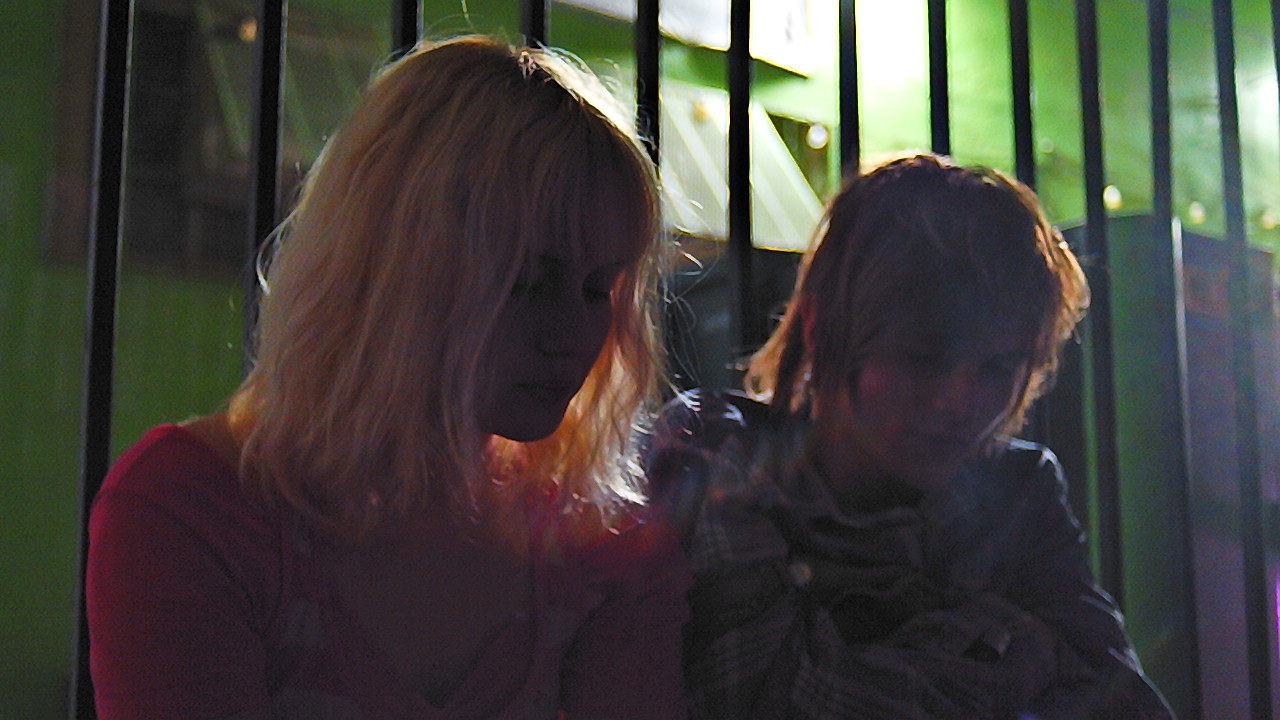
Photo: Tommy Pointer
Some albums don’t unfold so much as they slip through your fingers while you’re listening to them. Rumspringa, the second record from ear via A24 Music, lives in that exact sensation. It feels like trying to hold a conversation while the room keeps subtly changing shape, where meaning arrives in fragments and then dissolves before it fully settles.
Jonah Paz and Yaelle Avtan first recorded as ear on an iPhone in the Bard College library, and that sense of immediacy still runs through everything they make. Even now, with tours stretching across the US, UK, and Europe, there is nothing sealed or polished about their sound. Rumspringa feels built from half-finished thoughts, overheard phrases, and emotional static that never quite resolves into clarity.
The album takes its name from the Amish rite of passage where teenagers are briefly allowed to leave their community before deciding whether to return. ear don’t treat that idea as narrative so much as pressure. The record keeps circling the feeling of choosing, failing to choose, or realizing the choice has already been made without you noticing. Across its songs, freedom doesn’t arrive as a release. It arrives as confusion that keeps repeating itself in different forms.
That confusion shows up in the language itself. “Hello, goodbye / They don’t align,” they sing on “Rumspringa,” as if basic communication is already slightly broken. Elsewhere, there’s the blunt exhaustion of “I couldn’t focus,” or the strange tenderness of “the thread was never enough / to mend the seam.” These are not lyrics trying to be cryptic. Amid the layers of humming horns, flitting electronics, and soft guitar riffs, they read more like thoughts that interrupt each other before they can become full, concrete sentences.
Even at its most chaotic, the record is rooted in these small, ordinary anchors — apartments, streetlights, engines that won’t start. A grocery store argument that spirals into something half-comedic, half-violent. In “Water and Power,” a voice breaks through the noise mid-scene, switching between confrontation and apology as if it can’t decide which version of reality it belongs in. It is funny in a way that doesn’t fully feel like a joke.
ear have always worked in that blurred space between emotional sincerity and digital distortion, but Rumspringa pushes that balance further. There are moments where songs feel like they are actively unravelling while still insisting on staying together. Melodies flicker and disappear. Percussion stutters and restarts. Voices overlap, repeat, or drift out of sync. And yet nothing feels accidental. The chaos is carefully contained.
The lead single “Ne Plus Ultra” captures this tension most clearly. Over restless production and distorted bass, Paz and Avtan move through lines that feel like half-realized memories. “The wrong direction,” one of them repeats, not as a revelation but as something already accepted. Midway through, a strange interruption, a crying kitten folded into the track’s texture, becomes less of a shock than it should be. It just exists there, like another intrusive thought you don’t get to explain.
What makes Rumspringa so affecting is how often it returns to moments of trying, and failing, to stay mentally present. “I couldn’t focus,” they repeat on “Water and Power,” over a chorus that feels like it’s being pulled in several directions at once. There is always something interrupting attention, whether that be a feeling, a sound, or a thought that refuses to stay still long enough to be understood.
However, the record still resists being completely overwhelmed by disorientation. If anything, it keeps reaching toward something softer underneath all the noise. “Good Day Will Arrive” becomes a quiet emotional center, not because it resolves anything, but because it doesn’t. “I have to sever /My fears,” they sing, followed by the almost uncertain hope of “a good day will arrive.” It lands less like optimism and more like a mantra you say to keep moving.
That tension between collapse and persistence runs through everything ear do. Even the most fragmented tracks feel held together by instinct rather than structure. There is humor here too, often appearing in the middle of anxiety, like life briefly glitching into something absurd before snapping back. ear understand how close those two things sit to each other.
By the time Rumspringa closes, nothing has fully clarified itself. “It no longer exists / the place you thought you left,” they sing, and it feels less like closure than another disappearance. The album does not resolve its questions about freedom, identity, or connection. It just keeps moving through them, line by line, like someone trying to stay upright while the ground keeps shifting.
What lingers most is not clarity but proximity. ear make music that feels close enough to hear someone thinking in real time, close enough to notice when a sentence almost becomes something else. Rumspringa doesn’t offer answers. It stays in the moment right before they arrive and lets that be enough.
Listen to Rumpsringa below:
![Moody Joody Draw Us Closer to their Debut EP, Plain Jane [Q&A]](https://s3-us-west-2.amazonaws.com/onestowatch-v2/unnamed-1791228468.jpg)
![Everything You Need to Know About Janine Berdin [Q&A]](https://s3-us-west-2.amazonaws.com/onestowatch-v2/save_vid._net_825323764_18639518701012760_1512066654651545567_n-1791395650.jpg)
![Weston Estate Grows Up and Into Debut Album, 'Open Season' [Q&A]](https://s3-us-west-2.amazonaws.com/onestowatch-v2/i_m_g_8944_copy-1791395273.jpg)