Jumping off the Top Rope with Natanya [Q&A]
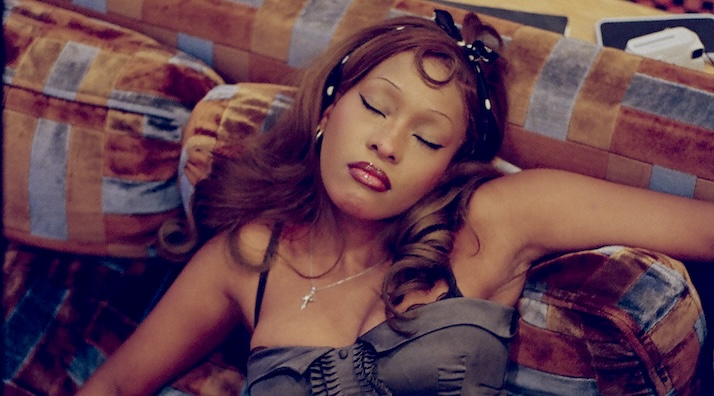
Photo by Riley Byington
Rising U.K. songstress Natanya just hit the R&B world like a ton of bricks with the release of her debut album Feline’s Return. Like, seriously— this album marks the arrival of R&B’s next superstar. An alumnus of the school of R&B, Natanya has graduated into her next era. Our generation’s next global pop diva.
This is not a case of overnight success or the aftershock of viral fanfare. The singer-songwriter-producer has been building toward this momentum for years. Her 2023 EP Sorrow Sunrise introduced the first contours of her sound. Classically trained and a student of her predecessors, the up-and-coming starlet is no stranger to trusting the process.
Before her debut, Natanya was just a kid from London growing up in a musically rich household where inspiration was never far out of reach. Her father, strict in his devotion to gospel and Michael Jackson, set the stage for Natanya’s soulful proclivities, while her mother carried the torch for her Trinidadian roots, filling the air with calypso, chutney, and other rhythms tied to family and lineage. Her family’s deep reverence for the arts widened her perspective on her own artistry. Long before she had a sound of her own, she was already studying scale, mood, and how to hold an audience.
Now, fresh off the release of Feline’s Return, Natanya is stepping into the spotlight with a quiet confidence that allows the music to speak for itself before making her grand entrance. She is thoughtful about her next steps, resistant to being boxed in by genre while wearing her influences on her sleeve. In conversation, she comes across as reflective, charming, and ambitious — a young artist shaped by family, fandom, and years of building her own world from the palm of her hand, packaging all of it into something public-facing and authentically her own. What stands clear to us: Natanya, has arrived— and it’s on her own terms.
OnesToWatch: You’ve spoken about growing up in a really musically rich household — your dad heavily involved in church and gospel music, while your mom played calypso at home because of your Trinidadian roots. How has your family upbringing and life in London shaped your creative DNA?
Natanya: My dad was like, gospel, Michael Jackson, or nothing, you know? My mom was with us a lot of the time when I was really young because my dad was working abroad. So she played a lot of early calypso in the house, chutney, and a lot of other Trinidadian music. She also had deep music taste. Once, I hacked into her iPod and found soul and R&B like Teddy Pendergrass and Anita Baker. So I had a mixture of things. Growing up, I would find my own music through Roblox and YouTube. I had my Paramore phase. There was a time when I was really into Eminem. I loved Biggie and early Kanye. I had a nice, well-rounded childhood. In London, I’d listen to Capital FM — UK pop staples like Ellie Goulding and Florence and the Machine. I was immersing myself in anything I could. I remember Carly Rae Jepsen ruled the world for like two years.
I heard that you were quite a big WWE fan as a kid. What was it about the theatrics of professional wrestling that drew you to the sport?
I think it’s the perfect sport. Ever since I was a kid, I was hooked. Every Monday and Friday, I’d tune in. I’d even watch some NXT. I was obsessed with all of the characters. My favorite was A.J. Lee. I would love to meet her one day. I love how wrestling combines storytelling with real-life stakes and athleticism. You have to be an elite performer and athlete to pull that off. It’s the perfect theater-kid sport.
I feel like wrestling is similar to the music industry as well.
It’s one of the only sports where the athletes can change the company from the inside. Wrestlers are known to come in and revolutionize the business — just as much as it’s an artist’s goal to revolutionize the music industry. I think they’re very connected, a thousand percent.
If you were a WWE superstar, would you be a face or a heel?
I think they call it a “tweener” — somewhere in the middle of the good guy and villain. Like, you want to root for her, but she’s actually kind of bad.
In a recent interview, you said you want to redirect the attitude about yourself even more and want people to understand you on a deeper level. How do you navigate that in this digital age?
I approach everything as myself. I try as hard as possible to be me because when I watch Amy [Winehouse] interviews, she’s just speaking and showing up as her authentic self. So that’s why I try really hard not to act. As I continue to grow, I don’t want to hide behind genre. I know I’m influenced by R&B a bit, but I also have an affinity for exploring pop music. That’s me tapping into that “face-heel” character.
The new album is absolutely phenomenal. You pull heavily from early 2000s pop and R&B, straight out of a Darkchild record, crafting a familiar yet refreshing project. What is it about this era that you are drawn to creatively?
There’s something about that era that felt so romantic. It was similar to wrestling for me — it makes you believe in something. As we get older, it’s harder for us to believe things. So I wanted to give my fans something to believe in with this tiny little world.
Your debut EP, Sorrow Sunrise, introduced your referential production style. At that time, I feel, it was more akin to neo-soul, Marsha Ambrosius, and Floetry influences. Tell me about your infatuation with both neo-soul and pop music.
I respect anyone who tries their hand at being an artist, especially if they come out of the UK. I think a lot of the people I’ve been compared to come from that soul discipline and build bigger worlds from there. My holy grails, like the Amys, the Michaels, the Janets — they all come from that world but took things to whole new heights.
Producer Jkarri worked with you closely for this whole process, essentially the Timbaland to your Missy Elliott. You’ve said one of the most special things about working with Jkarri is that he actually lets you be the executive producer you always knew you could be. How rare has that kind of trust been in your experience?
Absolutely. We became so close as teenagers. It was such a rare thing to meet someone you collaborate so well with and who is always willing to listen to you. Collaboration is all about finding equity in making the finished product. It’s so hard for girls to be in charge of their music. And now you see a burst of new female producers coming out, so confident in their craft, and now huge artists like Beyoncé are getting back credited as writers on these songs we’ve always loved. I’m so appreciative of Jkarri for helping me develop as a producer. He always has these quirky suggestions that bring a bit of personality and spark to the song.
What part of making a record feels most like home to you: writing, recording vocals, building the production, or sequencing a project?
It’s definitely world-building. I love method acting. Like, I just get so obsessed with being a specific character. You have to learn an entirely new person, new attitude, new language. It’s stressful at times, but so rewarding, because once you’re in it, you’ve made your own little movie.
What is the new definition of a pop star? Artists like yourself, PinkPantheress and Zara Larsson are all rewriting the blueprint of the modern pop girly.
Someone who moves people. There’s so much being shared right now, and so many people are having their moment. But it’s really hard to move people. It’s hard to shake people off balance.
Who’s the pop girly that shook you off balance?
Madonna … how’s that? Down to a T. She’s that girl at school that nobody wanted to play with. She didn’t care. She’s just all attitude. She’s always known what she wanted, and she was willing to go for it at any cost.
When people listen to this album five years from now, what do you hope they hear in these records?
I hope people see how hard I went early in my career. I had no guarantee that anybody was going to pay attention. I remember my dad knocking on my door while I was recording these songs, and he’s like, “When are you doing your law conversion class?” And I’m just in there going hard at my dreams.
What have you been left with after completing this album? How do you feel about the reception?
Honestly, I was feeling the deepest amount of pressure up until literally today. But I realize all of that is just excitement. Sometimes it’s hard to tell the difference between nervousness and excitement. You just have to live in it, and you have to appreciate it for what it is and enjoy the results of great work.
What is in the future for Natanya?
I have no clue what’s going to happen. I just hope to continue to make deeper statements with my art and to take more control over my music. When I really take charge of the production and style from start to finish, people listen to me. So those are the next steps for me.
Listen to Feline's Return below:
![Cavetown is A Fun Adult Who Does Things in New York City [Q&A]](https://s3-us-west-2.amazonaws.com/onestowatch-v2/image47-1791580275.jpeg)