Accessory's Debut Album Dust Is A Microcosm of Hopeful Hopelessness [Q&A]
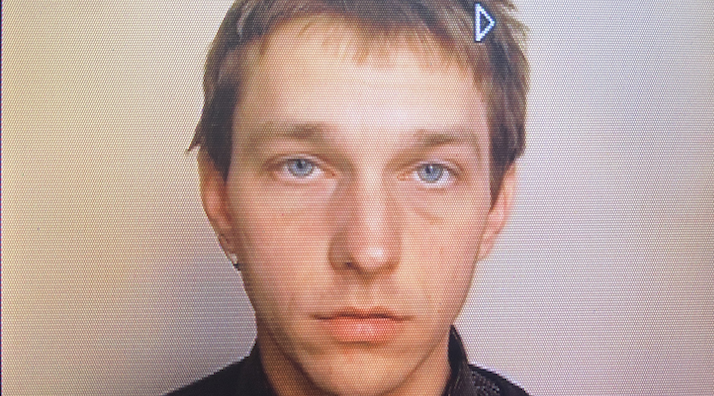
Photo by Jason Balla
Though you may know him for his work in indie band, Dehd, Chicago-based producer and songwriter, Accessory (aka Jason Balla) moves through music with a singular perspective, particularly on his debut album, Dust. Titling the project Dust couldn’t have been more fitting for both Jason Balla’s microcosmic approach to building soundscapes out of textures and feeling, but it also perfectly embodies his ability to see the innerworkings of life, to take a tiny atom of a conversation and explode it into a song. Rich with interpersonal discoveries, anti-war musings, and a hopelessness that verges on hopeful, Accessory’s Dust is a project to let consume you. Read on for more, from the artist himself:
OnesToWatch: Hey, how are you?
Accessory: I'm doing pretty good.
You're in Chicago, yeah?
Mm hmm.
How is it?
It's raining today. But we have optimism in the air. Hope is returning.
This is good. To start, I'd love to know who Accessory is – where did the name come from?
It's born out of the idea that this project's always alongside me in a way. It’s the other half of my internal world and dialogue, and this is the physical manifestation of it.
Did you always think that you would do a side project as well? When was this birthed?
I've been writing these songs for probably the last eight or ten years. These ones are newer, but it's always been a part of my art practice just to write songs and so much of the stuff I make doesn't also fit in the Dehd world. So after a certain point in time, it’s like a critical mass where I have to start putting some stuff out.
When would you say you started writing the songs for Dust then?
Most of them, probably two years ago. With the exception of a few that were things I wrote, maybe in my mid 20s. As I get older and change and learn, I've been changing the versions of the songs, so they've kind of been reiterated a bunch of times until they were brought up to speed with both what's interesting to me now, but also what's relevant to my life. So, changing belief in the lyrics even.
Okay, this makes sense. That begs the question then, did you set out to write an album, or did these songs all find a story with each other naturally?
It's an album for sure. Maybe at first you're just writing stuff because that's just like what you do. But then there were a few anchors that made the world make sense. One of the songs, “World of Pain,” for example, is one of those songs where it’s an experience I wanted to represent in the album, and then maybe in the other category, “This is not your life” is one where it's a lot more personal and intimate. There were these two poles on opposite ends of the larger conversation of life, which is that I don't like the world that we're participating in right now. It’s so challenging and heavy and awful and there's so much despair in today's climate of everything. It’s crazy talking about the record now because I was feeling it so hard then. And it's like, has it only gotten worse?
Yeah, unfortunately.
So it's been an interesting yardstick for that as well, just that time can go by. The last two years for me have gone by so fast. Yet, when you check back in with yourself, when you open up your diary, you're like, wow, this shit's still been going on. I feel some things even heavier now, but somehow I felt it then, too. It's been really interesting to revisit that older version of myself.
I'm curious about that specifically – I saw you wrote something along those lines about “Calcium,” about how it feels even heavier now. I'd love to hear about that song in particular and what it means in this context.
“Calcium” is an anti-war song, basically. In my life, but generally, too, it's really hard to write happy songs well. It's also really hard to write something political without it becoming this kind of caricatured mantra, like how some punk has become, where it’s just a stereotype of itself. With “Calcium,” I wrote it at the beginning of everything that was happening in Palestine, and then there was the Ukrainian war, and I was just seeing so much suffering of everyday people. It’s because it's on your phone, and you're just participating and bearing witness to just atrocities and so much sadness and pain and real people's lives being lost. It gets disfigured when you're on your phone, it's so crazy. And I guess it just hit me one day and most of the lyrics came out through that one kind of day of really feeling ill.
I feel like that's a good one to represent the album vibe as a whole, do you agree?
I think “Calcium” does it. Also, because my history up until this point is very much being in a rock band. A lot of people know me for that kind of thing. So, especially with “Calcium,” the lyricism and the topic matter – which is represented throughout the record – is darker. That was my goal with this record, was to experiment with new sounds and songwriting. It’s a combination of experimentation and doing stuff that feels new to me in the musical landscape, but also at the end of the day, you could just play it on the acoustic guitar and it would be still compelling.
I think that is the number one indication of a good song – does it sound good with production, but does it sound good on an acoustic guitar?
Yeah, I had this really existential epiphany once when I was on a camping trip. People were passing the acoustic guitar around. This was a long time ago. But, and especially then the way that I wrote songs and played music then, my songs were all about riffs and stuff. I was like, I can't play one fucking song at this campfire right now and and everyone's stunting on me, playing amazing stuff. I realized how much I wanted to challenge myself to be able to play something at the campfire.
This is definitely a modern problem, the way that songs are created in the studio so often that they don’t always hold up when the production is removed, especially certain types of pop. But I do think the folk world right now is doing a really good job of combining things like glitch chore production, but also really good songwriting. It's a cool middle ground people are finding.
Has there been anyone that's representative of that second thing for you?
There's this Chicago band you probably know, This House Is Creaking.
Oh, yeah, I played with them recently, as part of a festival.
Okay, sick. I'm obsessed with them right now. I think they have really cool production choices, but if you take it all away, it’s still based on really compelling melodies.
It's like the Spirit of the Beehive universe of wonderful, mind boggling production, but ultimately great songs.
Even Porches, too.
Totally.
On that note, what was the recording process like for this album? Because you've got some crazy sounds going on.
I recorded it all in this room, actually. I moved into this place around the same time I started working on the record. I've always been a home recorder also, but in the past, I've worked in the studio for records. Then, I recorded this Dehd song for a TV show a handful of years ago, in a literal practice space, and I was like, oh, if I can do this here and it can be in a TV show, I think I have arrived. That was my co-sign of confidence that I needed to double down on the fact that I have an ear. It’s a really amazing thing to be recording at home, because you can take your time and leave no stone left unturned as far as all the little moments of the album. Trying to make it feel special every step of the way. Spirit of the Beehive is inspiring to me in that way. You can tell they're considering – not even every section of the song – every micro section.
Were you writing while you were recording or writing the songs first and then bringing them to production?
Writing and recording, all at the same time. There's also that experience, they call it demo-itis or whatever, when you make a demo and it's so amazing and then you can never recreate it. So I tried to set it up so that as I'm writing, I'm recording the demo version of it, but also already ready to record the final thing. So I have the freedom to keep the really special magic that just happens in that time of the song's life.
Did you have any pieces of gear that you kept going back to as you were recording?
Yeah, I was really inspired by messing around with granular synthesis stuff. I got this cool pedal called the FABRIKAT. They make these really weird pedals and I don't even know how I stumbled on it, but I wound up getting it and the sound made its way all over the record. Most prominently, the vocal for “Sunshine” was created using that pedal’s effect.
Why did you choose Dust for the album's title?
I think that it means a lot of different things to me. In one way, I think about it in terms of carbon. It’s what you get when you reduce everything to this basic element of life. It's also sort of the symbol of the beginning of life, because all is built out of it, but it's also the end of things. The album works in this cyclical way where it's both an end and a beginning. It's a transitional time both internally and with what was physically going on in my life. And that’s just the way that the world works, we're always, constantly repeating these things. The album cover is a painting I did of my impression of what a diamond looks like, which is dust and carbon, but in a perfect structure, which I thought had a nice poeticism to it.
That's sick. I'd love to know if Dust were a candle. What would it smell like?
Probably that smell of outside after a rain.
Oh, that’s good. I'd also love to know what your favorite sound is right now, but a life sound, not a music sound.
I guess silence.
Perfect. And then to end out, who are your OnesToWatch? Who are people that you're listening to that you'd like us to listen to?
There's this really cool band called das bisschen Totschlag. They're really great. Especially if you like the few reference points that you already mentioned, I think you specifically would really like it.
Okay, sick.
They're great. Who else is amazing? There's this band from Chicago called TV Buddha that I think is awesome. Another great band from Chicago called Facing, who is also going on tour with us for the West Coast. They're kind of Portishead adjacent, the new era of trip hop.
I'm stoked to check all this out. Thank you so much!
Thank you.
![Tommy Lefroy on Crumbling Empires, the State of Surrender, and the Age of Precarity [Q&A]](https://s3-us-west-2.amazonaws.com/onestowatch-v2/unnamed-1790979504.png)
![Isabel Dumaa Daydreams Indie-Pop Perfection on "James Dean" [Q&A]](https://s3-us-west-2.amazonaws.com/onestowatch-v2/screenshot2026-09-25_at3.36.57_p_m-1790376009.png)