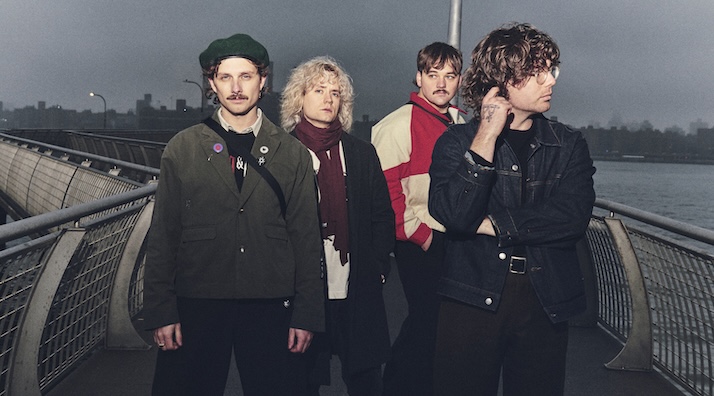
Inside Lecx Stacy’s ‘The Folkhouse,’ Where Grief Never Settles
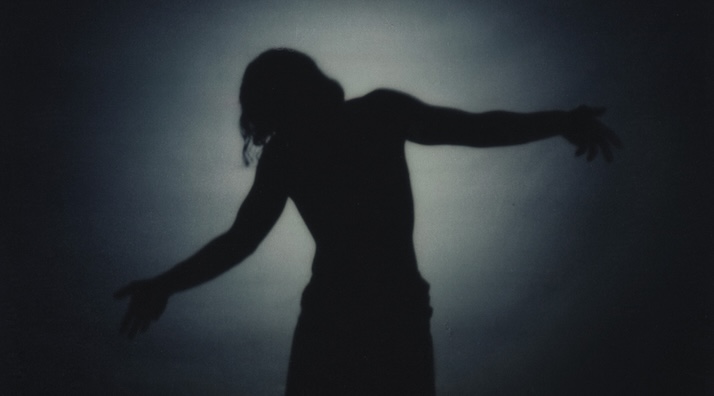
Photo by Eddie Mandell
There is a certain kind of record that does not announce itself so much as it quietly settles into the listener, unfolding over time rather than demanding immediate attention. Lecx Stacy’s The Folkhouse moves with that patience, treating grief less as a singular rupture than as a condition that reshapes how time itself feels. The album is not chasing resolution or catharsis. It is more interested in what remains when resolution never fully arrives, and how those remnants shape a new emotional rhythm.
Stacy shared with OnesToWatch, “The Folkhouse is a record about love, loss, and the places that shape you, made by someone who’s still figuring out where home is :).” Across nine tracks, Stacy builds a space that feels both inherited and lived-in. Family history slips through the frame without ever settling into a fixed narrative, especially in the way his father’s memories surface as atmosphere rather than testimony. Smoke-stained rooms, late-night haze, half-remembered conversations. These details do not appear as scenes so much as residue, shaping identity as something assembled from fragments rather than origins. What emerges is less autobiography than an echo chamber, where inheritance behaves like something porous and constantly rearranged.
The idea of “The Folkhouse” itself lingers like a structure you cannot quite place. Not quite physical, not fully imagined either. More like a house built from repetition and recall, where memory acts less like a record and more like renovation. Rooms shift depending on who is speaking, and doorways seem to open into earlier versions of the same feeling. Stacy leans into that instability, treating the album as a living interior where emotional geography is always in flux.
Musically, the record leans into a controlled instability that keeps everything slightly off balance. “Winter, A Wilted Flower” and “Safe In Your Hands, I Clasp” sit in restraint, built on negative space as much as sound, as if the songs are holding themselves together by instinct alone. Elsewhere, the edges fray more deliberately. “With You, I’d Be Closer to God” and “Testament, A God Fear & Rifle” push into both subtle and harsher textures and pressure, where distortion feels less like styling and more like emotional spillover. Even repetition becomes a form of fixation, circling the same feeling until it starts to lose and regain shape at the same time.
At the emotional core sits “In a Hail of Bullets, She’s the Gun”, a track that tightens the album’s tension into something immediate and unsettled. Desire and self-erasure fold into each other until the distinction barely holds. Stacy does not frame love as salvation or destruction. He keeps it suspended in the space between, where contradiction does not resolve but is endured.
What gives The Folkhouse its lingering weight is the way it refuses to separate grief from its aftermath. Loss is present, but so is the slow recalibration that follows it, the way absence gets carried forward until it starts to resemble continuity. Even moments that gesture toward closeness feel slightly unsteady, as if intimacy itself has to be learned again in real time. The sequencing reflects that instability, moving between clarity and collapse without settling into either.
By the time “Honey, This Coffin Wasn’t Built for Two” closes the record, there is no clean resolution, only recognition. The Folkhouse settles into its own unresolved shape, less a statement than a translation of private inheritance into something that feels strangely familiar. It does not close the loop. It learns to move within itself.
Across its runtime, the album resists spectacle in favor of sustained atmosphere, trusting that emotional clarity can emerge through accumulation rather than emphasis. It leaves behind afterimages that remain in the mind’s eye long after the final track fades.
Listen to The Folkhouse below:
![VITA Is Taking Her Power Back [Q&A]](https://s3-us-west-2.amazonaws.com/onestowatch-v2/copy_of_m_i_k_a_y_l_a393042468-_r1-015_photo_by_mikayla_lo_basso-1791244306.jpg)